South Amarillo office, phone answered 24/7
Pest control for Amarillo homes, from attic to slab
Scorpions in the attic, mice under the sink, termites working up the slab: we find where they live and how they get in.Then we treat it, seal the small gaps on the spot and tell you plainly what we used. Call any hour and someone at the office picks up.
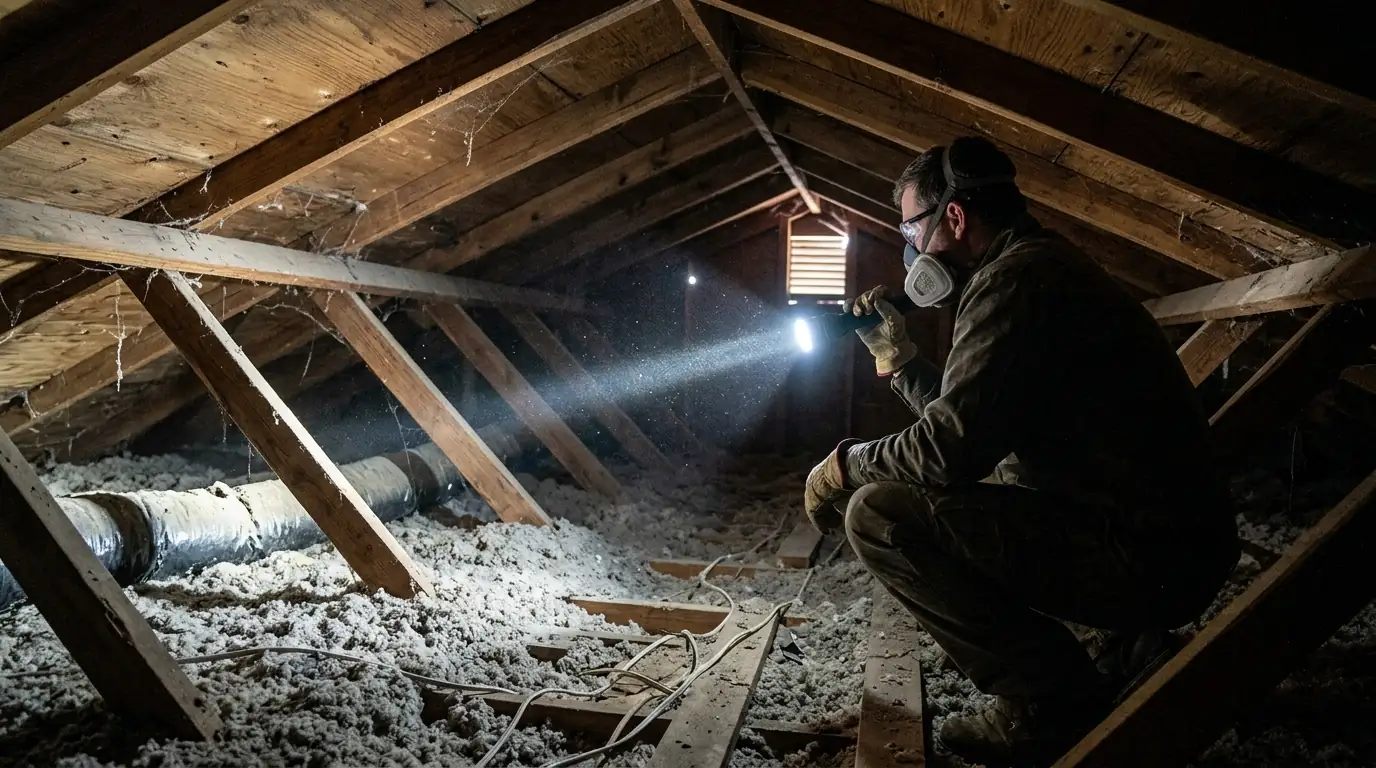
Move the light. Attics, crawlspaces, garages and weep holes are where we look first on every visit.
How does pest control work in Amarillo?
Call (806) 552-3060 any time and tell us what you are seeing. A technician inspects inside and out, finds the pest and the way it gets in, treats the places it lives, seals small gaps and explains what was used and when it is safe to go back in. You can stop there or set up seasonal visits timed to Panhandle pest cycles.
Product lines a technician may choose from, matched to the pest, the room and who lives there:
Pest and wildlife control across the Panhandle
Forty-three services in six groups. Pick the one closest to what you are seeing, or call and describe it and we will sort it out on the phone.
Home & Business Plans
Termites
Spiders, Scorpions & Indoor Insects
When Amarillo pests show up, month by month
Pick a month to see which pests usually get active around Amarillo and why. The levels come from Texas A&M AgriLife, NWS Amarillo, Texas DSHS and City of Amarillo seasonal notes, and every year shifts a little with rain and the first freeze.
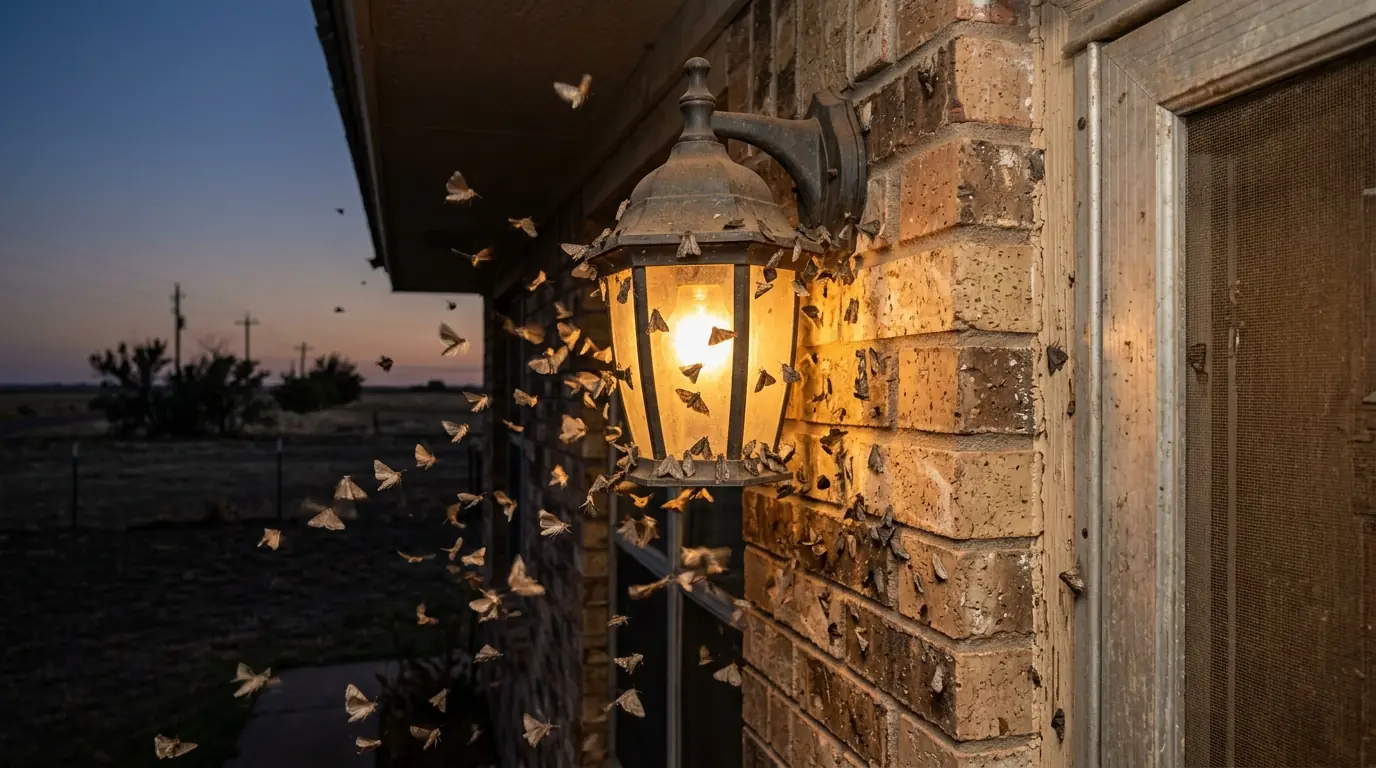
October in Amarillo
- Mice and ratsPeak. Cold fronts push them into wall voids, attics and garages; the first freeze averages about October 20.
- Boxelder bugs and elm leaf beetlesPeak. Fall invaders that overwinter in wall cracks and come out on warm winter days.
- MosquitoesRising. Adults emerge June to August around playas; West Nile risk often peaks in September and October.
- Field cricketsRising. Swarms build when rain and cooler weather end a summer dry spell.
- Brown recluse spidersSome activity. Mating season runs April through July, when more turn up in closets and garages.
- ScorpionsSome activity. Heat and drought send them down from attics and in through weep holes looking for water.
- Wasps and yellowjacketsSome activity. Yellowjacket colonies peak in August and September, mostly in ground nests.
- Bats in atticsSome activity. Mexican free-tailed bats summer here from late April into October.
- SnakesSome activity. Most sightings are at the edges of town and in new subdivisions; bites peak in July and August.
Levels show when activity usually rises, not a forecast for your house.
Small signs that usually point to a bigger problem
Most of what we treat starts with something small a homeowner noticed. These are the ones worth a call.
Mud tubes on the slab
Pencil-width dirt tunnels on a foundation edge or garage wall mean subterranean termites are traveling between the soil and wood in the house.
Wings on a windowsill
A pile of identical small wings in April or May is what termite swarmers leave behind. Bag a few and keep them for the inspection.
Droppings in a drawer
Rice-size droppings in a utensil drawer, behind the stove or under the sink point to house mice, most often after the first freeze.
Messy webs in stored boxes
Loose, irregular webbing in closets and garage boxes is typical of brown recluse spiders, which you rarely see in daylight.
Scratching overhead at night
Light scratching in the ceiling after dark is usually mice or rats. Heavier thumps at dawn and dusk can mean squirrels or raccoons.
A skunk smell by the porch
A strong odor around a deck or porch in late winter often means a skunk has a den underneath, with young coming in May.
Wind, dry air and fast cold fronts change how pests act here
Amarillo sits near 3,700 feet, gets about 20 inches of rain in a normal year and is one of the windiest places in the country. That keeps plenty of insects outside most of the time, but it also means pests come indoors in bursts. Texas A&M AgriLife has noted that heat and drought send scorpions, cockroaches and rodents inside looking for water, and a hard cold front here can drop the temperature 50 degrees in half a day.
So the calendar matters. Termite swarmers fly in April and May, miller moths pass through for a few weeks in late spring, crickets pile up at doorways in August and September, and mice start hunting for warm wall voids around the first freeze, which averages about October 20. We time treatments to those runs instead of spraying on a fixed schedule.
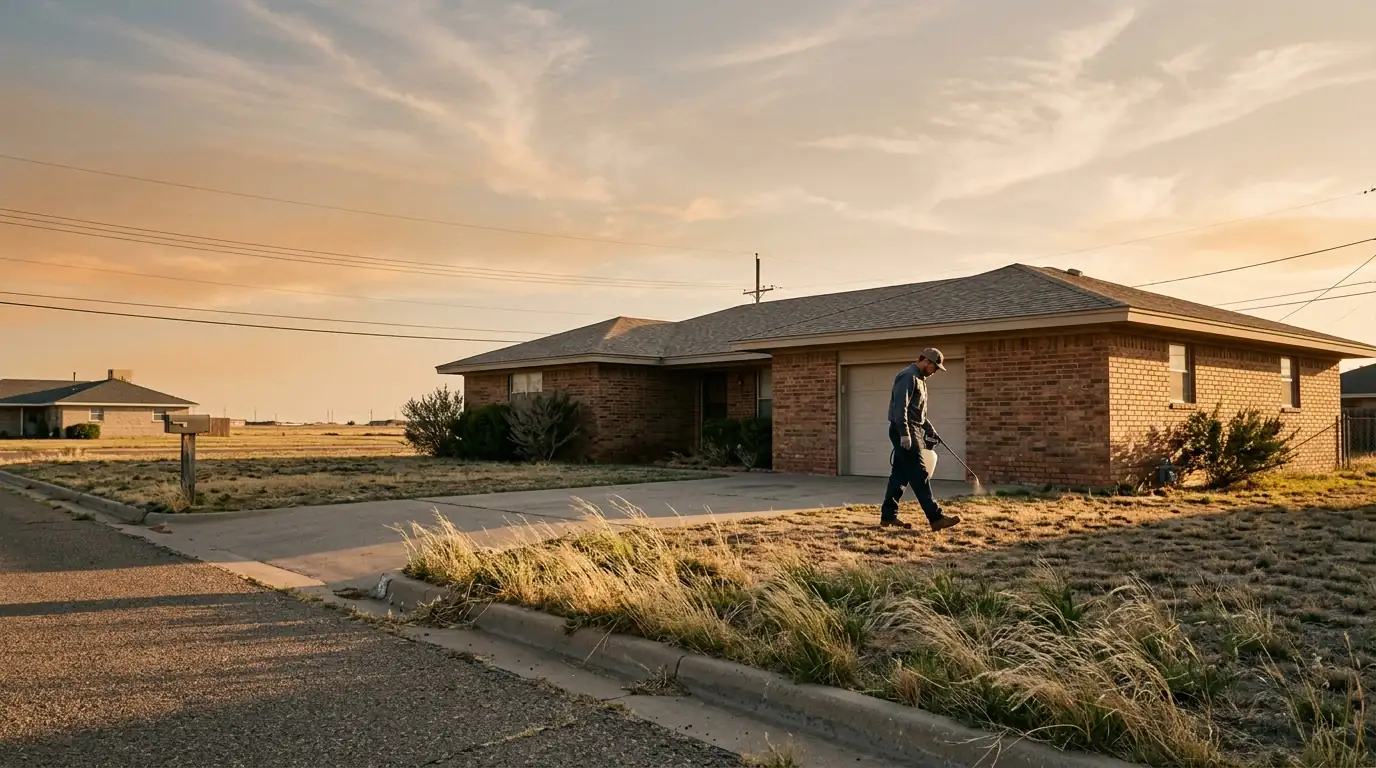
Housing matters too. Brick veneer has weep holes that let in scorpions and crickets. Older homes around Wolflin and South Lawn have more gaps, and some sit over crawlspaces. New builds on the southwest edge back up to open pasture, so snakes, prairie dogs and pocket gophers are part of the job there.
What happens when a technician comes out
You call, we listen
Tell the office what you are seeing and where. A few questions up front mean the technician shows up with the right gear.
Inside and outside walk
We check the attic access, garage, kitchen and bath plumbing, then walk the slab line, weep holes, vents and door seals.
Find the source
We look for where the pest lives and how it gets in, not just the spot where you saw it.
Treat and seal
Baits such as Advion, dusts or a targeted liquid like Termidor go where the pest lives. Small gaps get sealed on the spot and bigger repairs are pointed out.
Explain and follow up
You hear what was used, where it went and when kids and pets can go back in. If pests come back between visits, call and we return.
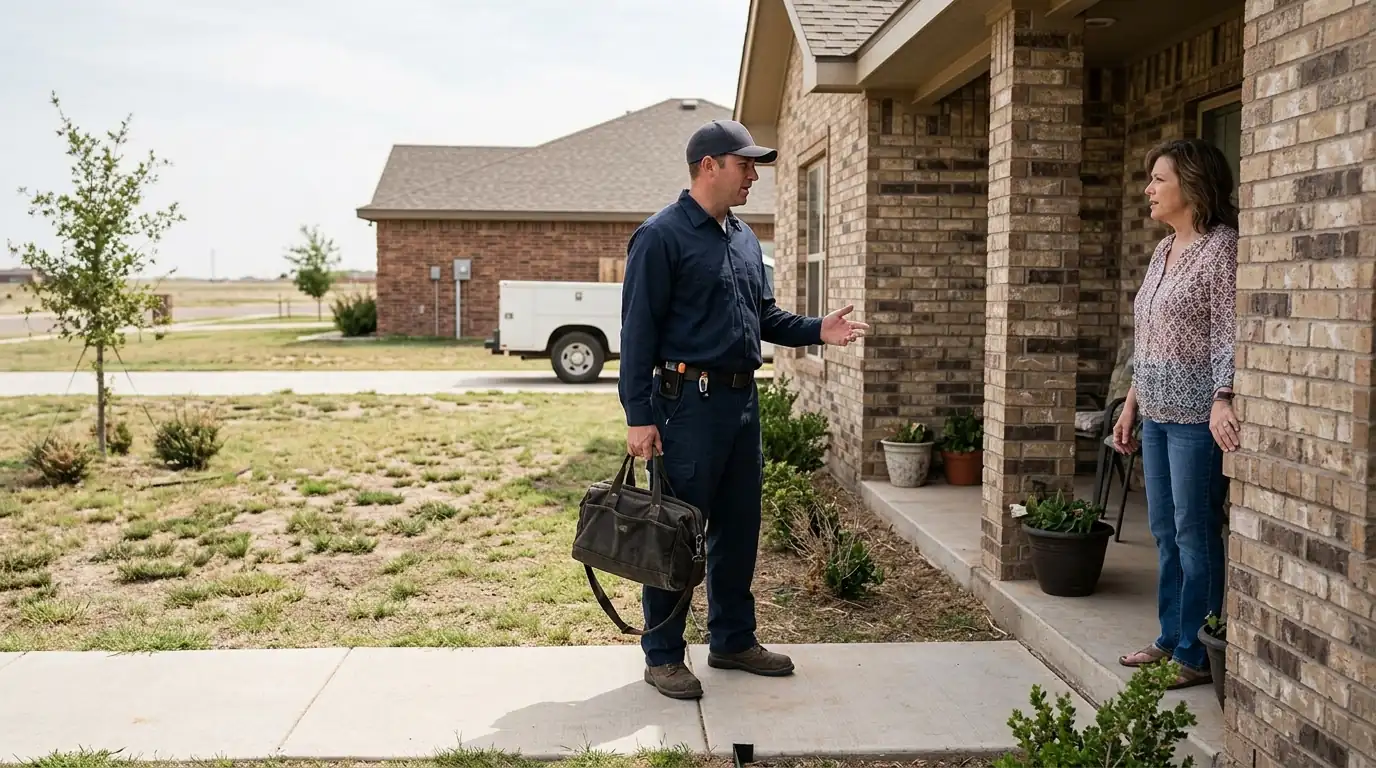
One visit or a seasonal plan, your call
Some problems need one good visit. A wasp nest under the eave, a bat in the garage or a few millipedes after a heavy rain do not call for a contract, and we will say so.
Other problems come back with the seasons. Scorpions, spiders, crickets and mice return to the same brick homes every year, so a quarterly plan and termite monitoring with Sentricon style bait stations or a liquid barrier make sense for many homes. We will tell you which fits your house and why.
How quarterly pest control works and how termite bait stations are monitored.
What you can expect from our office
A phone that gets answered
Call at 2 in the afternoon or 2 in the morning and you reach us. We will tell you what can wait until daylight and what cannot.
An office in south Amarillo
We work out of Lamount Dr near Hollywood Rd, so south and west Amarillo, Canyon and Bushland are close by.
Plain answers, no pressure
We tell you what we found, what we recommend and what you can handle yourself. Some homes need one visit, not a plan.
Treatments chosen room by room
Products and placements are picked for the pest, the room and who lives there, with re-entry times explained before we leave.
Amarillo neighborhoods and Panhandle towns we cover
We cover Amarillo from Woodlands to Tradewind Square, plus Canyon and towns out to about 60 miles. Pick a ZIP to check it.
Amarillo neighborhoods
- City View79118
- Puckett79109
- Ridgecrest79109
- Sleepy Hollow79121
- Hollywood-Scotsman79110
- Western Plateau79109
- Windsor79109
- South Georgia Place79110
- Belmar79106
- Olsen Park79106
- The Greenways79119
- Heritage Hills79119
- Wolflin79109
- Woodlands79124
Panhandle towns
Check a ZIP code
Tap your ZIP to see the matching neighborhood or town page.
Questions Amarillo homeowners ask us
Is the Pestcon phone line answered at night and on weekends?
Yes. The line at (806) 552-3060 is answered 24 hours a day, every day of the year. At night we sort out whether the problem needs someone right away, like a snake in the house or wasps at the only door, or whether it can be handled first thing in the morning.
How is the price of pest control set for an Amarillo home?
It depends on the pest, the size and layout of the home, how far the problem has spread and whether you want one visit or seasonal service. For common jobs we can often give a price over the phone once we hear the details; for termites, wildlife and bed bugs we price after the inspection.
How do you handle treatments in homes with kids and pets?
We choose products and placements with kids and pets in mind, keep rodent bait in tamper-resistant stations, use baits and dusts inside walls and cracks where nobody can touch them, and tell you how long to keep everyone off treated areas before we leave.
Which towns outside Amarillo does Pestcon serve?
Canyon, Bushland, Lake Tanglewood, Panhandle, Claude, Vega, Fritch, Borger, Stinnett, Dumas, Cactus, Sunray, Hereford, Pampa and Tulia, plus Potter, Randall, Carson, Deaf Smith, Moore, Hutchinson, Gray, Swisher, Armstrong and Oldham counties. For towns farther out we tell you on the phone what day we will be in the area.
What should I do before the technician gets to my house?
Leave the pest where you found it if you can, or bag one in a sealed sandwich bag. Clear a path to the attic access, under the sinks and the garage walls, put pets in a closed room and write down where and when you saw activity. That shortens the visit and helps us aim the treatment.
Pest Advice for Panhandle homeowners
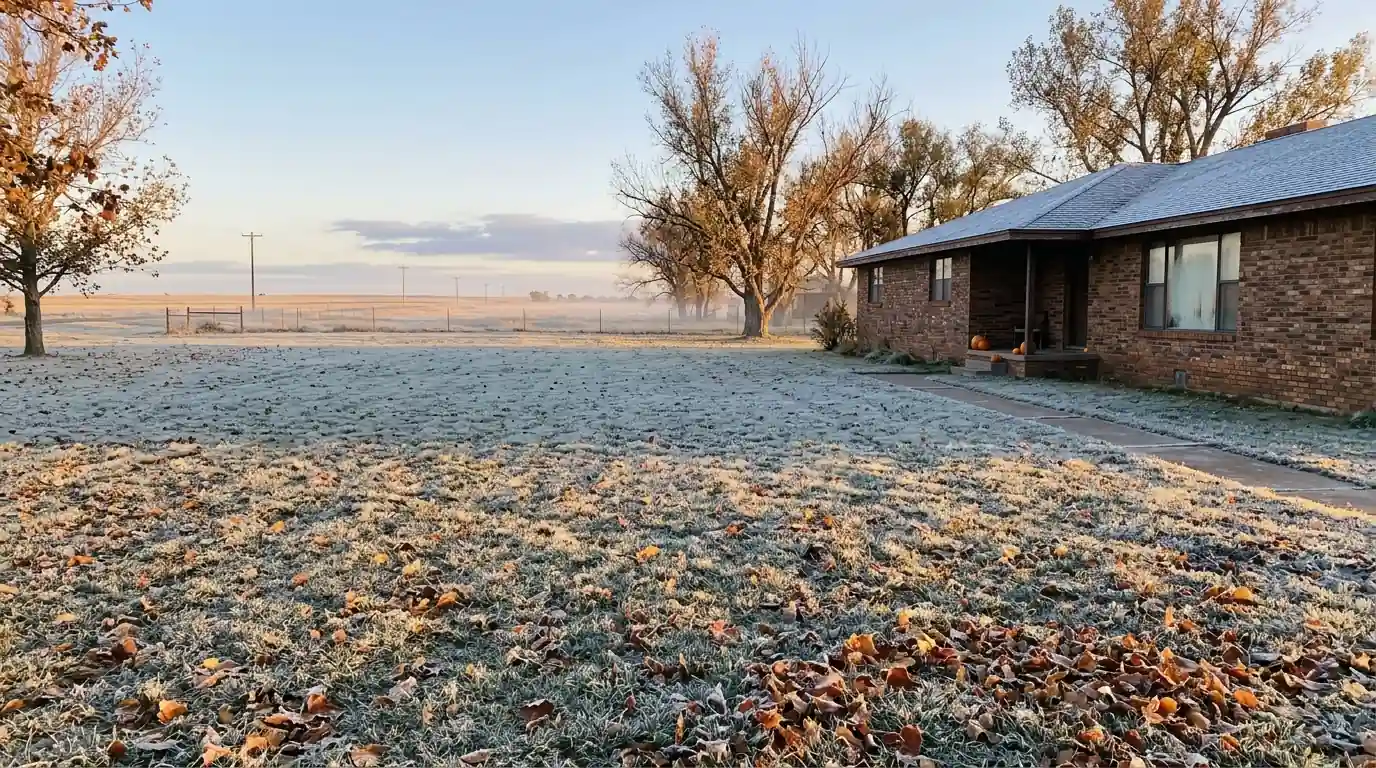
Mouse-proofing your home before the first freeze
In Amarillo the first fall freeze usually arrives around October 20, and a cold front can drop temperatures 50 or 60 degrees in half a day.
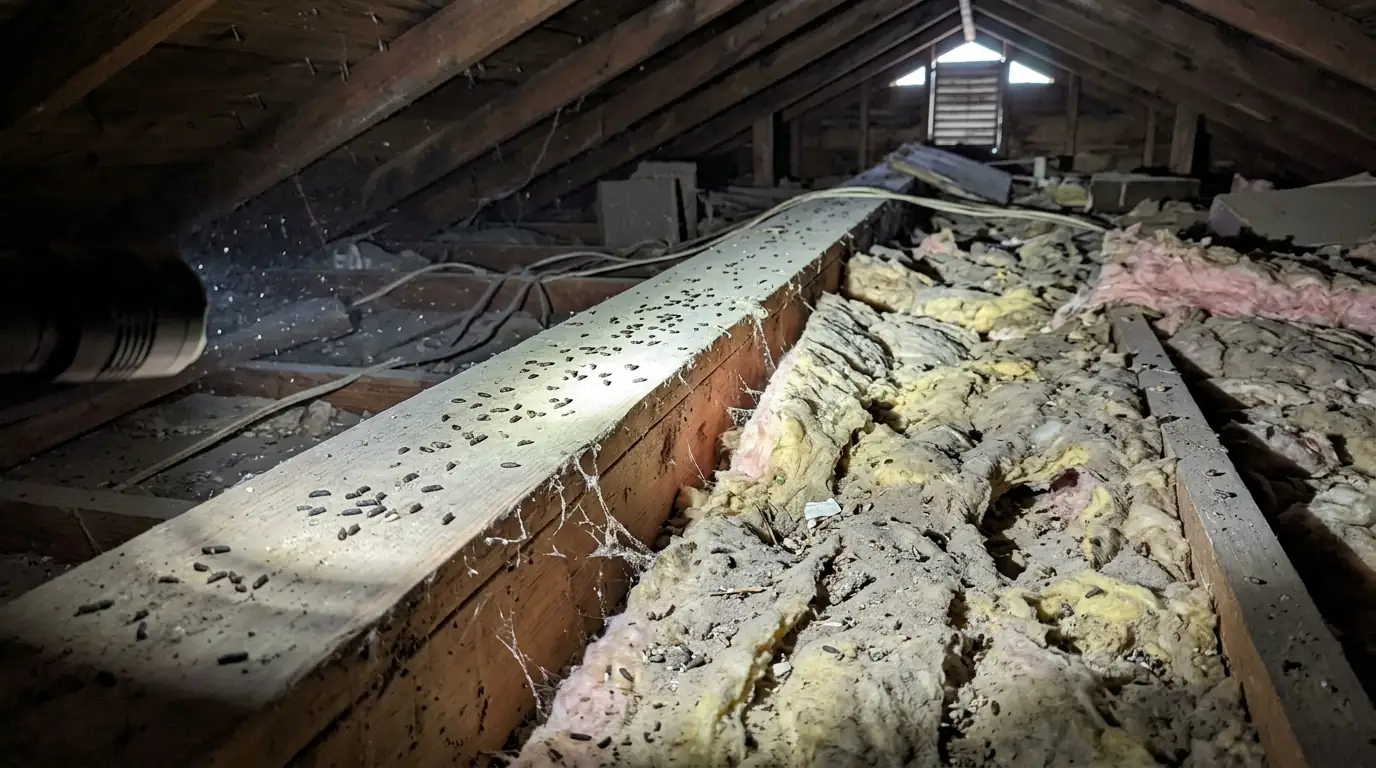
Signs your attic insulation needs replacing after rodents
Once the scratching overhead stops, it is tempting to close the attic hatch and forget about it.
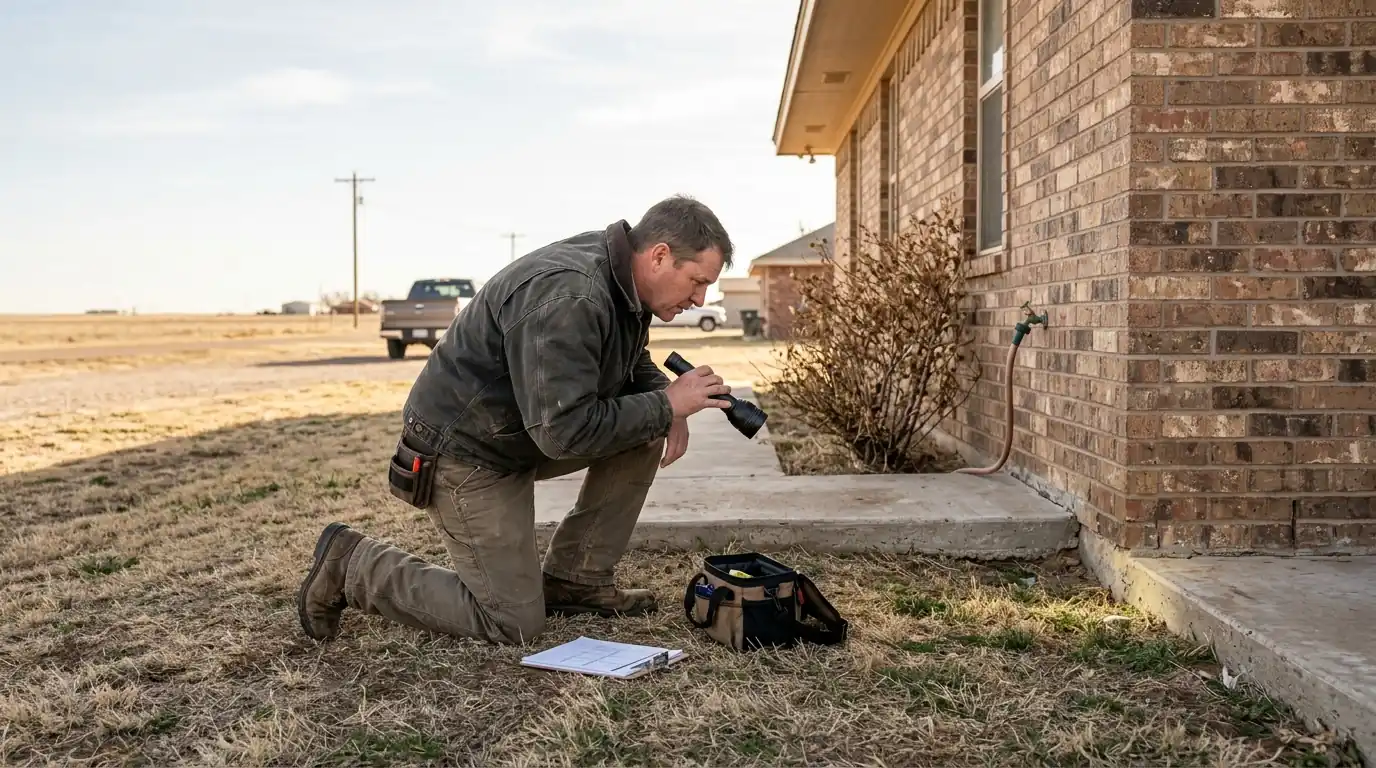
The Texas WDI report when buying or selling a home
If you're buying or selling a house in Amarillo or Canyon, someone will probably mention a WDI report, often called a termite letter.
Call the Pestcon office in Amarillo
- Phone
- (806) 552-3060
- Hours
- Open 24 hours, 7 days a week
- Office
- 231 Lamount Dr, Amarillo, TX 79110
- Coverage
- Amarillo, Canyon and Panhandle towns out to about 60 miles
Our office is on Lamount Dr in south Amarillo, near Hollywood Rd (Loop 335).