Apartment and rental pest control in Amarillo
When roaches or bed bugs show up in one unit, the units on either side are usually next.We work with Amarillo landlords and property managers to treat unit by unit, coordinate tenant prep and keep records for every door, from duplexes to large complexes.
How do you handle pest control in an Amarillo apartment complex or rental?
In an Amarillo apartment or rental, pest control works best unit by unit: inspect the reported unit and the ones sharing its walls, treat with baits and targeted methods, and follow up until the activity stops. We give tenants clear prep sheets, schedule around access notices and keep a per-unit record so managers can see what was done.
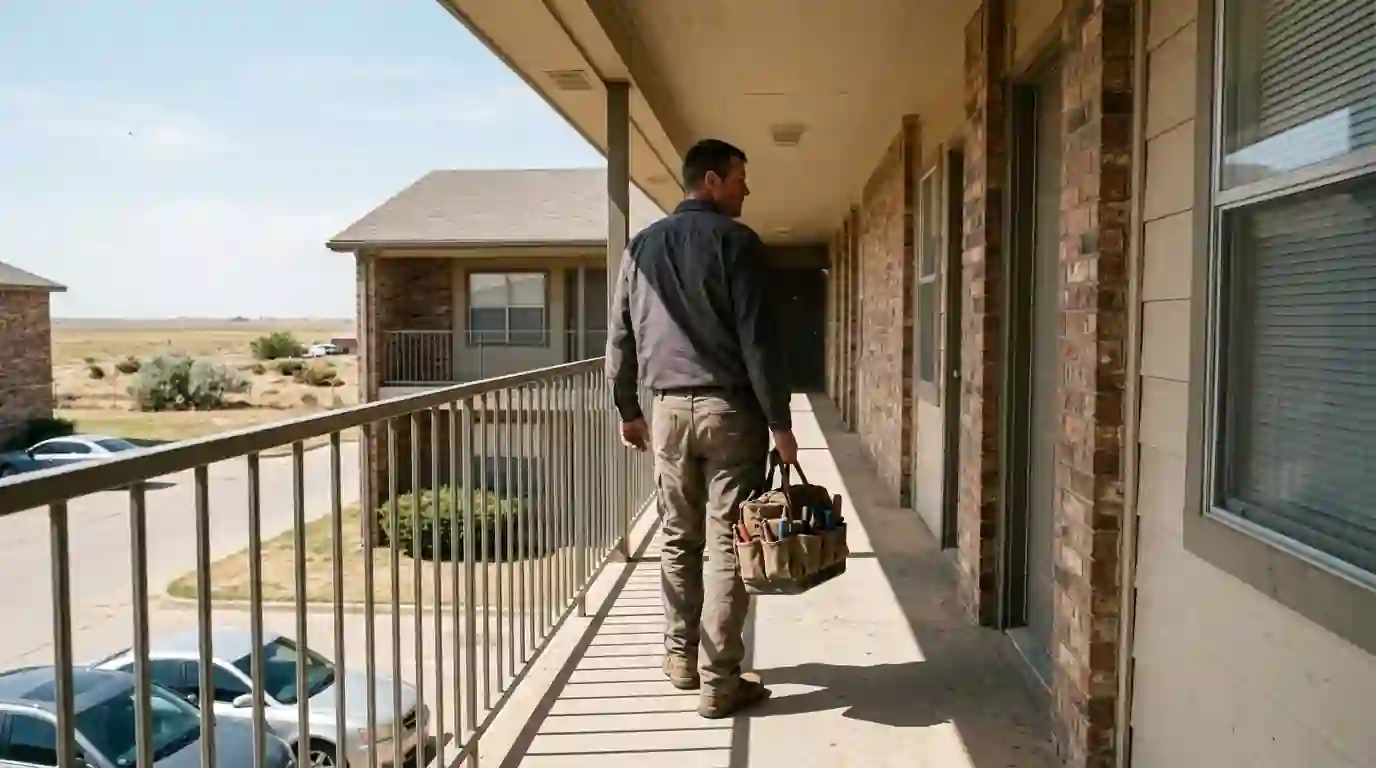
Why one unit's pests become the whole building's problem
Apartments share walls, plumbing chases, attic space and sometimes ductwork. German cockroaches travel along pipes from one kitchen to the next, and bed bugs move through outlets, baseboards and hallway carpet. Treating only the unit that complained often pushes pests sideways into the neighbors, and then the call comes from next door a month later.
That is why we inspect beyond the reported unit. For roaches, we check the apartments that share a wall with it, and the ones overhead and underneath when we can get in. For bed bugs, we look at adjoining bedrooms and shared laundry. It takes a little longer on the first visit, but it stops the cycle of retreating the same stack of units every few months.
Turnover is the other weak spot. A vacant unit between tenants is the easiest time to inspect, treat and seal gaps around plumbing, before new furniture and boxes move in. Many managers have us look at every unit on turnover so problems are caught before the next lease starts, while cabinets are empty and every baseboard is easy to reach.
Signs that pests are spreading between units
These patterns tell a manager the problem is building-wide, not just one tenant.
Complaints from neighboring doors
Two or three roach reports in the same stack or hallway within a few weeks usually point to a shared source.
Roaches in a clean unit
German cockroaches in a well-kept unit often come from the unit next door through plumbing gaps under the sink.
Bites after a move-in
Tenants reporting bites shortly after someone moves in nearby, or after bringing home used furniture, often means bed bugs.
Spotting on mattress seams
Dark specks, shed skins and tiny eggs along mattress seams and box spring edges are bed bug signs we look for first.
Droppings in shared spaces
Mouse droppings in laundry rooms, storage closets or the maintenance room mean rodents are traveling the building.
Furniture left at the dumpster
Mattresses and couches set out by the dumpster can spread bed bugs to anyone who picks them up.
How we treat a rental unit by unit
Here is how a typical roach or bed bug job runs for a property manager.
Get the unit list and notices sorted
The manager gives us the reported units and the ones next to them, and handles entry notices to tenants. We agree on a day and time so we can get into every unit on the list.
Send tenant prep instructions
Each tenant gets a plain prep sheet for their pest. Roach prep is light; bed bug prep involves bagging and laundering bedding and clothes.
Inspect and treat each unit
The technician inspects kitchens, bathrooms and bedrooms, then treats with gel baits and growth regulators for roaches or targeted treatment for bed bugs at seams, frames and baseboards. Gaps around pipes under sinks are noted or sealed.
Record findings per unit
Each unit gets its own record: activity level, what was applied, prep compliance and repairs needed. Managers can see at a glance which units are clear and which need more work.
Follow up on schedule
Bed bugs usually need a follow-up about 10 days later to catch newly hatched bugs. Roach units are rechecked until the bait is no longer being taken and no live roaches turn up.
Need apartment pest control in Amarillo?
Call and tell us what you are seeing. The line is answered 24 hours a day, every day.
Tenant prep before a roach or bed bug visit
Good prep is the difference between one treatment and three, so share these with tenants.
- Roaches: clear items out from under the kitchen and bathroom sinks.
- Roaches: wipe up grease and crumbs, but skip spraying store-bought products, which can repel roaches from the bait.
- Bed bugs: wash and dry bedding and clothes on high heat, then keep them in sealed bags.
- Bed bugs: pull beds and couches a foot away from walls and clear clutter under beds.
- Bed bugs: do not move furniture or belongings into another unit or a friend's home.
- Everyone: put pets in a carrier or another room and cover fish tanks.
- Everyone: tell the manager about leaks, gaps under doors or broken screens.
What Amarillo rental properties run into
Amarillo rentals range from older brick duplexes and fourplexes near the center of town to larger complexes along the main corridors and newer townhomes on the southwest side. Older buildings tend to have more plumbing gaps and settled baseboards, which give German cockroaches more room to move between units. Newer complexes have tighter construction but more turnover, which brings in roaches and bed bugs in boxes and furniture.
Panhandle weather adds its own pattern. Hot, dry summers drive roaches and rodents toward water, a pattern Texas A&M AgriLife has described, so a ground-floor unit with a leaking water heater or a dripping AC line becomes a target in summer. When fall cold fronts drop temperatures sharply, mice move into ground-floor units, laundry rooms and storage closets, especially near open fields at the edge of town.
We also see crickets and scorpions in ground-floor units on the south and southwest edges of the city, where complexes back up to open land. Treating the building perimeter and weep holes protects every ground-floor unit at once. Crickets swarm in August and September, and scorpions hunt them right up to the patio doors, so we schedule that exterior work before late summer on properties that border pasture.
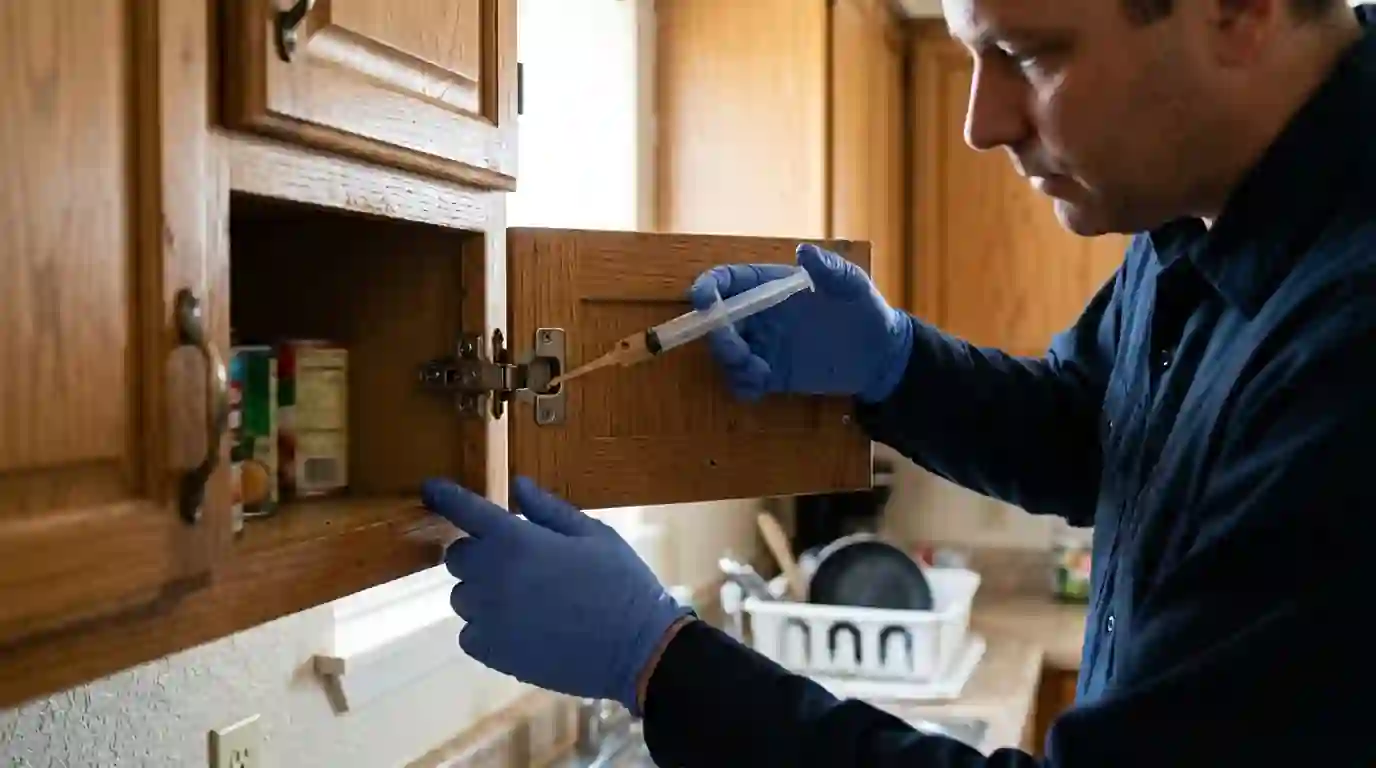
What changes the cost of apartment pest control in Amarillo
Rental pricing depends on how many units are involved and what the pest is.
- Number of units treated
- One unit plus its neighbors costs less than a full building, but treating neighbors often saves money over repeat calls.
- Type of pest
- German cockroaches and bed bugs need more time and follow-ups than general insects. Bed bugs can also call for heat treatment in heavy cases.
- Level of infestation
- Units with heavy activity need more product and more return visits.
- Tenant prep and access
- Units that are not prepped or cannot be entered on the scheduled day add return trips.
- Ongoing service or one-time
- Monthly or quarterly service for the whole property, including turnovers, is priced differently from a single job.
We quote after an inspection of the affected units, or by phone once we know the unit count and the pest.
Who handles what in a rental pest job
Clear roles keep a multi-unit job on schedule.
| Task | Who usually handles it |
|---|---|
| Entry notices and unit access | Property manager or landlord |
| Prep sheets for each unit | We supply them; manager passes them to tenants |
| Bagging, laundering, clearing under sinks | Tenant |
| Inspection, treatment and follow-up | Our technician |
| Sealing small pipe gaps found on the visit | Our technician, or maintenance for larger repairs |
| Per-unit records and recommendations | We provide them to the manager |
Product lines a technician may choose from, matched to the pest, the room and who lives there:
Where we handle apartment pest control
Neighborhoods and towns we cover most often, with ZIP codes. The rest of Amarillo and the towns in our service area are covered too.
- City View79118
- Puckett79109
- Ridgecrest79109
- Sleepy Hollow79121
- Hollywood-Scotsman79110
- Windsor79109
- Belmar79106
- The Greenways79119
- Heritage Hills79119
- South Georgia Place79110
- Wolflin79109
- Eastridge79107
- Canyon79015
- Hereford79045
- Pampa79065
- Dumas79029
- Borger79007
- Bushland79012
Apartment Pest Control questions from Amarillo homeowners
Should I treat neighboring apartments when one Amarillo unit has roaches?
Usually yes. German cockroaches move between units through plumbing chases, wall voids and gaps under sinks, so treating one kitchen often pushes them next door. Covering the next-door kitchens too, plus the stacked units when we can reach them, stops the problem from bouncing back. It costs a little more up front and usually far less than repeat calls.
How do you treat bed bugs in an Amarillo apartment building?
We inspect the reported unit and any units sharing walls, then treat mattress seams, bed frames, furniture joints and baseboards. Tenants bag and launder bedding and clothes before the visit. A follow-up about 10 days later catches bugs that hatched from eggs. Heavy infestations may be better handled with heat treatment, which we can explain on the inspection.
Can you treat rental units between tenants in Amarillo?
Yes, and it is the easiest time to do it. An empty unit lets the technician reach every cabinet, baseboard and plumbing gap without furniture in the way. We inspect for roaches, bed bugs and rodent signs, treat as needed and note gaps for maintenance. Starting a new lease with a clean unit avoids early complaints.
Who pays for pest control in an Amarillo rental property?
That depends on the lease and the situation, so we leave it to the landlord and tenant to settle. What we can do is document what we find: the pest, how widespread it is, prep compliance and likely sources such as shared plumbing. Those per-unit records help managers make fair decisions and show that the problem was handled.