Dead animal removal and odor cleanup in Amarillo
A sweet, rotten smell that gets worse every day usually means an animal died in a wall, attic or crawlspace.We answer 24/7, find the source, remove it, treat the odor and show you how the animal got in.
How do you find and remove a dead animal smell in an Amarillo house?
To get rid of a dead animal smell, the carcass has to be found and removed; air fresheners only cover it. Our technician traces the odor and flies to the strongest spot, opens the smallest access needed, removes the animal and soiled material, sanitizes and deodorizes the area, then finds and points out the gap it used to get in.
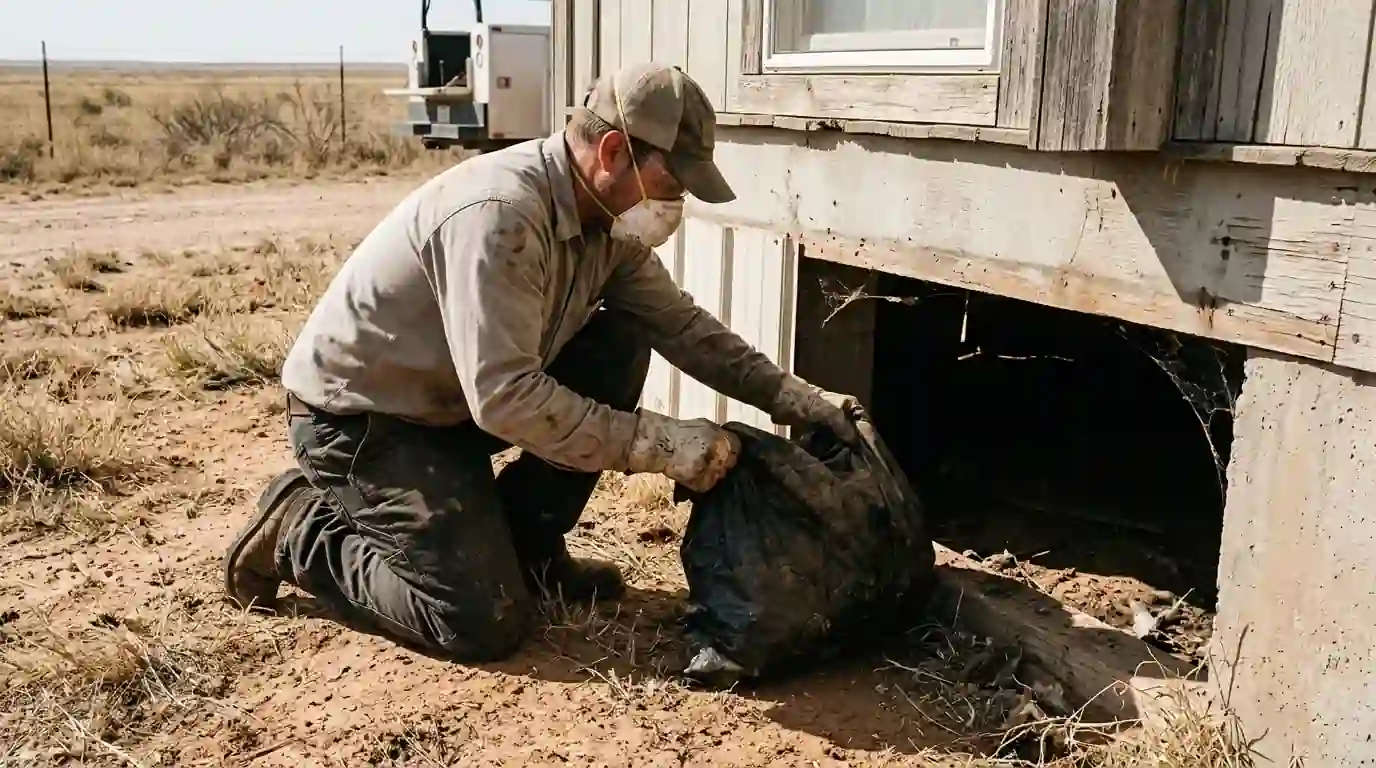
Signs an animal has died inside your home
The odor is usually first, but other clues help pinpoint where the animal is.
A smell that builds
A sickly sweet, rotten odor that starts faint and gets stronger over several days, often worse in the afternoon heat.
Flies in one room
Large blowflies gathering at a window, light fixture or ceiling vent in a room where nothing else explains them.
Stains on the ceiling or wall
A damp, yellow or brown spot spreading on drywall, sometimes with a greasy look.
Sudden quiet after noise
Scratching or scurrying in the walls or attic that stopped a few days before the smell began.
Recent rodent treatment
Rodents that ate bait outside can crawl into a wall or attic before dying.
Pets sniffing one spot
A dog or cat that keeps nosing at a baseboard, vent or closet corner.
Why the smell will not just go away on its own
A small animal like a mouse may stop smelling in a week or two once it dries out. A rat, squirrel, bird or anything larger can take far longer, and the odor and fluids soak into insulation, drywall and wood framing as it breaks down. Flies lay eggs on the carcass, and maggots or a wave of adult flies can turn up indoors a week later. Amarillo summer heat in an attic speeds all of that up.
Air fresheners, candles and odor sprays only mask the smell for a few hours. Until the source and the soaked material come out, the odor keeps returning, especially on warm days. Removing it also takes away food for carpet beetles and other scavenging insects that can move from a dead animal into the house.
How our technician finds and removes a dead animal
Finding the animal is most of the work, and we try to open as little as possible.
Trace the odor
Our technician moves room to room and up into the attic or down into the crawlspace, following the smell to its strongest point. Flies, stains and recent noise help narrow it down.
Check likely spots first
We look in the places animals most often die: along attic eaves, inside wall voids near entry points, under bathtubs, behind appliances, in crawlspaces and inside ductwork near vents.
Open the smallest access needed
If the animal is inside a wall, we cut a small, neat opening at the most likely point, after talking with you about where. Often we can reach it from the attic or crawlspace instead.
Remove the animal and soiled material
The carcass is bagged and removed along with stained insulation, nesting material and maggots. We wear protective gear, since dead animals can carry bacteria and parasites.
Sanitize and deodorize
The area is cleaned and treated with a disinfectant and an odor neutralizer that breaks down the smell rather than covering it.
Find how it got in
We look for the gap the animal used, such as a weep hole, vent or soffit opening, and recommend sealing so the next one cannot follow.
Need dead animal removal in Amarillo?
Call and tell us what you are seeing. The line is answered 24 hours a day, every day.
Where animals die in Amarillo homes, and when
Most dead animal calls in Amarillo trace back to mice, rats, squirrels, birds and sometimes skunks or raccoons. Mice push into homes as nights turn cold around the average first freeze in late October, and some die in wall voids after eating bait outside. Squirrels in the older tree-lined neighborhoods and birds in vents and soffits make up much of the spring and summer work.
Brick ranch homes on slabs give animals wall cavities behind the brick veneer, reached through open weep holes, and attics reached through soffit and vent gaps. Older homes from the 1920s to 1940s often sit on pier-and-beam foundations with crawlspaces, where skunks, rats and stray cats can crawl under and die out of sight. Summer attic heat here makes odor build fast, so a smell noticed in July usually needs attention sooner than one in January.
Outdoor carcasses count too. A dead skunk under a shed or a bird in a gutter can carry odor into the house through vents and crawlspace openings.
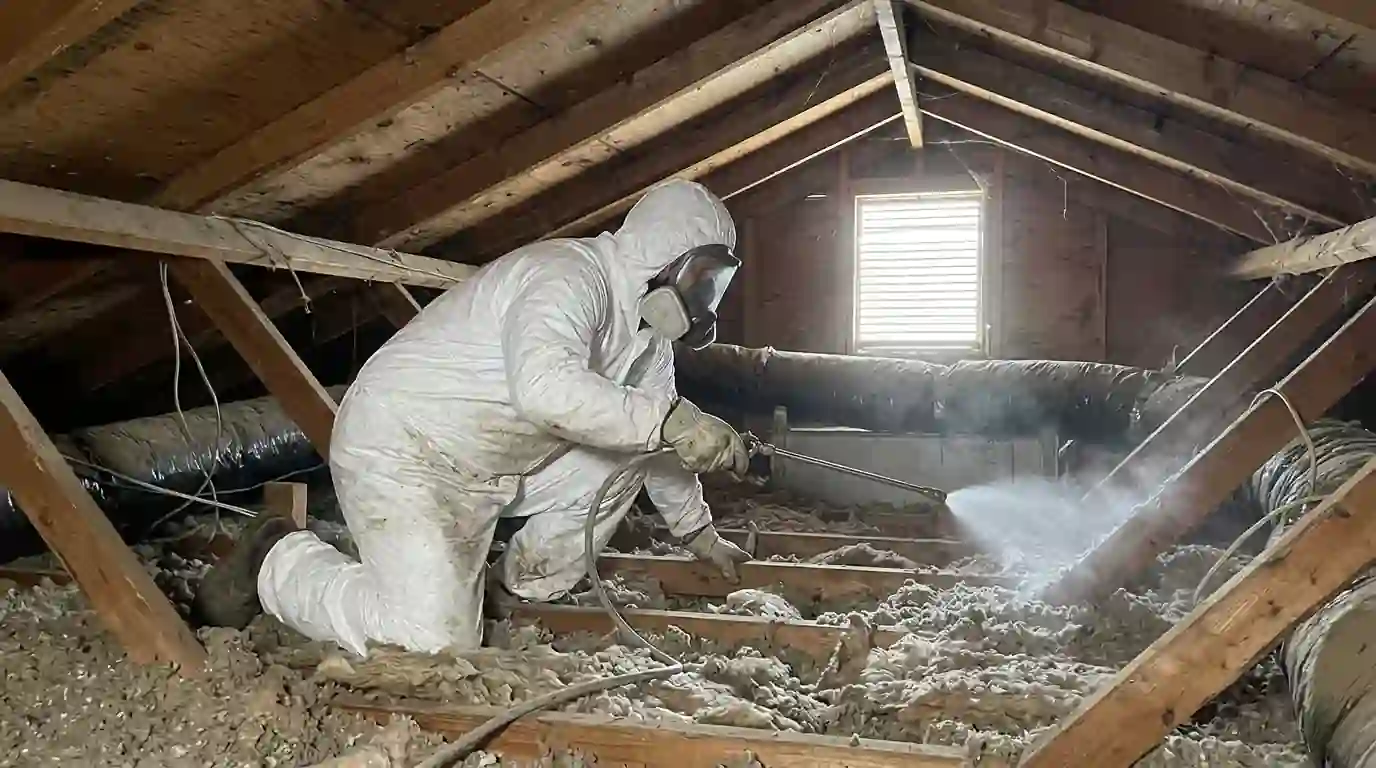
What you can do until we arrive
These steps cut down on odor and keep your household safe in the meantime.
- Close the door to the room where the smell is strongest and open a window if weather allows.
- Keep pets out of the area so they do not dig at the wall or reach the carcass.
- Do not handle a dead animal with bare hands; wear gloves and use a bag if it is in the open.
- Kill flies with a swatter or fly trap rather than spraying near food areas.
- Note when the smell started and any noises you heard before it, since that helps us narrow the search.
- Do not seal suspected entry holes yet; we need to see them to confirm where the animal came from.
What changes the cost of dead animal removal in Amarillo
The biggest variables are how hard the animal is to find and reach.
- Location of the animal
- A carcass in the open in a crawlspace is quicker than one deep in a wall void or under a tub.
- Wall or ceiling openings
- Cutting and patching an access opening adds time compared with reaching it from the attic.
- Size of the animal
- A mouse needs less cleanup than a raccoon, skunk or several animals together.
- Amount of soiled material
- Stained insulation and soaked wood need more removal and treatment.
- Exclusion afterward
- Sealing the entry point is an added step that stops the next animal from getting in.
We quote over the phone once we know where the smell is and how long it has been there, or after a look on site.
Product lines a technician may choose from, matched to the pest, the room and who lives there:
Where we handle dead animal removal
Neighborhoods and towns we cover most often, with ZIP codes. The rest of Amarillo and the towns in our service area are covered too.
- City View79118
- Puckett79109
- Ridgecrest79109
- Sleepy Hollow79121
- Hollywood-Scotsman79110
- Windsor79109
- Belmar79106
- The Greenways79119
- Heritage Hills79119
- South Georgia Place79110
- Wolflin79109
- Eastridge79107
- Canyon79015
- Hereford79045
- Pampa79065
- Dumas79029
- Borger79007
- Bushland79012
Dead Animal Removal questions from Amarillo homeowners
How long does a dead mouse smell last in an Amarillo wall?
A single dead mouse may smell for one to two weeks before it dries out, often less in cool weather and longer in summer heat. Larger animals like rats and squirrels can smell for weeks. If the odor is strong or spreading, or flies are showing up, dead animal removal and deodorizing is usually faster than waiting.
Will you have to cut into my wall to remove a dead animal?
Not always. Our technician first tries to reach the animal from the attic, crawlspace, a vent or an appliance space. If the carcass is sealed inside a wall void, we cut a small, neat opening at the most likely spot after talking with you about it, and tell you what patching will be needed.
Can a dead animal in the attic make my family sick?
It can carry bacteria and parasites, and the flies it draws can spread them. The bigger day-to-day issue is the odor and flies coming into living spaces. Avoid handling the carcass and keep pets away. During dead animal removal we bag the carcass, take out soiled material and sanitize the area.
Why do I smell a dead animal after rodent baiting in Amarillo?
A rodent that eats bait can crawl into a wall, attic or under a floor before it dies, especially if it lives inside the house. That is one reason we rely on traps inside living spaces and bait stations outside. If you notice an odor after a rodent treatment, call us and we will trace and remove the source.
How do you get rid of dead animal odor once it is removed?
Removing the carcass and the soaked material solves most of the problem. After that, our technician sanitizes the area and applies an odor neutralizer that breaks down the smell rather than masking it. Airing the room out helps too. A faint smell may linger a few days in hot weather, then fade.