Termite bait stations for Amarillo homes
Termite bait stations sit in the soil around your house and quietly intercept foraging termites before they reach the foundation.We install the stations, check them on a set schedule and add bait when termites show up, so the colony is targeted without trenching or drilling.
Do termite bait stations work in Amarillo?
Yes, termite bait stations work well against the native subterranean termites found around Amarillo. Stations go into the soil every several feet around the house. Termites foraging underground find them, feed on the bait and share it through the colony, which slowly declines. The key is regular monitoring visits, so bait is in place when termites arrive.
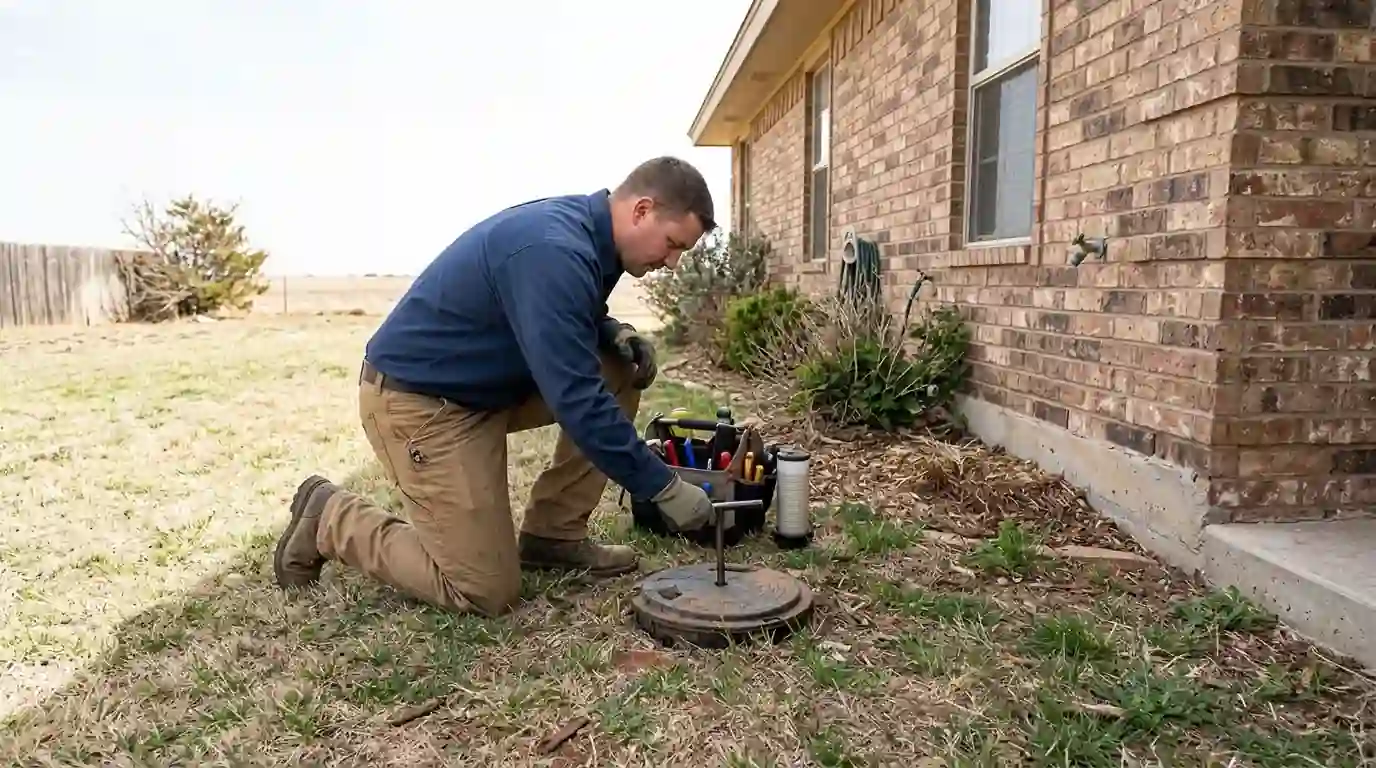
How a termite bait station actually works
Subterranean termites forage through the soil in a wide pattern, tunneling in every direction looking for wood and other cellulose. A bait station is a plastic cylinder set flush with the ground, with slots in the sides so termites can enter. Inside is either a monitoring piece of wood or a cartridge of bait made from cellulose mixed with a slow-acting growth inhibitor.
When termites find the station, they feed and haul the bait home, sharing it mouth to mouth with nestmates. The active ingredient keeps termites from molting properly, so they die over weeks rather than right away. Because it works slowly, foragers keep feeding and keep recruiting others, which spreads the bait through the colony instead of just killing a few workers at the edge.
Systems differ. Some start with monitoring wood and switch to bait once termites are found; others hold bait from day one. Sentricon is one well-known example. Either way, a station only works if termites find it and the bait is fresh, which is why monitoring visits are part of the service, not an extra.
Installing and servicing bait stations
Here is what happens from installation through the regular checks.
Inspect and plan station spots
The technician inspects the house for activity and moisture problems, then maps station locations around the perimeter. Spots near past activity, downspouts, AC drains and damp areas get priority.
Install stations in the soil
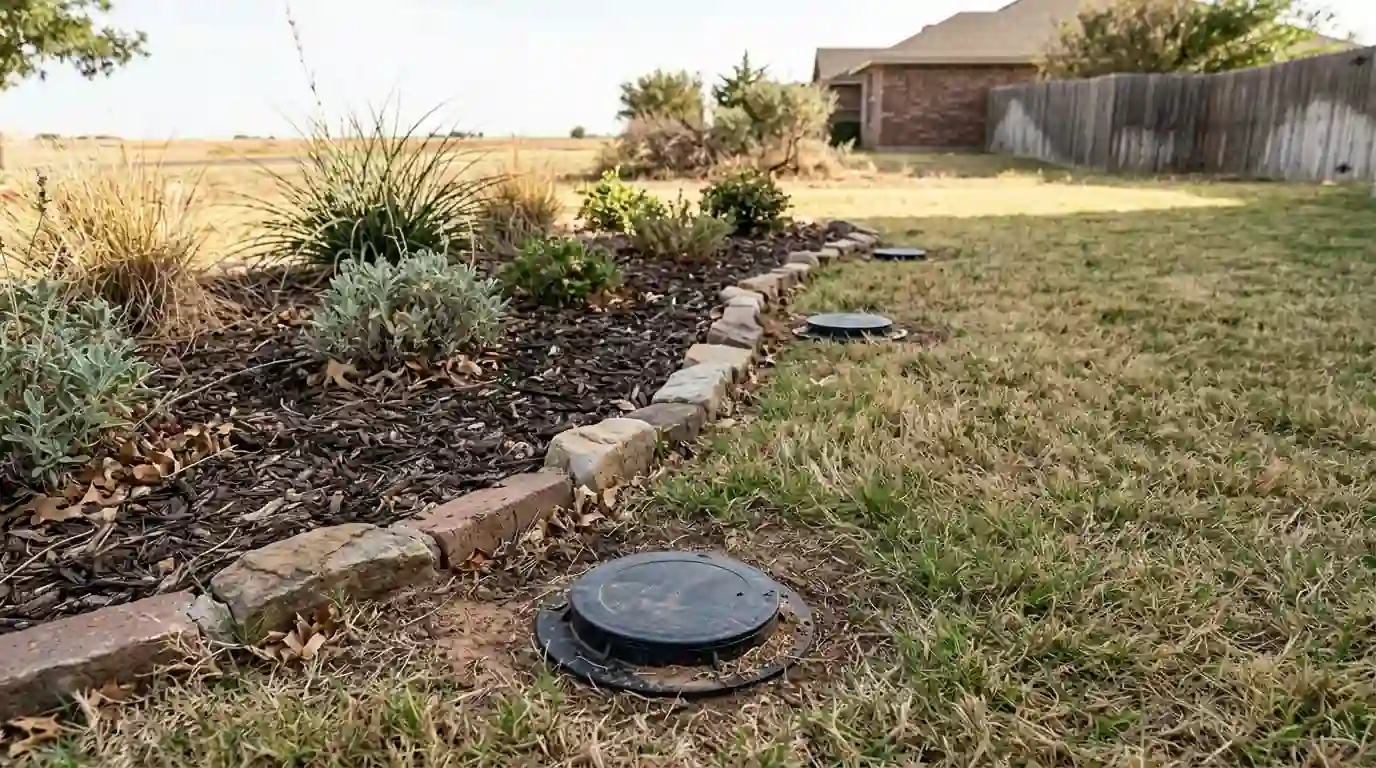
Stations go into the ground a couple of feet out from the foundation, usually every several feet, with closer spacing where termites are likely. Each one sits flush with the soil so it does not catch a mower.
Number and record each station
Every station is numbered on a diagram of the property. That record shows which stations had activity and when, so the technician can see patterns over time.
Check stations on schedule
On each monitoring visit, the technician opens every station, looks for termites, feeding or damage, and replaces worn monitors or bait. Stations knocked loose by mowing or wind are reset.
Add bait where termites appear
When termites are found, bait goes in or gets topped up, and nearby stations are checked closely. Once feeding stops and the activity is gone, regular monitoring continues.
When bait stations are the better choice
Baiting fits some Amarillo homes better than a liquid barrier.
Lots of concrete around the house
Homes with patios, sidewalks and driveways along most of the foundation would need heavy drilling for a liquid treatment.
You want to avoid drilling
Some homeowners do not want holes drilled through finished flooring, decorative concrete or stone patios.
Wells or water near the house
Properties with a private well, a pond or a playa close to the foundation may favor a method that does not saturate the soil.
You want ongoing monitoring
Regular station checks give an early warning system and a record of activity over the years.
After a liquid treatment
Some owners add stations after a liquid treatment as a second line of defense.
Hard-to-trench landscaping
Mature shrub beds, rock gardens and edging along the foundation can make trenching difficult.
Need termite bait stations in Amarillo?
Call and tell us what you are seeing. The line is answered 24 hours a day, every day.
Bait stations in Panhandle soil and weather
Across the Panhandle, native subterranean termites forage hardest when the soil is warm and damp. The bulk of Amarillo's yearly rain, roughly three quarters of it, falls from spring storms through late summer, and termites forage hardest in those months. Swarms here usually come in April and May. Stations installed before spring give termites the whole active season to find them.
Clay-heavy soil stays wet near the surface after storms, and termites follow that moisture. Spots where downspouts empty, AC condensate lines drip or sprinklers overspray are common places for stations to light up first. We place stations with that in mind, rather than spacing them evenly regardless of what the yard is doing.
Wind and dry spells matter too. Gusts over 50 miles an hour, common in winter and spring, can blow soil away from stations or pile debris on top of them, and long dry stretches can push termites deeper. Regular checks catch stations that need resetting and confirm the bait is still in good shape.
What the technician looks for at each station
A quick look tells a lot about termite activity near the house.
| What is found | What it means | What we do |
|---|---|---|
| Clean monitor, no feeding | No termites at that spot yet | Leave in place, check again next visit |
| Mud or soil packed inside | Termites have been exploring | Check closely, consider adding bait |
| Live termites in the station | Active foraging next to the house | Add or top up bait, check nearby stations |
| Bait partly eaten, no termites | Colony may be declining | Replace bait and keep monitoring |
| Station displaced or damaged | Mower, wind or digging moved it | Reset or replace the station |
What changes the cost of termite bait stations in Amarillo
You pay for the install and for the monitoring that follows, so both shape the price.
- Size of the perimeter
- A longer foundation needs more stations to cover it.
- Station spacing
- Homes with past activity or lots of moisture may need closer spacing in some areas.
- Monitoring frequency
- How often the stations are checked affects the ongoing cost.
- Active termites at install
- An active infestation can mean more bait and more frequent checks at first, sometimes with localized treatment inside.
- Outbuildings
- Detached garages or shops can be added to the station layout.
We quote bait stations after an inspection, once we measure the perimeter and see where termites are likely.
How to take care of bait stations in your yard
Stations work best when they stay in place and termites can reach them.
- Mow and trim carefully around the station caps.
- Do not pull, move or open stations between visits.
- Tell us if you add a patio, flowerbed or sprinkler line near a station.
- Keep mulch and rock from piling over station caps.
- Keep moisture away from the foundation itself by fixing leaks and extending downspouts.
- Call if a station gets broken or you see swarmers in spring.
Product lines a technician may choose from, matched to the pest, the room and who lives there:
Where we handle termite bait stations
Neighborhoods and towns we cover most often, with ZIP codes. The rest of Amarillo and the towns in our service area are covered too.
- City View79118
- Puckett79109
- Ridgecrest79109
- Sleepy Hollow79121
- Hollywood-Scotsman79110
- Windsor79109
- Belmar79106
- The Greenways79119
- Heritage Hills79119
- South Georgia Place79110
- Wolflin79109
- Eastridge79107
- Canyon79015
- Hereford79045
- Pampa79065
- Dumas79029
- Borger79007
- Bushland79012
Termite Bait Stations questions from Amarillo homeowners
How long do termite bait stations take to work in Amarillo?
Termites have to find the station first, which can take weeks to months depending on where they are foraging and the time of year. Once they start feeding, the colony declines over several weeks to months as the bait spreads. Baiting is slower than a liquid treatment, which is why it pairs well with monitoring and works best when stations go in before the spring foraging season.
How often are termite bait stations checked?
Stations are checked on a regular schedule set when they are installed, often several times a year and more often while termites are active. Each visit, the technician opens every station, records what is inside, replaces worn monitors or bait and resets any that moved. That record shows where and when termites have been active around the house.
Can I put in my own termite bait stations from a hardware store?
You can buy stations, but most store versions only monitor and do not hold the same kind of colony-killing bait. Without regular checks, termites can come and go without anyone noticing. Professional systems are installed on a planned layout, checked on a schedule and baited when termites show up, which is what makes them work.
Are termite bait stations safe around kids and pets in Amarillo yards?
The bait sits inside sealed, locked stations set flush with the ground, so kids and pets do not reach it during normal play. The amount of active ingredient is small and targeted at termites. We place stations with your yard use in mind and explain what is inside, and we ask that nobody pull or open them between visits.