Commercial pest control for Amarillo businesses
A mouse in a stockroom, roaches in a break room or birds over a loading dock can cost a business customers and a clean inspection.We set up scheduled service for Amarillo offices, shops, warehouses, feed businesses, churches and schools, with records you can show anyone who asks.
How does commercial pest control work for a business in Amarillo?
Commercial pest control in Amarillo starts with an inspection of the building and its daily routines, then a written plan: monitoring devices placed and mapped, treatment where pests live, and scheduled visits that fit your hours. Every visit is logged with findings, products used and repairs needed, so you have documentation ready for managers, auditors or inspectors.
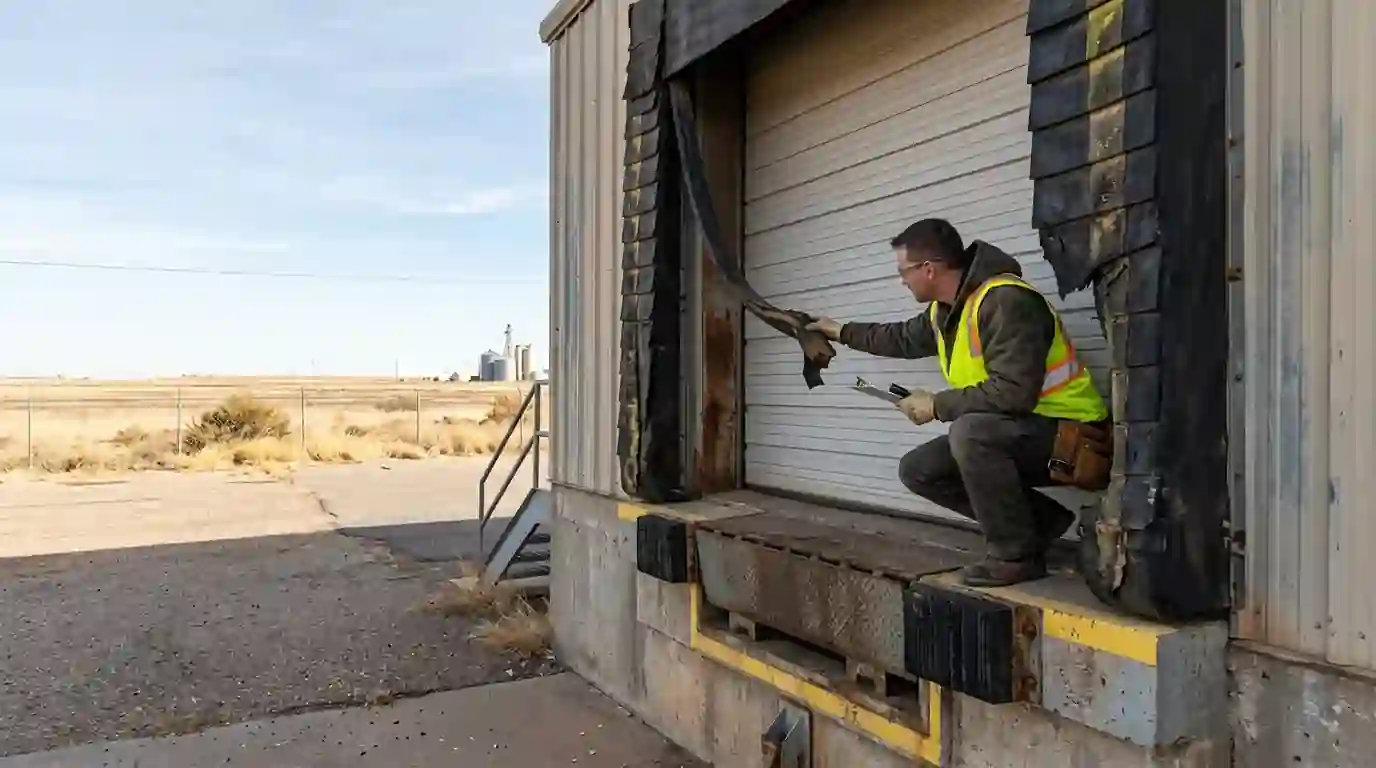
What a commercial account looks like from the first walk-through
Before anything is treated, the technician walks the building with whoever knows it best, often the manager, custodian or facilities lead. We look at doors that stay propped open, where the dumpster sits, how deliveries come in, where staff eat, and where water collects. Those daily routines decide where pests show up more than the building itself does, so we ask a lot of questions on that first visit.
From the walk-through we draw up a service plan: which rooms get monitored, where rodent stations go outside, what gets treated on each visit and how often we come. A small office might need a visit every month or two, while a warehouse or feed store with grain on hand usually needs more frequent checks. The plan is written in plain language so anyone on your staff can read it and know what to expect.
Problems we find most in Amarillo commercial buildings
These are the issues that usually prompt a business to call.
Rodent droppings in storage
Mice in back rooms and supply closets, and Norway rats burrowing near loading areas, especially where feed, grain or seed is stored.
Roaches in break rooms
German cockroaches ride in on boxes and lunch bags, then settle behind refrigerators, coffee makers and vending machines.
Birds at docks and signs
Pigeons, house sparrows and starlings nesting on ledges, signs and dock canopies leave droppings right at the entrance.
Insects in stored product
Indian meal moths and sawtoothed grain beetles in feed, seed, pet food or pantry stock, often spotted as webbing or small moths near shelving.
Spiders and crickets at entries
Glass storefronts and bright entry lights draw insects at night, and spiders follow them inside.
Wasps at doorways
Paper wasps nesting in door frames, awnings and playground equipment, which matters most at schools and churches.
How we service a commercial account
Each scheduled visit follows the same order so the log reads the same way every time.
Check in and read the log
The technician checks in with your contact and reads the sighting log for anything staff reported since the last visit. Reported sightings get inspected first.
Inspect and service the monitors
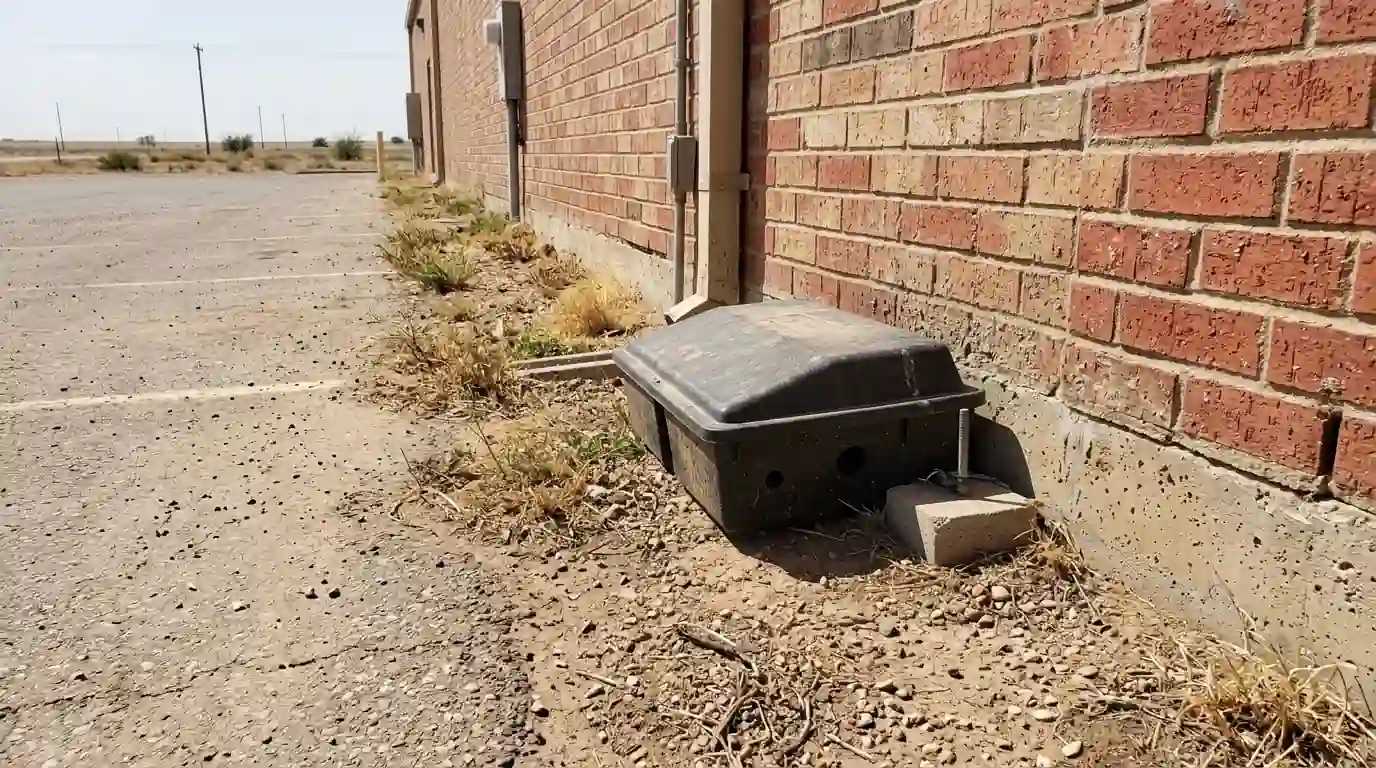
Interior glue boards and traps and exterior rodent stations are checked, counted and refreshed. Each device has a number on the site map, so activity can be tracked by location over time.
Treat where activity is found
Baits, crack and crevice treatment and exterior perimeter work go where the monitors and inspection point. In food areas and sensitive rooms, we lean on baits, traps and exclusion rather than spraying.
Write up sanitation and repair items
Door gaps, worn sweeps, standing water, spilled feed and clutter get written up with a location so maintenance knows exactly what to fix.
Leave a written service report
The report lists what was found, what was applied and where, and what we recommend. It goes into your logbook, so you build a running record visit after visit.
Need commercial pest control in Amarillo?
Call and tell us what you are seeing. The line is answered 24 hours a day, every day.
What different Amarillo businesses usually need
The plan changes with the type of building and how it is used.
| Business type | Common pressure | What the plan leans on |
|---|---|---|
| Offices | Ants, spiders, break room roaches | Interior baiting, entry treatment, staff sighting log |
| Retail stores | Mice in stockrooms, insects at entries | Rodent monitors, door sweeps, lighting advice |
| Warehouses | Mice, Norway rats, birds | Exterior stations, dock door seals, bird deterrents |
| Grain and feed businesses | Rats, mice, stored product insects | Frequent station checks, spill notes, pheromone traps |
| Churches | Mice in kitchens, wasps, spiders | Kitchen monitoring, eave work, visits around service times |
| Schools | Wasps, mice, ants, roaches | After-hours service, playground checks, careful bait placement |
Why grain, feed and wind shape commercial pest work here
Amarillo sits in wheat and cattle country, with grain elevators across the region and feedyards around Hereford. Anywhere grain or feed is stored, rodents follow. Norway rats dig in beneath slabs and outbuildings and turn up often around feed stores and chicken coops, and a mouse can slip through a quarter-inch crack. A farm supply or feed business here needs far more exterior rodent work than an office building downtown.
The wind adds its own trouble. Winter and spring wind here regularly gusts past 50 miles an hour, and it pile trash, chaff and spilled feed against dock doors and fence lines. That debris becomes cover and food for rodents. Wind also wears out door sweeps and dock seals faster, so we check them on every visit.
Birds round it out. The Texas Parks and Wildlife Code leaves three species unprotected, pigeons, house sparrows and European starlings, which means their nests and eggs may be taken down. Nearly every other bird is protected, and for those we rely on deterrents and exclusion such as netting and spikes rather than removal. On a warehouse or feed store, that usually means netting over dock canopies and spikes on sign ledges.
What changes the cost of commercial pest control in Amarillo
Commercial pricing follows the size and needs of the site, not a flat rate.
- Square footage and layout
- Larger buildings and more rooms mean more monitors and more inspection time. Several buildings on one site add up.
- Visit frequency
- Food handling, feed storage and schools often need more frequent service than a dry-goods office.
- Number of monitoring devices
- Exterior rodent stations, interior traps and insect monitors each take time to check and log.
- After-hours or weekend timing
- Service scheduled outside normal hours to avoid customers or students can change the price.
- Documentation needs
- Some businesses need detailed reports, device maps and product records for an auditor or a corporate office.
- Starting condition
- A building with an active infestation needs a cleanout phase before routine service takes over.
We quote commercial service after a walk-through of the building, or by phone for a small, simple site.
What your staff can do between service visits
Your team sees the building every day, and a few habits make a big difference.
- Write every pest sighting in the logbook with the date, time and exact spot.
- Keep exterior doors closed; propped doors are one of the most common rodent entries we find.
- Keep dumpsters and grease bins away from doors where possible, with lids shut.
- Store feed, seed and pet food on pallets off the floor and away from walls.
- Clean up spilled grain and feed the same day, inside and at the dock.
- Report broken door sweeps, dock seals and gaps around pipes to maintenance right away.
- Leave rodent stations and traps exactly where the technician placed them.
Product lines a technician may choose from, matched to the pest, the room and who lives there:
Where we handle commercial pest control
Neighborhoods and towns we cover most often, with ZIP codes. The rest of Amarillo and the towns in our service area are covered too.
- City View79118
- Puckett79109
- Ridgecrest79109
- Sleepy Hollow79121
- Hollywood-Scotsman79110
- Windsor79109
- Belmar79106
- The Greenways79119
- Heritage Hills79119
- South Georgia Place79110
- Wolflin79109
- Eastridge79107
- Canyon79015
- Hereford79045
- Pampa79065
- Dumas79029
- Borger79007
- Bushland79012
Commercial Pest Control questions from Amarillo homeowners
Can you service our Amarillo business after hours?
Yes. Many schools, churches, restaurants and stores prefer service before opening, after closing or on a day they are closed, so inspections and treatment happen without customers or students around. We set the schedule during the first walk-through. Our phones are answered 24/7 if something comes up between scheduled visits, like a rodent sighting before a big event.
What goes into a commercial pest control logbook?
The logbook holds the service plan, a map of every monitoring device, the report from each visit and a record of products applied, with where and how much. It also has a sighting page where your staff note pests they see. That record shows managers, auditors and inspectors that pest control is handled regularly and that problems get followed up.
Do grain and feed businesses in the Panhandle need different pest control?
They need heavier rodent and stored product work than most sites. Norway rats and house mice gather around feed and grain, and insects like Indian meal moths and sawtoothed grain beetles get into stored product. We usually place more exterior stations, check them more often, add pheromone traps for moths and leave detailed notes on spills, pallets and doors.
How do you handle pest control at Amarillo schools and churches?
We work around the schedule, usually after hours or on days the building is empty. Baits and traps go in tamper-resistant stations or out of reach, and interior work favors baits and crack treatment over broad spraying. Wasp nests at doors and on playground equipment are removed on every warm-season visit, since that is when they matter most for kids.