Mosquito control for Amarillo backyards
Mosquitoes biting on the patio at dusk usually mean they are breeding in standing water close to home, in a clogged gutter, a planter saucer or a low spot in the yard.We find and treat the breeding sites and the shady places adults rest. We answer 24/7.
How do you get rid of mosquitoes in an Amarillo backyard?
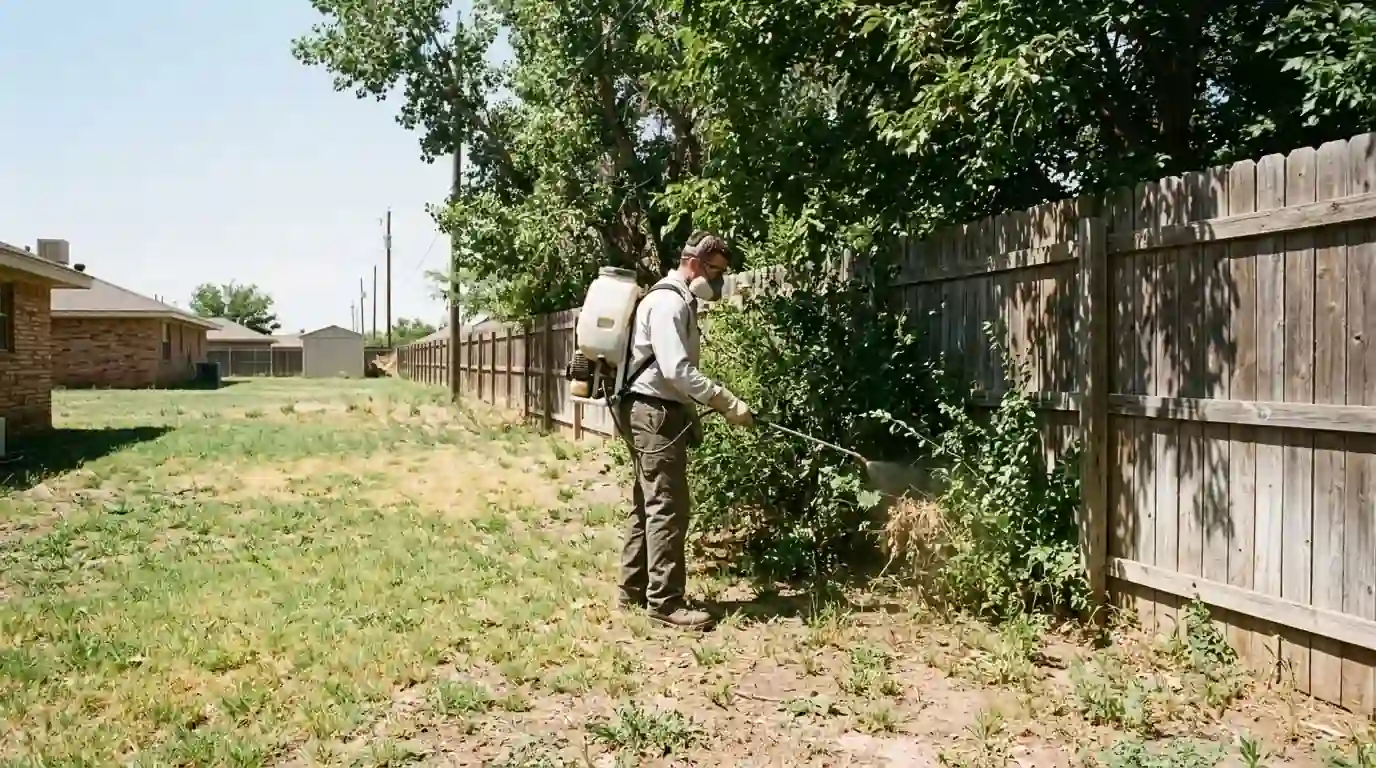
You get rid of backyard mosquitoes by eliminating standing water where they breed and treating the shady plants where adults rest. Our technician walks the yard to find containers, gutters and low spots holding water, treats water that cannot be drained with a larvicide, and applies a residual treatment to shrubs, fences and under decks. You dump standing water weekly.
Playa lakes, storms and mosquitoes on the High Plains
Amarillo is flat enough that rainwater often has nowhere to go. Water that does not drain collects in playa lakes, the shallow round basins scattered across the High Plains, and Texas Parks & Wildlife counts about 19,300 playas on the Texas High Plains. Heavy clay soil holds that water instead of letting it soak in. Since about three quarters of Amarillo's rain falls from April through September, mostly in thunderstorms, playas, ditches and low yard spots fill right when mosquitoes are most active.
Researchers looking at the Panhandle in 2007 tied playa coverage to human West Nile cases, which makes sense: more standing water means more mosquitoes. Studies in Lubbock County found Culex tarsalis carried most of the West Nile positives. Culex mosquitoes breed readily in still, nutrient-rich water, the kind that sits in playas, ditches, clogged gutters and neglected birdbaths.
Adults are most abundant in Amarillo from June to August, but the risk of West Nile often peaks later, in September and October, as infected mosquitoes build up through the season. That late peak catches people off guard, because by then the evenings are cooler and it feels like mosquito season should be over.
What the City of Amarillo does, and where your yard comes in
The City of Amarillo runs a mosquito program that treats more than 100 standing-water sites. It fogs from April to October based on trap counts and complaints, and it larvicides parks and ditches. West Nile virus shows up in local mosquitoes almost every year, and a city official cited about 30 to 40 local human cases a year in 2024. That public work makes a real difference across town.
What the city does not do is spray private property. Your backyard, your neighbor's yard and the water sitting in your gutters are outside its program. Mosquitoes do not travel far from where they hatch, so the ones biting you on the patio usually come from water within a short distance of your house. That is where our work fits: finding and treating the breeding spots and resting areas on your own property that the city's program does not reach. A clean yard next to a neglected one still gets bites, so it helps when neighbors on the same block keep up with their standing water too.
Where mosquitoes are breeding in your yard
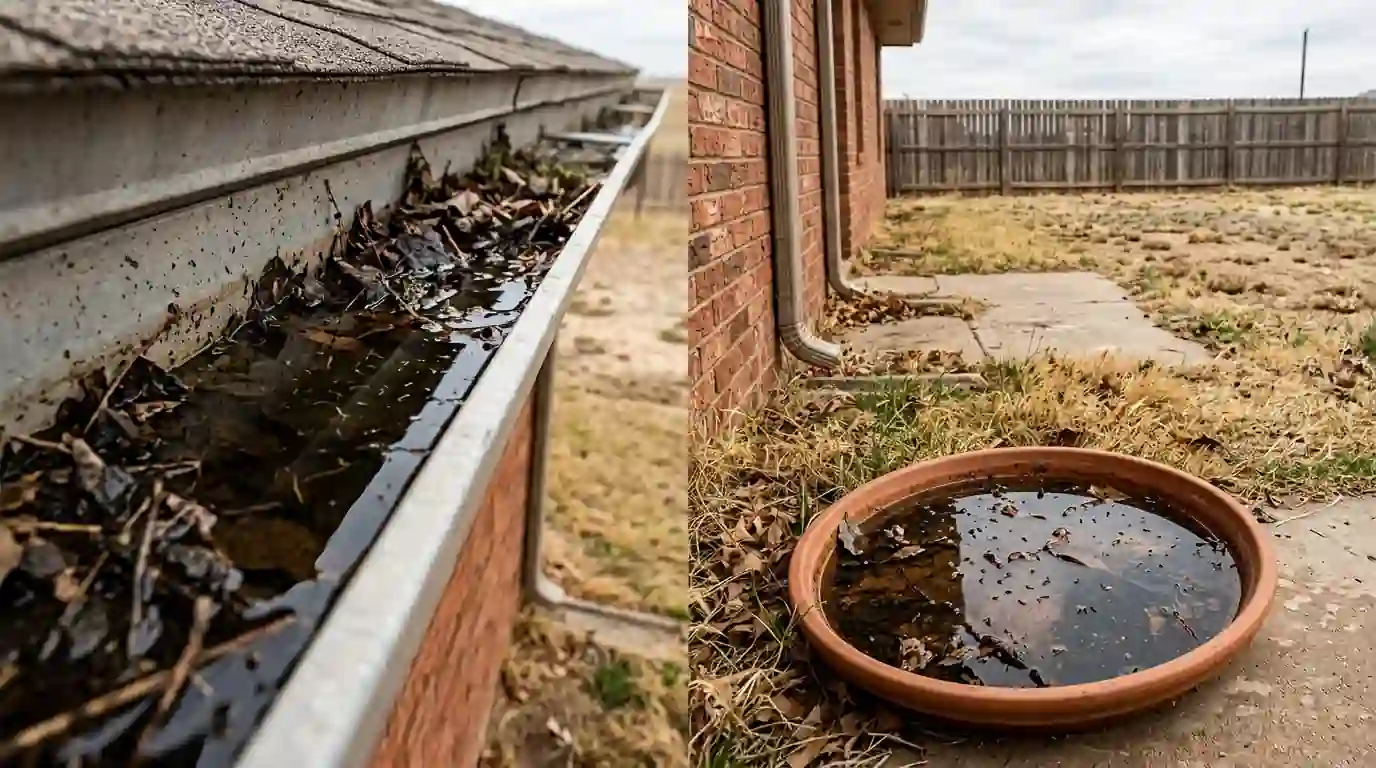
Mosquitoes can breed in surprisingly little water; these are the spots we find most often.
Clogged gutters
Gutters packed with leaves and elm seeds hold water for days after a storm, right next to the house.
Planter saucers and pots
The water left in saucers under potted plants is enough for a batch of larvae to develop.
Birdbaths and pet bowls
Birdbaths and outdoor water bowls that are not changed every few days are common breeding sites.
Tarps, tires and toys
Folds in tarps, old tires, buckets, wheelbarrows and kids' toys collect rainwater and go unnoticed.
Low spots in the lawn
Depressions in the yard and along the foundation where clay soil holds puddles after heavy rain.
Drainage ditches and playas
Ditches, retention basins and playas near the property, especially on the edges of town.
Need mosquito control in Amarillo?
Call and tell us what you are seeing. The line is answered 24 hours a day, every day.
What our technician does on a mosquito visit
Mosquito work combines a careful walk of the property with targeted treatment of water and resting areas.
Walk the property for water
We check gutters, downspouts, containers, birdbaths, low spots, AC condensate drips, tarps and anything else holding water. We dump what we can and show you the rest.
Treat water that stays
Ornamental ponds, drainage areas and spots that cannot be emptied get a larvicide labeled for mosquitoes, which stops larvae from developing into biting adults.
Treat adult resting areas
Adult mosquitoes rest in shady, sheltered spots during the day. Our technician applies a residual treatment to the undersides of shrub leaves, dense plants, fences, under decks and shaded patio areas.
Suggest yard changes
We point out where trimming thick shrubs, regrading a low spot or extending a downspout would cut down on breeding and resting spots.
Repeat through the season
Treatments wear off and new mosquitoes hatch after every storm, so we recommend repeat visits from early summer into fall to cover the late West Nile peak.
Weekly standing-water checks you can do
A few minutes a week makes a big difference, since mosquitoes can go from egg to adult in about a week in warm weather.
- Dump water from planter saucers, buckets, toys, wheelbarrows and tarps after every rain.
- Change birdbath and outdoor pet water at least twice a week.
- Clean gutters, especially after elm seed and leaf drop.
- Store tires, buckets and containers upside down or under cover.
- Fill or regrade low spots where water sits for more than a couple of days.
- Keep window and door screens in good repair.
- Wear repellent outdoors at dawn and dusk from June through October.
How the Amarillo mosquito season unfolds
Here is the general pattern from the last spring freeze to the first fall freeze.
| Time of year | What mosquitoes are doing | What to focus on |
|---|---|---|
| Mid to late April | Early activity after the average last freeze around April 18 | Clean gutters and clear winter debris holding water |
| May | Storms start filling low spots, ditches and playas | Weekly dump-and-drain checks after each rain |
| June to August | Adult numbers at their highest | Regular yard treatments and repellent at dusk |
| September to October | West Nile risk often peaks as infected mosquitoes build up | Keep treating and keep wearing repellent |
| After about October 20 | The first freeze shuts most activity down | Store containers upside down for winter |
What changes the cost of mosquito control in Amarillo
Mosquito pricing depends on yard size, vegetation and how many visits the season calls for.
- Yard size
- Larger lots and acreage properties take more time and product to treat.
- Amount of vegetation
- Yards with dense shrubs, trees and garden beds have more resting areas to treat.
- Standing water nearby
- Properties next to playas, ditches or drainage basins see more mosquito pressure and may need more frequent visits.
- One visit or seasonal
- A single treatment before an event is priced differently from a series of visits through the season.
We quote after looking at the yard, or by phone once we know the size of the property and what is around it.
Product lines a technician may choose from, matched to the pest, the room and who lives there:
Where we handle mosquito control
Neighborhoods and towns we cover most often, with ZIP codes. The rest of Amarillo and the towns in our service area are covered too.
- City View79118
- Puckett79109
- Ridgecrest79109
- Sleepy Hollow79121
- Hollywood-Scotsman79110
- Windsor79109
- Belmar79106
- The Greenways79119
- Heritage Hills79119
- South Georgia Place79110
- Wolflin79109
- Eastridge79107
- Canyon79015
- Hereford79045
- Pampa79065
- Dumas79029
- Borger79007
- Bushland79012
Mosquito Control questions from Amarillo homeowners
Does the City of Amarillo spray for mosquitoes in my backyard?
No. The City of Amarillo fogs from April to October based on traps and complaints, treats more than 100 standing-water sites and larvicides parks and ditches, but it does not spray private property. Mosquitoes breeding in your gutters, containers and low spots are up to you, which is where a yard treatment helps.
When is West Nile virus risk highest in Amarillo?
It often peaks in September and October, later than many people expect. Adult mosquitoes are most numerous from June to August, but infected mosquitoes build up over the season. West Nile shows up in local mosquitoes almost every year, so keep using repellent at dawn and dusk well into fall, until the first hard freeze.
How do playa lakes near my Amarillo home affect mosquitoes?
Playas collect rainwater that does not drain, and clay soil keeps it there, creating breeding sites after storms. A 2007 study linked playa coverage to human West Nile cases in the Panhandle. If you live near a playa or drainage basin, regular yard treatment and strict control of standing water on your own lot matter more.
How often should my Amarillo yard be treated for mosquitoes?
Most yards do best with repeat treatments through the warm season, since residual treatments wear off and each storm can trigger a new hatch. We usually suggest starting in early summer and continuing into fall to cover the late West Nile peak. A single treatment before an outdoor event is also an option.