Bee and wasp removal in Claude, TX (79019)
Armstrong County is where Africanized honey bees were first confirmed in the Texas Panhandle, back in 2006.Around Claude's ranch country, bees, wasps and yellowjackets nest in sheds, walls and the ground. We drive about 28 miles east on US-287.
ZIP 79019About 28 miles east via US-287
What should I do if I find a bee swarm or nest near my home in Claude?
Keep people and pets away, don't mow or run equipment near it, and call us. Africanized honey bees were first confirmed in the Panhandle in Armstrong County, and they defend their nests more aggressively than other bees. We identify whether it's bees, wasps or yellowjackets, remove the nest, and seal the gap they used so a new swarm doesn't move into the same spot.
Africanized bees and why Armstrong County homeowners take nests seriously
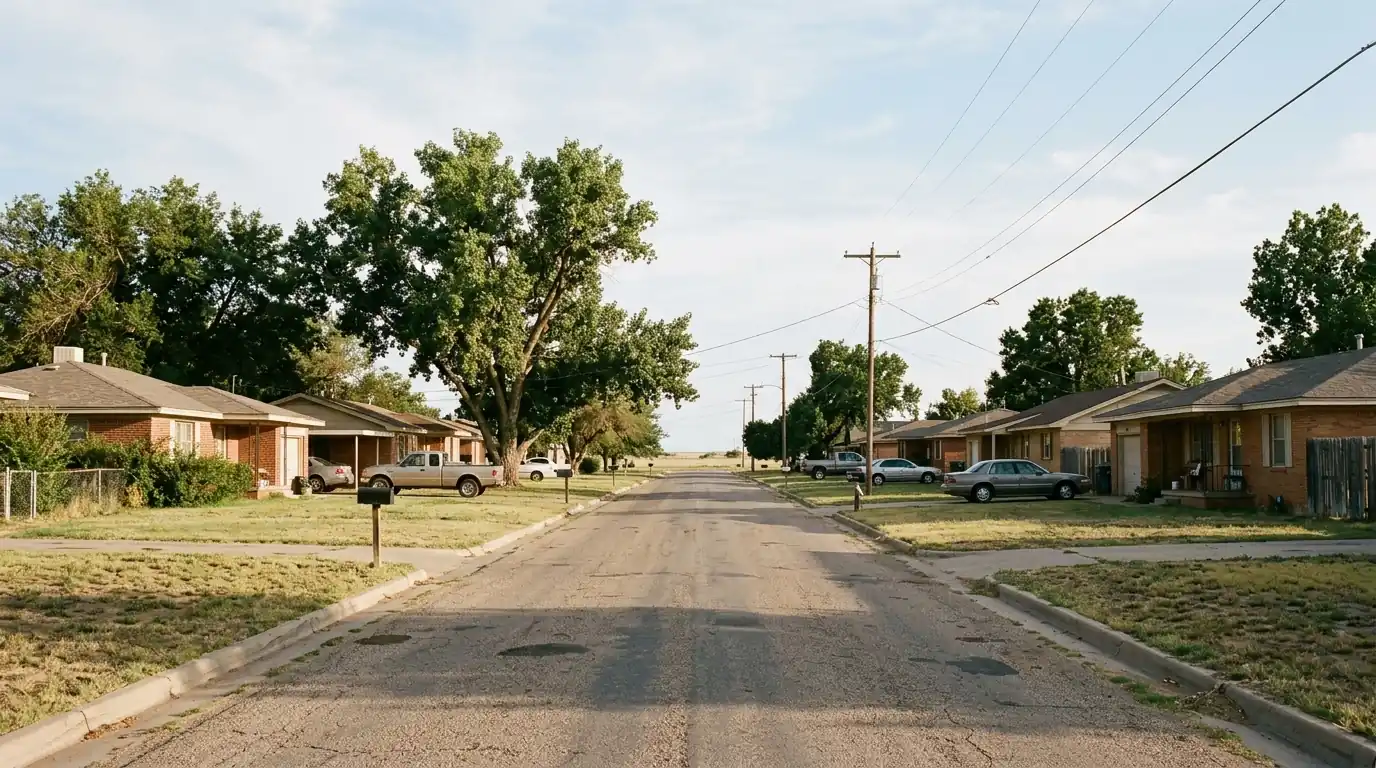
Claude is the Armstrong County seat, a town of about 1,186 with a 1912 courthouse, set in ranch country about 28 miles east of Amarillo on US-287. We serve homes, ranches and outbuildings across 79019.
Texas A&M AgriLife reports that Africanized honey bees were first confirmed in the Panhandle in Armstrong County in 2006, and later in Amarillo. They look nearly identical to regular honey bees, but they nest closer to the ground and defend the nest far more aggressively. Vibration from a lawn mower, weed trimmer or tractor near a nest can set them off. They'll also nest in places European honey bees usually avoid: water meter boxes, old tires, overturned buckets and holes in the ground.
Ranch property gives bees and wasps plenty of options. Sheds, barns, old equipment and wall voids in older homes all hold colonies. Paper wasps hang nests under eaves and porch roofs, yellowjacket colonies peak in August and September, mostly in ground nests, and mud daubers build tubes on walls but rarely sting.
Stinging insects around Claude and how to tell them apart
Knowing which insect you have changes how the nest is handled.
| Insect | Typical nest spot | What to know |
|---|---|---|
| Honey bees (including Africanized) | Wall voids, sheds, meter boxes, ground cavities | Africanized colonies defend aggressively; don't disturb |
| Paper wasps | Under eaves, porch roofs, fence rails | Open umbrella-shaped paper combs; sting when nests are bumped |
| Yellowjackets | Ground holes, sometimes wall voids | Colonies peak August and September; aggressive near nests |
| Mud daubers | Mud tubes on walls, ceilings, sheds | Rarely sting; mostly a cleanup issue |
Pest problem in Claude?
Call and describe it. The phone is answered 24 hours a day.
How we remove a bee or wasp nest on a Claude property
Every removal starts with keeping people at a safe distance.
Identify from a distance
We confirm whether it's honey bees, paper wasps, yellowjackets or mud daubers before getting close, since each needs a different approach.
Clear the area
People, pets and livestock are kept back, and mowing or equipment work near the nest stops until we're done.
Treat and remove
Wasp and yellowjacket nests get treated and removed. Honey bee colonies in walls or sheds are treated, and the comb is removed when we can reach it, since leftover honey draws new bees.
Seal the opening
We seal gaps in siding, eaves and walls where the colony got in, which keeps a new swarm from moving into the same space.
Check for other nests
We look around sheds, eaves and the yard for other nests, since ranch properties often have more than one.
Ways to lower your bee and wasp risk in Claude
Most nests start in a gap or cavity you can close.
- Walk the yard and sheds before mowing, listening for buzzing near the ground.
- Seal gaps in siding, eaves and soffits, as Texas A&M AgriLife recommends.
- Turn over or remove old tires, buckets and empty containers.
- Keep water meter box lids closed and check under them carefully.
- Knock down small paper wasp nests early in spring before they grow.
- If bees chase you, run to a building or vehicle and don't swat.
Pest control services for Claude
Bee Removal
A honey bee swarm resting on a fence post and a colony living inside your wall are two different problems, and both need a...
Wasp & Yellowjacket Removal
A paper wasp nest over the front door, yellowjackets streaming out of a hole in the lawn or buzzing inside a wall all call...
Snake Removal
A snake coiled by the back door, in the garage or under the AC unit needs to be identified before anyone gets close.
Rodent Control
Droppings in a kitchen drawer or scratching in the attic at night usually mean house mice, and gnawed feed sacks in a barn often...
Skunk Removal
A skunk denning under your porch, deck or shed brings odor, holes and a rabies concern for pets.
Home Pest Control
Spiders in the garage, crickets at the back door and a mouse behind the stove are everyday problems in Amarillo houses.
Pest control questions from Claude
Are there Africanized bees around Claude and Armstrong County?
Yes. Texas A&M AgriLife reports that Africanized honey bees were first confirmed in the Texas Panhandle in Armstrong County in 2006. They look like regular honey bees but defend nests more aggressively and nest closer to the ground. Treat any honey bee colony near your home as if it could be Africanized and keep your distance.
Can you remove bees from the wall of an older home in Claude?
Yes. We treat the colony inside the wall, remove the comb when we can reach it, and seal the gap the bees used. Leftover honey and comb can attract new bees and other pests, so getting it out matters. We'll explain what's involved once we see where the colony is.
When are yellowjackets worst around Claude ranch properties?
Yellowjacket colonies peak in August and September, when they're largest and most defensive. Most nest in the ground, so mowing and equipment work are when people get stung. If you see a steady stream of yellowjackets going in and out of a hole, mark it and call us before working nearby.