Brown recluse spider control in Amarillo
Brown recluses hide in closets, garages and stored boxes, and most people only notice them when one turns up in a shoe or a towel.We find where they live with glue board monitoring, treat their hiding spots and help you change the storage that shelters them.
What actually gets rid of brown recluses in an Amarillo house?
Getting rid of brown recluses in an Amarillo home takes monitoring, targeted treatment and decluttering together. Our technician places glue boards to find where they are active, treats wall voids, closets, garage corners and baseboards, and dusts hidden spaces. You move storage into sealed bins and off the floor. Follow-up visits check the boards until the catches stop.
Signs you have brown recluses, not just stray spiders
Recluses are shy, so the signs are often indirect.
A violin shape on the back
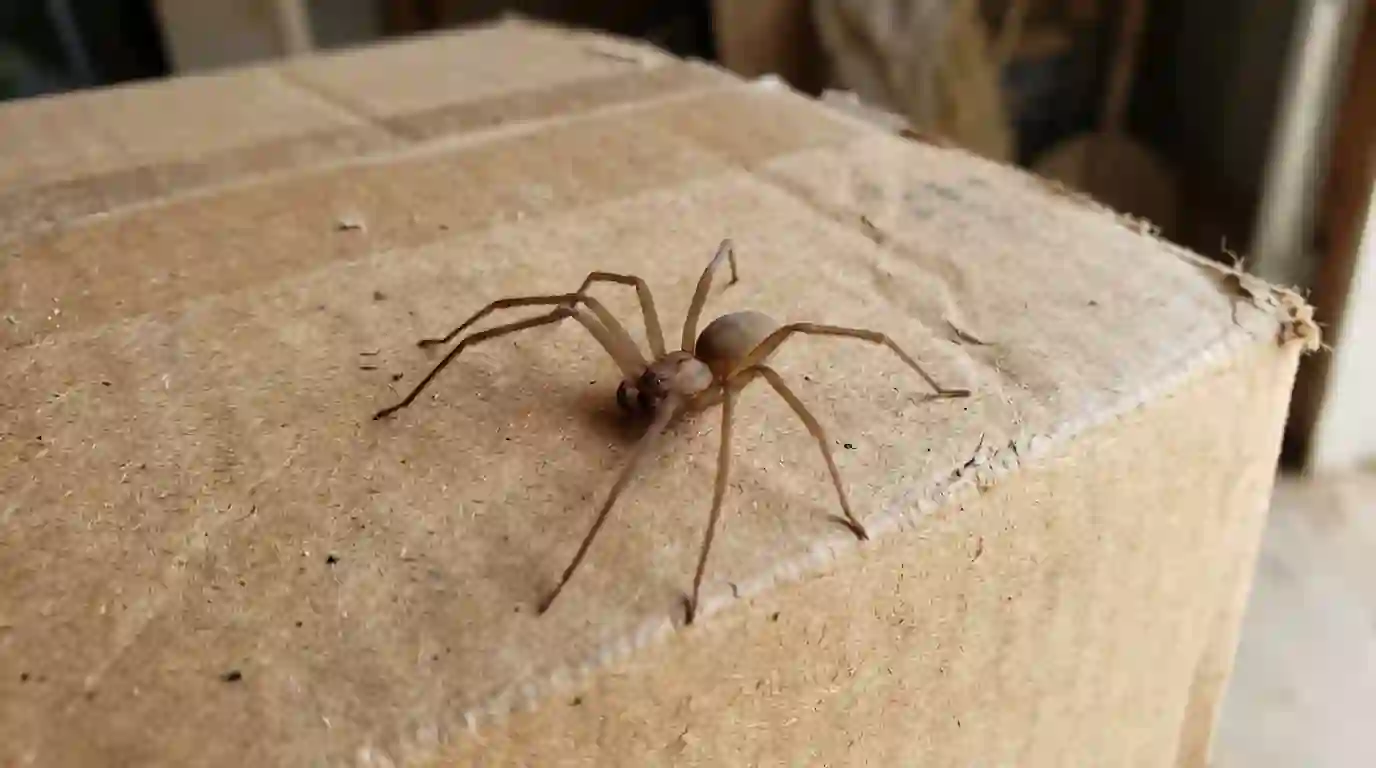
Look for a dark, fiddle-shaped patch on the front body section, its narrow end pointing back toward the abdomen. The rest of the spider is plain tan to light brown, with long legs of one solid color.
Spiders in stored items
Finding spiders in boxes of seasonal decorations, stored clothing or shoes in the back of a closet points to recluses.
Small, irregular webs
Recluses spin loose, off-white webs in corners and behind objects, used for shelter rather than catching prey.
Shed skins in corners
Cast skins in closet corners, under furniture or in garage storage show spiders are growing there.
Spiders in the bathtub
Recluses wander at night and fall into tubs and sinks, where they cannot climb the smooth sides.
Catches on sticky traps
If store-bought sticky traps keep catching tan spiders with long legs, the population is established.
Where brown recluses live in an Amarillo house
Texas A&M AgriLife describes brown recluses as living both inside and outside across Texas, favoring closets, stored clothes, boxes, garages and the space behind baseboards. In Amarillo homes, the spots we check first are the back of bedroom closets, under beds with storage, linen closets, garages full of cardboard boxes, and attic storage near the access hatch. Anywhere dark, dry and rarely disturbed is a candidate.
Recluses do their hunting after dark; daylight hours are spent wedged into cracks, folds and gaps. They are not aggressive; most bites happen when a spider is pressed against skin, like when someone puts on a shoe, pulls on a glove or rolls over on one in bed. That is why a recluse problem is as much about storage habits as about treatment.
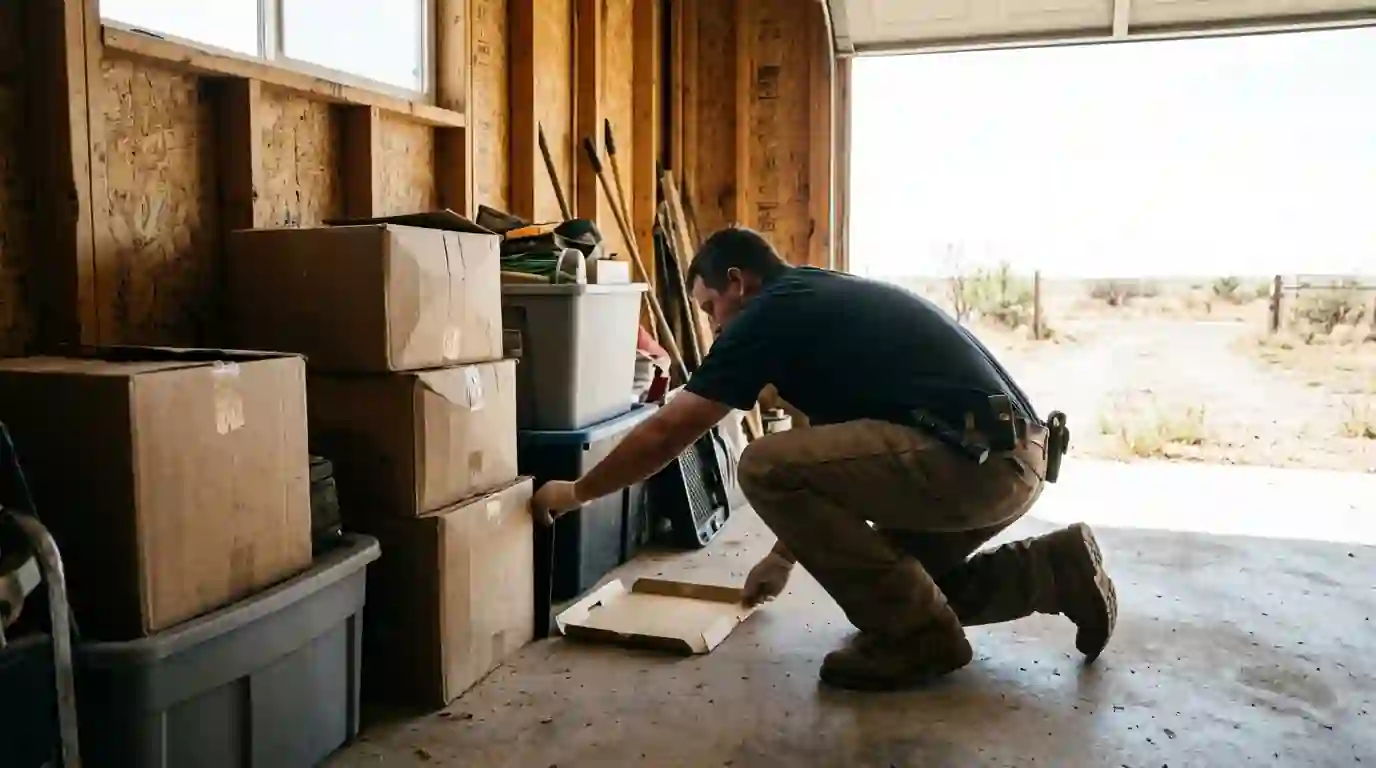
Garages deserve special attention. Cardboard boxes stacked against the wall, folded tarps, holiday decorations and sports gear give recluses endless hiding places close to insects coming in under the door. Many of the recluse problems we see start in the garage and work their way indoors through the garage entry into the kitchen or laundry room.
How we treat a brown recluse problem
Recluses take steady work over several visits, not a single spray.
Inspect and place glue boards
The technician inspects closets, garages, the attic access, under beds and behind furniture. Glue boards go along walls, behind furniture and in closets, each marked on a sketch of the house.
Treat hiding spots
A residual treatment goes into cracks, along baseboards, behind furniture and around closet edges. Garage corners, shelves and the base of walls get careful coverage.
Dust wall voids and hidden gaps
Insecticide dust goes into wall voids through outlets and gaps, under bottom cabinets and into attic edges, where recluses hide beyond the reach of sprays.
Treat the exterior and entry points
Weep holes, door frames, gaps around pipes and the garage door seal are treated to cut down spiders and the insects they eat.
Read the boards and follow up
On follow-up visits, glue boards are checked and counted to show where recluses are active and whether numbers are dropping. Treatment is focused on hot spots until catches stop.
Need brown recluse control in Amarillo?
Call and tell us what you are seeing. The line is answered 24 hours a day, every day.
Recluse season and bite facts for the Texas Panhandle
From roughly April through July, brown recluses are mating, and that is when people see the most spiders moving around inside. Males wander looking for females, so they show up in the open more often: crossing a floor, inside a shoe, in a pile of laundry. Local TV has carried reports from Amarillo pest companies about rising recluse calls, and our phones match that pattern each spring and early summer.
Bites are a real concern but often exaggerated. According to the Texas Panhandle Poison Center, roughly one recluse bite in ten leads to tissue damage; the rest generally heal without it. If you think you have been bitten, clean the area, put a cool compress on it and see a doctor, especially if the area changes color, blisters or spreads, or if you feel unwell. Catch the spider in a jar if you can do so safely, so it can be identified.
Heat and dryness drive many pests indoors in summer, according to Texas A&M AgriLife, and recluses follow the insects that come in looking for water and shelter. Brick slab homes with weep holes and garages with worn door seals give them easy routes in. Once inside, they settle into the first quiet storage they find, which is why the garage and the closets nearest it usually have the highest glue board counts.
What you can do to make your home less friendly to recluses
These steps cut hiding places and lower the chance of a bite.
- Move clothing, shoes and linens in closets into sealed plastic bins.
- Replace cardboard boxes in the garage and attic with lidded plastic bins.
- Move beds slightly away from walls and tuck in bedspreads so they do not drape to the floor.
- Shake out any shoe, glove or jacket that has been sitting a while before wearing it.
- Wear gloves when moving stored boxes or reaching into dark storage.
- Vacuum closet corners, behind furniture and under beds regularly.
- Leave glue boards in place between visits so the technician can read them.
What changes the cost of brown recluse control in Amarillo
Recluse work usually involves several visits, so the scope shapes the price.
- Size of the home
- More rooms, closets and storage areas mean more monitoring and treatment.
- How established they are
- Recluses confined to one garage shelf are a smaller job than recluses spread through closets and the attic.
- Clutter and storage
- Packed garages and closets take longer to inspect and treat, and decluttering first can save visits.
- Number of follow-ups
- Most recluse jobs need several follow-up visits to check boards and retreat hot spots.
- Attic and wall void work
- Dusting attics and voids adds time but reaches spiders sprays cannot.
Most recluse jobs are quoted after an inspection, since we need to see how far the spiders have spread through storage.
Product lines a technician may choose from, matched to the pest, the room and who lives there:
Where we handle brown recluse control
Neighborhoods and towns we cover most often, with ZIP codes. The rest of Amarillo and the towns in our service area are covered too.
- City View79118
- Puckett79109
- Ridgecrest79109
- Sleepy Hollow79121
- Hollywood-Scotsman79110
- Windsor79109
- Belmar79106
- The Greenways79119
- Heritage Hills79119
- South Georgia Place79110
- Wolflin79109
- Eastridge79107
- Canyon79015
- Hereford79045
- Pampa79065
- Dumas79029
- Borger79007
- Bushland79012
Brown Recluse Control questions from Amarillo homeowners
How can I tell a brown recluse from other spiders in Amarillo?
A recluse is a plain tan or light brown spider with a darker fiddle-shaped patch behind the eyes, long legs of one solid color with no bands, and a body about the size of a pencil eraser. Recluses have six eyes in pairs, which needs a magnifier to see. If you are unsure, trap it in a jar and show the technician.
What should I do if I think a brown recluse bit me?
Clean the bite with soap and water, apply a cool compress and see a doctor, especially if the area darkens, blisters or spreads or you feel unwell. The Texas Panhandle Poison Center puts tissue damage at roughly 1 in 10 recluse bites, so most heal without lasting harm. If you can catch the spider safely, keep it for identification.
How long does brown recluse control take in an Amarillo home?
Expect several weeks to a few months of follow-up, depending on how established the spiders are. Recluses hide deep in storage and wall voids, and they can go a long time without food. Glue board counts on each visit show whether numbers are dropping. Decluttering and sealed storage speed things up a lot.
Why are there more brown recluses in my Amarillo house in spring and summer?
Brown recluse mating season runs roughly April to July. Males wander looking for females, so they cross open floors and end up in shoes, laundry and bathtubs more often. Summer heat also brings in insects looking for water, and recluses follow their food. That is why spring is a good time to start monitoring.