Raccoon removal from Amarillo attics and chimneys
Heavy thumping in the attic at night, a torn soffit or a chimney full of chatter usually means a raccoon has moved in.We remove the raccoon and any young, repair the entry point and close the house up so another one cannot take its place.
How do you get a raccoon out of an attic in Amarillo?
Getting a raccoon out of an attic starts with finding its entry point and checking for young. Our technician removes the raccoon by trapping or a one-way door, takes out any kits by hand, then repairs and reinforces the opening with heavy wire or metal. Damaged insulation and droppings are assessed, and the rest of the roofline is checked for weak spots.
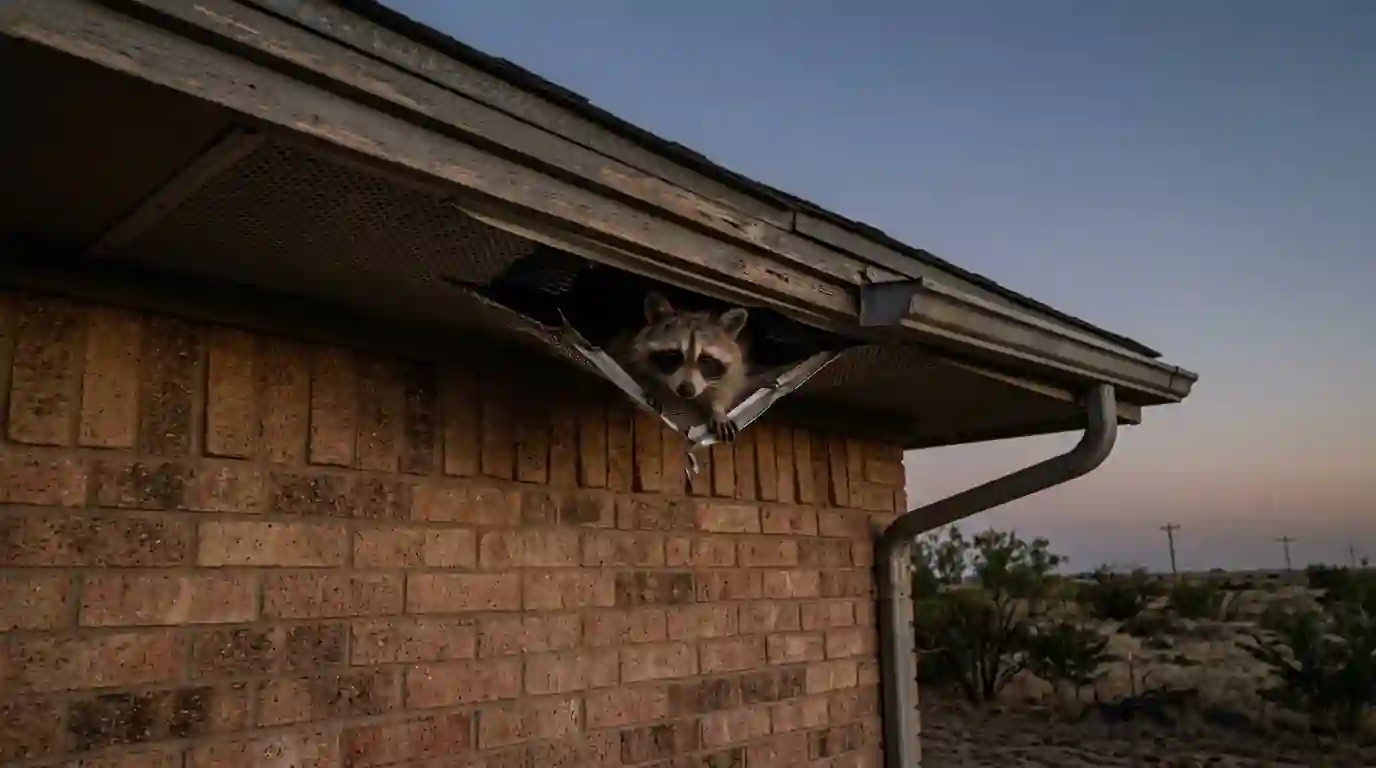
How to tell a raccoon is in your attic or chimney
Raccoons are big, strong animals, and the signs they leave are hard to miss once you know what to look for.
Heavy walking overhead
Thuds and slow, heavy footsteps in the ceiling, usually at dusk and before dawn, much louder than the scurrying of mice.
Torn soffit or roof vents
Bent soffit panels, a ripped roof vent, or a pulled-back shingle at the roof edge, often near a tree branch or downspout.
Chattering in the chimney
Chirping, purring or whining from a fireplace in spring, a strong sign of a mother with kits on the smoke shelf.
Muddy paw prints
Handprint-like tracks on gutters, downspouts, siding or a car hood near the entry point.
Flattened insulation and latrines
Trampled trails through attic insulation and piles of droppings in one or two spots, which raccoons use as a toilet.
Raided trash and pet food
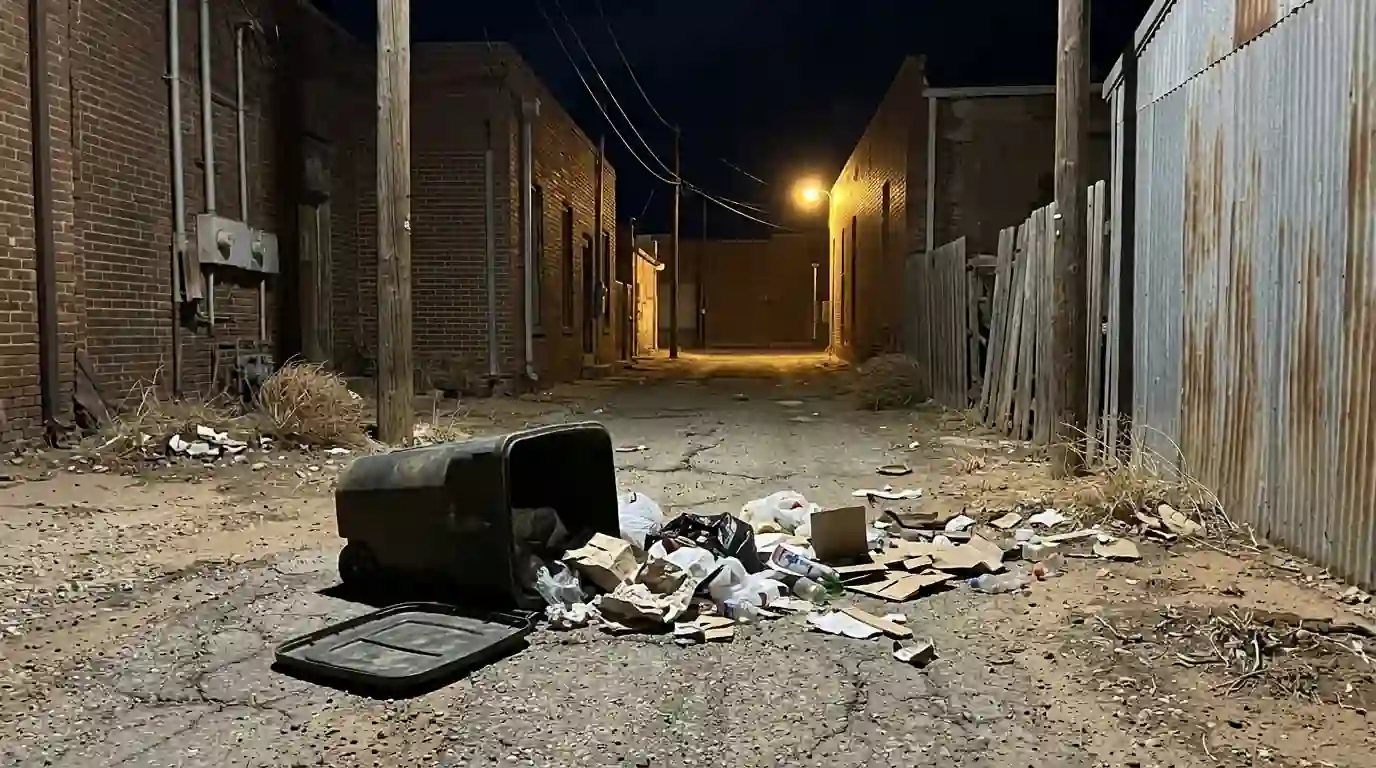
Cans tipped over, bags ripped open and pet bowls cleaned out overnight in the garage or yard.
Why raccoons pick attics and chimneys in spring
Raccoons den in barns, hollow trees and houses across Texas, and females give birth to their young in April and May. A pregnant raccoon in March or April is looking for a dry, warm, protected space, and an attic or an uncapped chimney is about as good as it gets. She can tear open a soffit corner, peel back a roof vent or squeeze past a loose chimney cap in a single night.
Once the kits are born, the mother is protective and the attic becomes a nursery for about two months. The young start following her outside by early summer. If only the mother is removed during that window, the kits are left behind to cry, starve and die in the attic, which turns a raccoon problem into a dead animal problem. Every spring job starts with a check for young.
Raccoons in Amarillo neighborhoods and the TPWD rules
Raccoons follow water and shelter, so we see them most in Amarillo's older tree-lined neighborhoods, around parks and greenbelts, near playa lakes and along draws where wooded cover runs close to houses. Brick homes with wood soffits and fascia, mature elms brushing the roofline and open trash cans in alleys give them everything they need. Homes near Lake Tanglewood, the canyons and other wooded water draws see steady raccoon pressure too.
Texas Parks and Wildlife is clear on one point that surprises many homeowners: moving live raccoons is illegal. You cannot trap a raccoon in your attic and drive it out to the country. TPWD allows landowners and their agents to take nuisance furbearers on their property, and any release elsewhere needs TPWD authorization and the consent of that landowner. Our technician explains how the raccoon will be handled before work begins, so there are no surprises.
Raccoons can carry rabies and roundworm, so never corner one, try to feed it or handle droppings with bare hands. A raccoon out in daylight that stumbles, circles or shows no fear of people should be reported to animal control, and any pet that fights with one should see a veterinarian about a rabies booster.
Need raccoon removal in Amarillo?
Call and tell us what you are seeing. The line is answered 24 hours a day, every day.
What our technician does on a raccoon removal job
Raccoon removal is part wildlife work and part repair, and we handle both in order.
Find the entry point
We walk the roofline, check soffits, vents, the chimney and any branches overhanging the house, then confirm the active hole from inside the attic if it is safe to enter.
Check for kits
From March through early summer we search the attic for young before setting any trap or door, so no kits are left behind.
Remove the raccoon
Depending on the setup, we use a one-way door on the entry so the raccoon leaves and cannot return, or a trap set near the opening and checked daily.
Take out the young by hand
Kits are removed by hand and handled according to TPWD rules. We explain the plan before we start.
Repair and reinforce the opening
The torn soffit, vent or roof edge is repaired and backed with heavy-gauge welded wire or sheet metal. Raccoons pull at anything weak, so light screen is never enough.
Cap the chimney and check the roofline
We fit or recommend a chimney cap and check other vents and soffits, because a raccoon that loses one entry will test the next weakest spot.
Where raccoons get in, and the fix we use
Each entry point needs a repair matched to how hard a raccoon will pull on it.
| Entry point | What it looks like | Our fix |
|---|---|---|
| Soffit corner | Bent or dropped panel at a roof corner | Rebuild and back with welded wire or metal |
| Roof vent | Torn or pried-up vent cover | Steel vent guard fastened to the deck |
| Uncapped chimney | Noise on the smoke shelf, debris in the firebox | Stainless chimney cap with screen sides |
| Gable vent | Pushed-in louvers | Heavy hardware cloth fastened behind the vent |
| Crawlspace vent or opening | Broken screen, flattened soil at the opening | Welded wire cover, buried barrier if needed |
Steps to make your home less inviting to raccoons
These habits cut off the food and easy access that draw raccoons to a house.
- Store trash in the garage or use cans with locking lids.
- Feed pets indoors and bring bowls in before dark.
- Trim tree branches back several feet from the roof.
- Pick up fallen fruit, pecans and spilled birdseed.
- Keep the chimney capped and the damper closed when not in use.
- Do not try to remove a raccoon yourself or move one off your property.
What changes the cost of raccoon removal in Amarillo
Each raccoon job depends on how the animal got in and what it did once inside.
- Kits in the attic
- Searching for and removing young by hand takes more time than a single adult.
- Entry point repair
- A small soffit fix is quicker than rebuilding a torn roof edge or vent.
- Chimney work
- Removing raccoons from a chimney and fitting a cap adds equipment and time.
- Attic damage
- Heavy droppings and soiled insulation may need cleanup beyond the removal itself.
- Height and roof pitch
- Steep or two-story roofs need more ladder work and safety setup.
We quote after inspecting the roofline and attic, or give a starting point by phone once we know what you are hearing.
Product lines a technician may choose from, matched to the pest, the room and who lives there:
Where we handle raccoon removal
Neighborhoods and towns we cover most often, with ZIP codes. The rest of Amarillo and the towns in our service area are covered too.
- City View79118
- Puckett79109
- Ridgecrest79109
- Sleepy Hollow79121
- Hollywood-Scotsman79110
- Windsor79109
- Belmar79106
- The Greenways79119
- Heritage Hills79119
- South Georgia Place79110
- Wolflin79109
- Eastridge79107
- Canyon79015
- Hereford79045
- Pampa79065
- Dumas79029
- Borger79007
- Bushland79012
Raccoon Removal questions from Amarillo homeowners
Is it legal to relocate a raccoon I trapped in Amarillo?
No. Texas Parks and Wildlife says moving live raccoons is illegal. Landowners and their agents may take nuisance raccoons on their own property, but releasing one elsewhere needs TPWD authorization and the consent of that landowner. Our technician handles raccoon removal under those rules and explains the plan before trapping starts.
When do raccoons have babies in Amarillo attics?
Raccoon young are born in April and May, so spring is the season we find mothers with kits in attics and chimneys. The kits stay in the den for several weeks before following the mother outside. Removing only the mother leaves the kits behind, so every spring raccoon removal starts with a search for young.
Will a raccoon leave my chimney on its own?
Sometimes, once the kits are old enough to climb out, but waiting means weeks of noise and odor, and the mother may move into the attic next. Smoke or fire can trap or kill the young. We remove the raccoon family and then cap the chimney so it stays empty. Keep the damper shut until then.
Do raccoons in the attic damage insulation and wiring?
They can. Raccoons trample and soil insulation, tear ductwork and sometimes chew wires. They also use one or two spots as a latrine, which can carry roundworm eggs. After raccoon removal, our technician looks at the attic and tells you what cleanup or insulation replacement may be needed, and what is safe to leave.