Bat removal and exclusion for Amarillo homes
Bats streaming out of a gable vent at dusk or droppings piling up under an eave mean a colony is roosting in your attic or wall.We get them out with one-way exclusion devices and seal the roost so they cannot return.
How do you get bats out of an attic in Amarillo?
Bats are removed from an attic by exclusion, not by trapping or spraying. Our technician watches the colony leave at dusk to find every exit, seals all the other gaps, then fits one-way devices that let bats fly out but not back in. Once the roost is empty, the devices come off and the openings are sealed for good.
Signs bats are roosting in your home
Bats are quiet during the day, so the evidence usually shows up outside first.
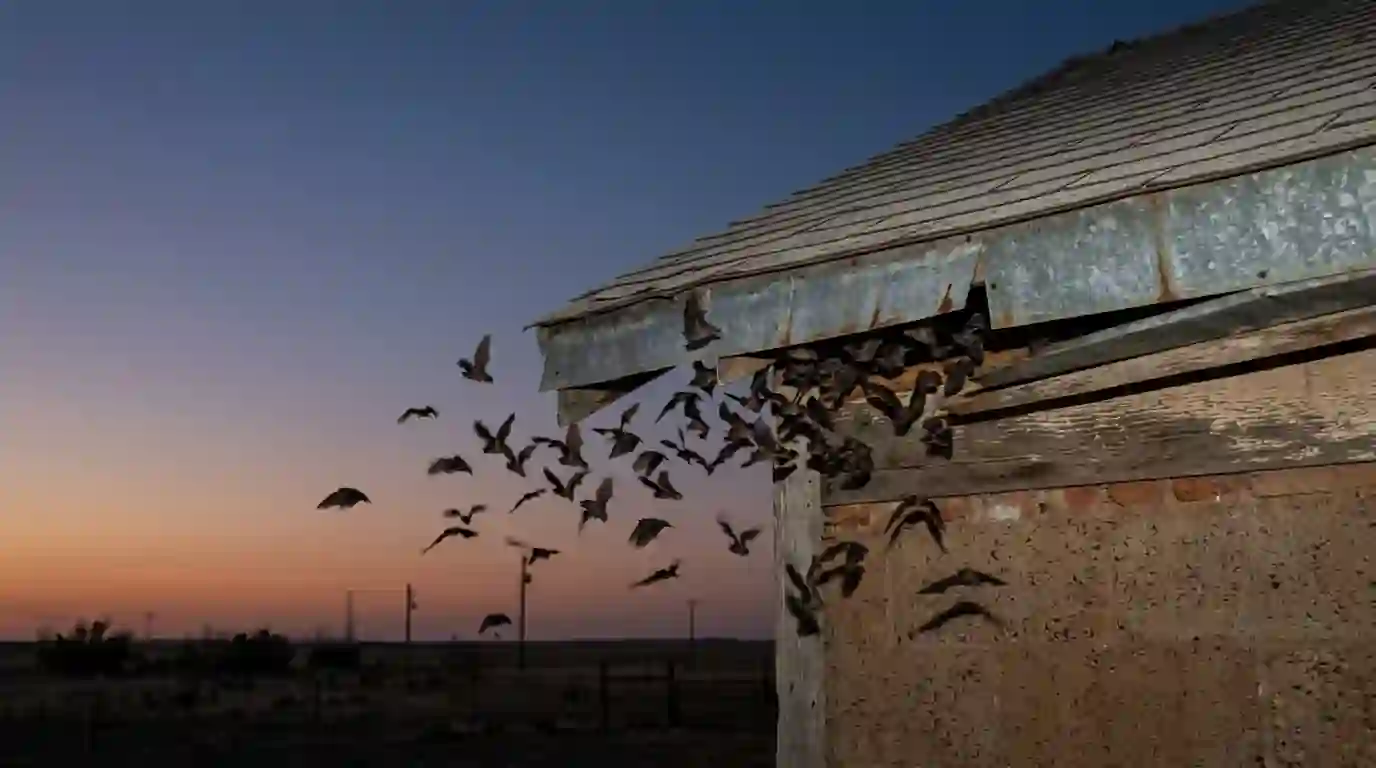
Bats leaving at dusk
Small dark shapes dropping out of a gable vent, soffit gap or roof edge one after another around sunset.
Droppings under an entry
Small dark pellets piled on a porch, patio or windowsill below a gap. Bat droppings crumble into shiny fragments, unlike mouse droppings.
Dark stains at gaps
Brown or black smudges around a crack or vent, left by the oils on bats' fur as they squeeze in and out.
Squeaking in the wall
High-pitched chatter or rustling in a wall or ceiling, often loudest at dusk and dawn.
Ammonia smell
A sharp odor in the attic or a closet near the roost, from guano and urine building up.
A bat inside the house
A bat flying in a room or clinging to a curtain, often a young one that took a wrong turn from the roost.
Mexican free-tailed bats in the Panhandle
The bat we most often find in Amarillo attics and wall voids is the Mexican free-tailed bat. They spend the summer across the whole state and readily roost in attics and wall voids. Not far from here, the Clarity Tunnel at Caprock Canyons State Park holds up to 500,000 of them from late April to mid-October. Smaller colonies settle into homes, and a gap no wider than a pencil at a soffit or fascia joint is enough for them.
Texas law gives clear guidance. Parks and Wildlife Code section 63.101 allows bats to be removed from buildings where people live or work, and pesticides cannot be used on bats. Exclusion, letting bats leave and keeping them from returning, is the method that fits those rules, and it is what our technician uses.
Rabies is part of the picture too. The City of Amarillo confirmed a rabid bat in 2023. Most bats are healthy, but never pick one up with bare hands, and keep pets away from any bat on the ground.
Found a bat in a bedroom? Read this first
A bat bite can be small enough to go unnoticed, especially on someone who was asleep. If you wake up to a bat in the room, or find one near a child, someone who was sleeping, or a person who cannot say whether they had contact, call your doctor or the local health department about possible rabies exposure. They will tell you whether the bat should be tested.
If it is safe, close the bat in the room with the door shut and a towel along the bottom, and keep pets out. Do not throw the bat outside or crush it if a health official may want it tested. If you have to contain it yourself, wear thick leather gloves, cover the bat with a box or container when it lands and slide a piece of cardboard underneath. Then call us about the roost it came from.
Need bat removal & exclusion in Amarillo?
Call and tell us what you are seeing. The line is answered 24 hours a day, every day.
How our technician excludes a bat colony
Bat exclusion is about finding every opening and controlling which ones stay open.
Watch the evening flight
Our technician watches the house around dusk to see exactly where bats leave. A colony often uses more than one gap.
Inspect the roofline and attic
We check soffits, fascia joints, ridge vents, gable vents, chimney flashing and gaps where siding meets brick, plus the attic for guano and staining.
Seal secondary gaps
Every crack bats could use, except the main exits, is sealed with sealant, mesh or flashing so the colony has only the exits we choose.
Install one-way devices
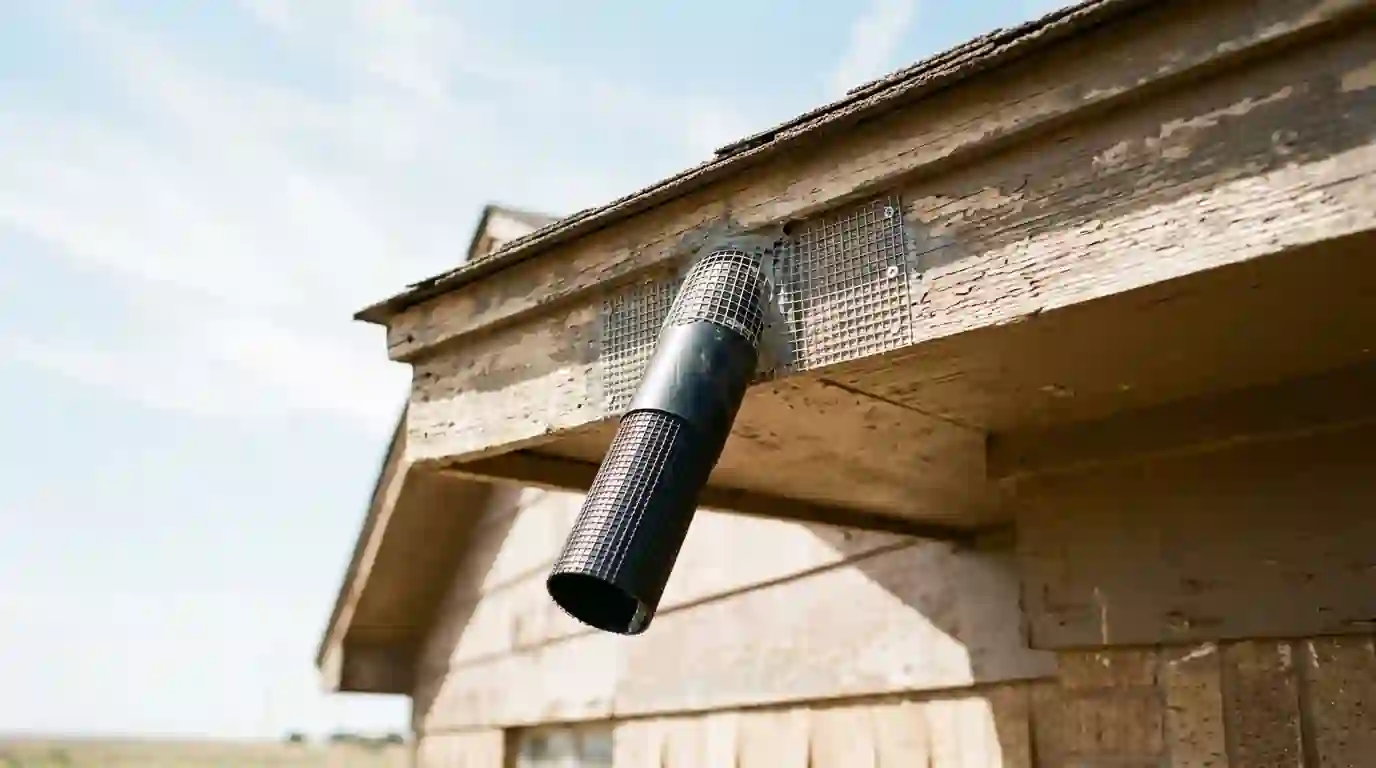
Exclusion tubes or netting go over the main exits. Bats leave to feed at night and cannot find their way back in.
Confirm the roost is empty
After several nights we check for activity. Once no bats are coming or going, the devices come off.
Seal the final openings
The main exits are closed with materials suited to the surface, and we talk with you about guano cleanup in the attic.
Timing exclusion around bat pups
Standard bat-management practice is to avoid exclusion while flightless pups are in the roost, which for colonies in Texas generally means part of the summer. Young bats cannot fly out through a one-way device, and sealing the adults out would leave the pups to die inside your walls, with the odor and insect problems that follow.
So timing matters. If you call during pup season, our technician can still inspect, find the entry points and plan the work, then schedule exclusion once the young are flying. Exclusion in spring before pups arrive, or in late summer and fall once they can fly, is the cleaner choice. Mexican free-tailed bats leave the region for the winter, so a fall exclusion also keeps the colony from returning next spring.
What you can do before and after exclusion
These steps help keep your family safe and the roost closed for good.
- Keep pets away from any bat found on the ground, alive or dead.
- Never handle a bat with bare hands.
- Do not seal gaps yourself while bats may still be inside.
- Do not use sprays, foggers or mothballs on bats; pesticides cannot be used on them.
- Keep window screens in good repair, especially on upstairs bedrooms.
- Avoid stirring up guano in the attic; dried droppings should be cleaned with proper protection.
What changes the cost of bat removal in Amarillo
Bat exclusion is priced on the house and the colony, since each roost is different.
- Number of entry points
- A colony using one gable vent is simpler than one using gaps across the whole roofline.
- Size of the colony
- Large colonies leave more guano and often use more exits.
- Roof height and design
- Tall, steep or complex rooflines need more ladder work and more sealing.
- Guano cleanup
- Removing droppings and soiled insulation from the attic is a separate job from exclusion.
- Season
- During pup season, the work may be split into an inspection now and exclusion later.
We quote after an evening inspection, or give a starting point by phone once we know where you see the bats.
Product lines a technician may choose from, matched to the pest, the room and who lives there:
Where we handle bat removal & exclusion
Neighborhoods and towns we cover most often, with ZIP codes. The rest of Amarillo and the towns in our service area are covered too.
- City View79118
- Puckett79109
- Ridgecrest79109
- Sleepy Hollow79121
- Hollywood-Scotsman79110
- Windsor79109
- Belmar79106
- The Greenways79119
- Heritage Hills79119
- South Georgia Place79110
- Wolflin79109
- Eastridge79107
- Canyon79015
- Hereford79045
- Pampa79065
- Dumas79029
- Borger79007
- Bushland79012
Bat Removal & Exclusion questions from Amarillo homeowners
Is it legal to remove bats from my Amarillo house?
Yes. Texas Parks and Wildlife Code section 63.101 allows bats to be removed from buildings people live or work in. The same rules say pesticides cannot be used on bats, which is why bat removal is done by exclusion: one-way devices let bats leave and keep them from returning, and the openings are sealed afterward.
What should I do if I find a bat in my bedroom in Amarillo?
Call your doctor or the local health department about possible rabies exposure, especially if someone was asleep, if a child was in the room, or if anyone cannot rule out contact. Bat bites can be tiny. Close the bat in the room if you can, keep pets out and do not discard it before asking whether it should be tested.
When is the best time for bat exclusion in the Panhandle?
Spring before pups are born, or late summer and fall once the young can fly, are the best windows. General bat-management practice avoids exclusion while flightless pups are in the roost, since they would be trapped inside. If you call in summer, we can inspect and plan, then schedule bat exclusion once the pups are flying.
Are the bats in my attic Mexican free-tailed bats?
Most likely, yes. Mexican free-tailed bats live across Texas in summer and commonly roost in attics and wall voids. They arrive in spring and leave for warmer areas in the fall. Our technician can confirm the species during the evening inspection, which also shows how many bats are using your roof.
Is bat guano in my attic dangerous?
It can be. Built-up bat guano can harbor fungal spores and smells strongly, and it can stain ceilings and draw insects. Avoid sweeping or stirring dry droppings. After bat exclusion, our technician looks at how much guano is present and explains whether cleanup and insulation replacement make sense.