Fly control for Amarillo homes and businesses
Flies circling the kitchen, crowding a back door or hovering over a sink drain are breeding somewhere close by, usually within a mile or two.We find that source, help you clear it, and treat the walls and ledges where flies rest between meals.
How do you get rid of flies around an Amarillo home or business?
Getting rid of flies means removing what they breed in, because spraying adult flies alone only buys a few days. Our technician tracks down the breeding material, such as garbage, pet waste, spilled feed, compost or a slimy drain, explains how to clean it up and keep it dry, then places fly baits and treats the surfaces where flies land. Drains get their own treatment for small flies.
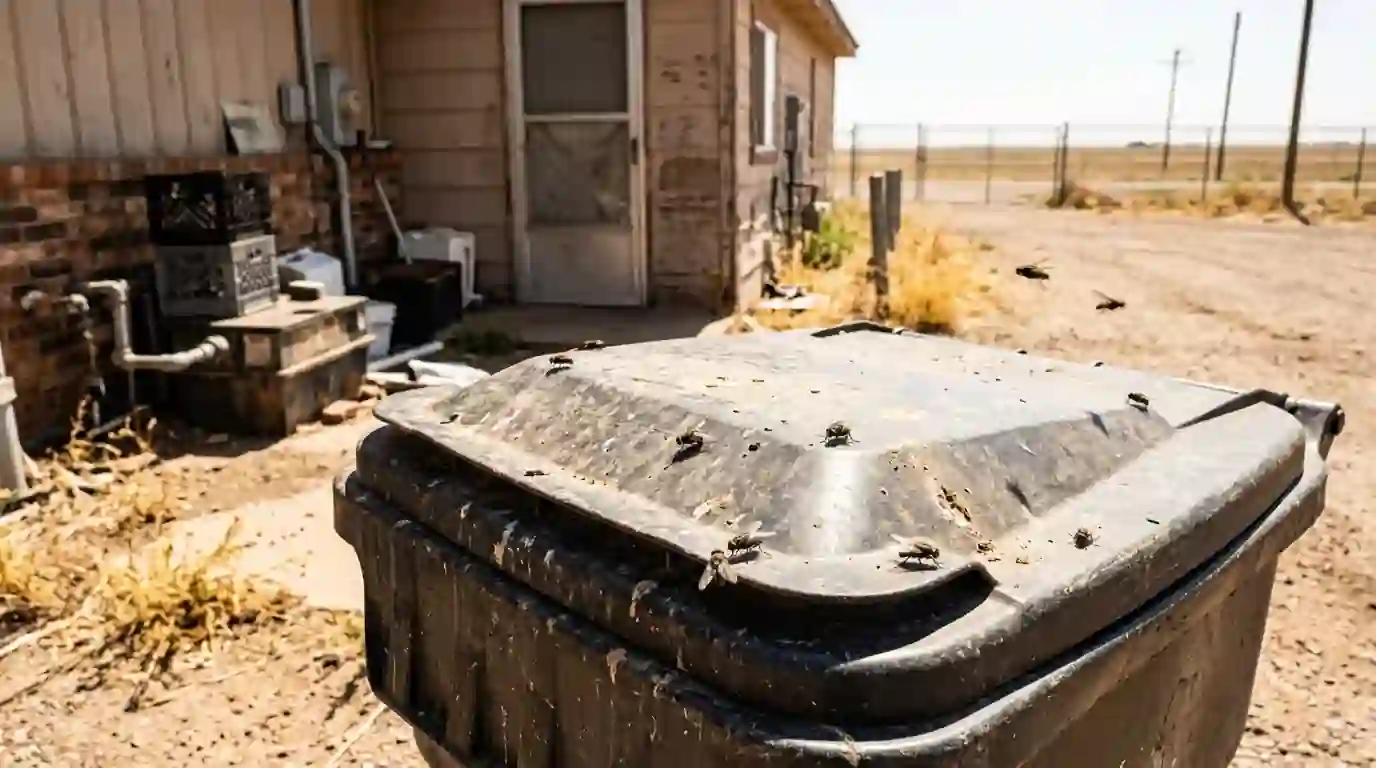
Which fly you are seeing and what it points to
The kind of fly and the spot where it gathers usually tell us where it is breeding.
House flies at the table
Gray flies about a quarter inch long landing on food, counters and people, a sign of garbage, pet waste or rotting material within a short flight of the house.
Biting flies at your ankles
Stable flies look a lot like house flies but bite, usually around the lower legs, and they gather near horse pens, cattle and old hay.
Tiny fuzzy flies by a drain
Drain flies are small, gray and moth-like. They rest on bathroom walls or hover over a shower, sink or floor drain with a slimy lining.
Fruit flies around produce
Small tan flies with red eyes circling the fruit bowl, the recycling bin, a mop bucket or a bar sink point to something fermenting nearby.
Maggots in a can or bin
Pale larvae crawling in a trash can, dumpster or compost pile mean adults are already laying eggs there, and another batch is about a week out.
Big flies at one window
Large, shiny blow flies collecting in a single room can mean an animal died in a wall or attic, which is a different job from routine fly work.
Why cleaning up the source beats spraying flies
A house fly can go from egg to adult in as little as 7 to 10 days when it has warm, moist material to grow in, according to Texas A&M AgriLife. That speed is the whole problem. Spray every adult on the patio today and a fresh crop crawls out of the same trash corner, dog run or wet feed spill next week. The flies you see are the symptom; the pile they hatched from is the cause.
That is why AgriLife puts sanitation first and chemicals second. Breeding material needs to be cleared out at least twice a week, or spread thin and dried so larvae cannot survive in it. Garbage, every kind of manure, spilled grain or feed, and decaying grass clippings or vegetable scraps all qualify. Once breeding stops, baits and surface treatments finish off the adults that remain, and the numbers stay down.
Traps have a place, but a small one. Sticky ribbons, jug traps and light traps catch flies that already exist and can show whether numbers are rising or falling. They never reach the source, so a garage hung with full traps usually means the real work has not started yet.
How feedyards and grain towns drive summer flies on the Panhandle
The country around Amarillo produces flies on a scale most cities never see. Hereford's feedyards, along with the cattle and grain operations around Dumas and Cactus, create acres of manure, wet feed and spilled grain each summer. AgriLife notes that house flies can travel up to about 20 miles, though most stay within a mile or two of where they hatched. Homes, shops and restaurants near pens, elevators and packing plants feel that pressure through every warm month.
Weather sets the calendar. Amarillo gets most of its rain, around three quarters of the yearly total, between April and September, largely from thunderstorms, and that is exactly when manure, compost and feed stay damp enough for larvae. Texas A&M has reported stable flies active by late April, and both species build through the hot months.
In town, the sources are smaller and easy to overlook: overflowing cans behind a rental, an alley behind a row of restaurants, a horse or a few chickens on an acreage lot at the edge of the city. Stable flies breed in old wet hay mixed with manure, so a round bale feeder or the bedding pile behind a barn can bring biting flies right to the back patio.
Need fly control in Amarillo?
Call and tell us what you are seeing. The line is answered 24 hours a day, every day.
Common Panhandle flies and the places they breed
Matching the fly to its breeding spot is the first thing our technician works out.
| Fly | Where it breeds | Where you notice it |
|---|---|---|
| House fly | Garbage, manure, spilled feed, wet grass clippings | Kitchens, patios, back doors, feed areas |
| Stable fly | Old wet hay mixed with manure | Pens, barns and horses; bites around the ankles |
| Fruit fly | Overripe produce, spilled drinks, recycling bins | Kitchens, bars, grocery and produce areas |
| Drain fly | Slimy film inside sink, shower and floor drains | Bathrooms, laundry rooms, commercial kitchens |
| Blow fly | Dead animals, meat scraps, uncovered pet waste | One room or window, dumpsters, alleys |
How our technician handles a fly problem on site
A fly visit is mostly detective work, followed by treatment aimed at the right spots.
Identify the fly
We catch or photograph a few and confirm whether they are house flies, stable flies, fruit flies or drain flies. Each one breeds somewhere different, so the plan changes with the answer.
Trace the breeding source
Our technician walks the property: trash cans, dumpster pads, dog runs, compost bins, feed storage, gutters packed with debris and every drain inside. We look for larvae, not just adults, because larvae mark the spot that has to change.
Lay out a sanitation plan
We show you what needs to be cleaned, covered, dried or moved, and how often. For a business, that can mean a new dumpster pickup schedule or a nightly drain routine for the closing staff.
Place fly baits
Bait stations or scatter baits go where flies feed and gather, away from food prep and placed with kids and pets in mind. Baits pull numbers down quickly once the source is under control.
Treat resting surfaces
Flies rest on sunny walls, eaves, door frames, fence tops and dumpster enclosures. A residual treatment on those surfaces kills them where they land, and we explain re-entry times before we leave.
Work the drains and doors
For small flies, drains get a treatment that breaks down the organic film where larvae live. We also check door sweeps, screens and closers, since a back door propped open in July lets flies in faster than any treatment can remove them.
Fly fixes you can make before and after our visit
Most of the long-term difference comes from small habits around the house or building.
- Bag kitchen trash tightly, keep outdoor can lids shut and rinse the cans every week or two in summer.
- Pick up dog waste in the yard at least twice a week, and daily during hot, wet stretches.
- Keep compost covered and turned, and set the bin well away from doors and windows.
- Store pet food, livestock feed and birdseed in lidded bins and sweep up spills the same day.
- Scrub sink and floor drains with a stiff brush once a week; pouring bleach alone rarely reaches the film.
- Repair torn window screens and adjust door closers so outside doors shut on their own.
What changes the cost of fly control in Amarillo
Fly jobs vary most with the type of fly and where the breeding is happening.
- Type of fly
- Drain flies and fruit flies call for drain and source work indoors, while house flies and stable flies need outdoor treatment and bait placement.
- Home or business
- A restaurant, food plant or store usually has more drains to treat and needs more frequent service than a single-family home.
- Source on or off the property
- When flies breed on your lot, cleanup does most of the work; flies drifting in from nearby pens need more ongoing baiting and surface treatment.
- Size of the property
- Acreage with horses, chickens or cattle has more ground and more breeding spots to cover than a city yard.
- One visit or seasonal service
- Some fly problems clear after a single visit and some cleanup, while properties near feedyards or grain usually do better with service through the warm months.
Pricing comes after a look at the property, or after a phone conversation about which flies you have and what sits nearby.
Product lines a technician may choose from, matched to the pest, the room and who lives there:
Where we handle fly control
Neighborhoods and towns we cover most often, with ZIP codes. The rest of Amarillo and the towns in our service area are covered too.
- City View79118
- Puckett79109
- Ridgecrest79109
- Sleepy Hollow79121
- Hollywood-Scotsman79110
- Windsor79109
- Belmar79106
- The Greenways79119
- Heritage Hills79119
- South Georgia Place79110
- Wolflin79109
- Eastridge79107
- Canyon79015
- Hereford79045
- Pampa79065
- Dumas79029
- Borger79007
- Bushland79012
Fly Control questions from Amarillo homeowners
Why do house flies keep coming back after I spray my Amarillo kitchen?
Spray only kills the adults, and new ones keep hatching from whatever they are breeding in. In warm, moist material like garbage, pet waste or spilled food, a house fly needs only about 7 to 10 days to develop from egg to adult. Until that source is cleaned up and kept dry, a fresh batch replaces the flies you killed. Find the breeding spot first, then use baits for the survivors.
Can you cut down stable flies biting around our horse pens near Amarillo?
Yes, though results depend heavily on cleanup around the pens. Stable flies breed in old wet hay mixed with manure, so the first step is clearing soggy bedding, hay waste under feeders and manure piles at least twice a week. Our technician then treats the shaded walls, fences and barn surfaces where stable flies rest between bites, and we plan around their season, since they are active here by late April.
What clears drain flies out of a bathroom sink or shower drain at home?
Cleaning the inside of the drain clears them. Drain fly larvae live in the slimy coating on the pipe walls below the stopper, so spraying the room only kills adults. Scrub the drain with a long, stiff brush, then use a drain treatment that breaks down organic buildup. Check guest showers and laundry drains as well, and run water through any that sit unused so the trap stays full.
When does fly season start and end around Amarillo?
Fly activity usually builds in late April and runs until the first hard freeze, which averages around October 20 in Amarillo. Stable flies have been reported active by late April, and house fly numbers climb through the rainy summer months, when breeding material stays moist. A warm fall can stretch the season, and flies inside heated buildings such as restaurants can keep breeding in drains all year.