Centipede and millipede control in Amarillo homes
A big redheaded centipede on the bathroom wall or a pile of curled-up millipedes by the patio door after a fall storm both send people looking for help.We treat where they come from, fix the moisture that draws them and tell you what not to spray. We answer 24/7.
How do you get rid of centipedes and millipedes in an Amarillo house?
You get rid of centipedes and millipedes by treating the damp areas outside where they live and closing the gaps they crawl through. Our technician treats the foundation, mulch and rock beds, weep holes and door thresholds, and checks for moisture problems. Millipedes that get inside die quickly in dry air, so vacuum them rather than spraying. Centipedes indoors usually mean other bugs are present.
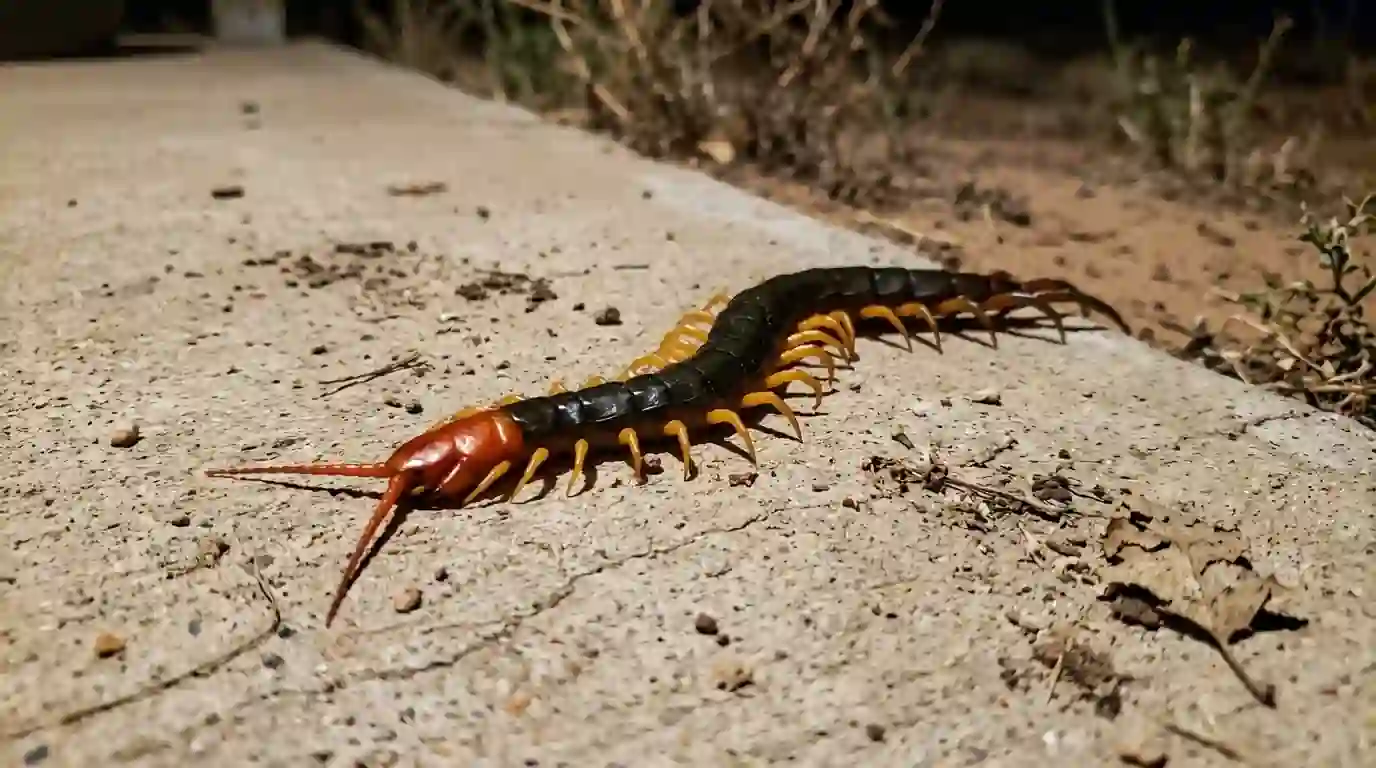
How to know whether you have centipedes or millipedes
The two look similar at a glance, but they behave very differently and need different handling.
Fast, flat, many-legged runner
Centipedes have one pair of legs per body segment and move quickly. House centipedes are thin with very long legs; the Texas redheaded centipede is much larger and brightly colored.
Slow, round, curling crawler
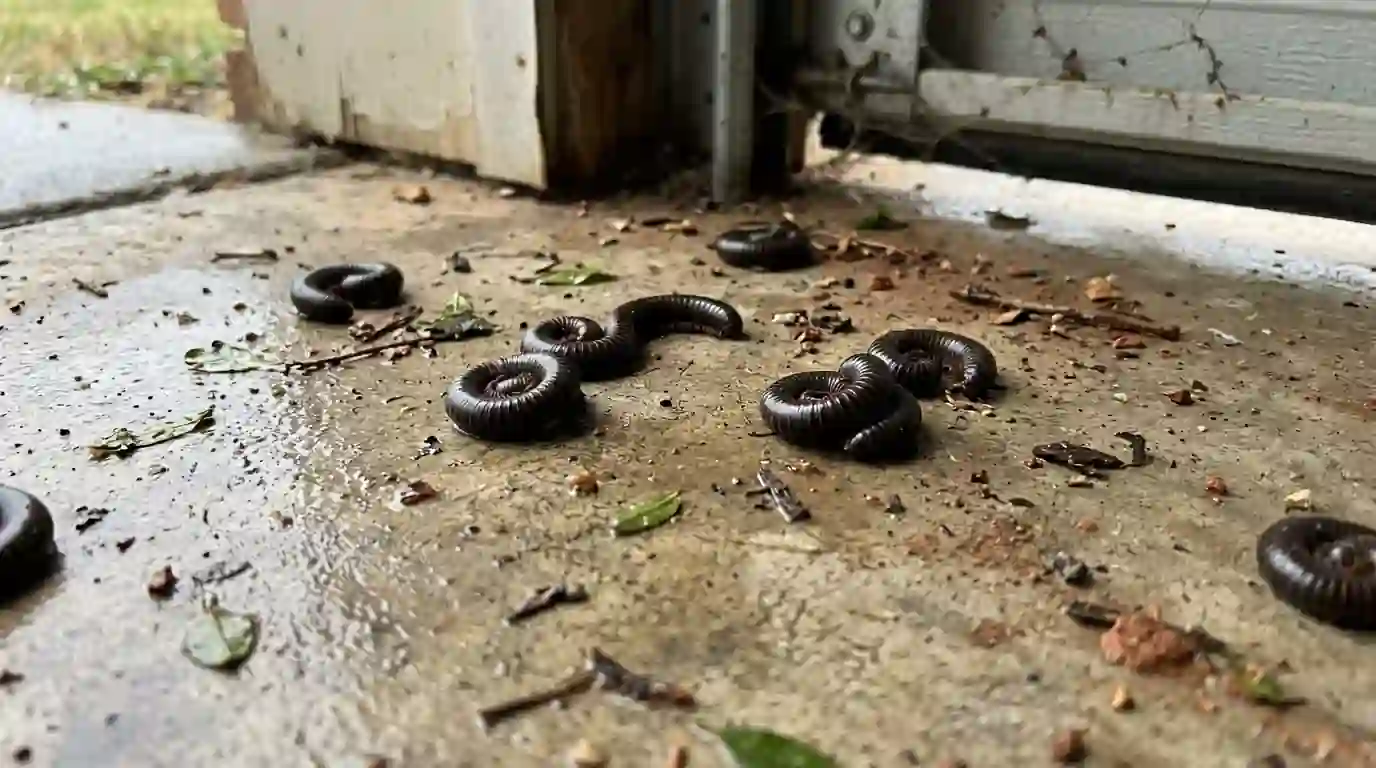
Millipedes have two pairs of legs per segment, move slowly and curl into a tight spiral when disturbed. They are usually brown or black.
Masses of millipedes after rain
Dozens or hundreds of millipedes crawling up foundation walls, across patios and under doors, usually after a heavy fall storm.
Dead millipedes on the floor
Curled, dried-up millipedes along baseboards, in entryways and in the garage the morning after they crawled in.
Centipedes in damp rooms
Centipedes turn up in bathrooms, laundry rooms, garages and crawlspaces, especially at night, where they hunt other insects.
A faint odor from millipedes
Some millipedes give off a strong-smelling fluid when handled, and crushed ones can leave a stain on light carpet or tile.
The Texas redheaded centipede and why it gets attention
The Texas redheaded centipede is the one that makes people call. It can reach about 8 inches long, with a red or orange head, a dark blue to black body and yellow legs. It is a night hunter that feeds on insects, spiders and even small lizards, and it shelters under rocks, landscape timbers and debris during the day. It can deliver a painful bite through a pair of venom claws behind the head. The bite is very painful but rarely serious for healthy adults; anyone with a strong reaction, or a child who is bitten, should get medical advice.
Indoors, a redheaded centipede is usually a wanderer that came in through a gap under a door or a garage. The smaller house centipede is a different story. It can live indoors in damp spots and hunts cockroaches, silverfish and spiders. Seeing house centipedes regularly is a hint that there is other insect activity in the house for them to feed on, which we also look for on the visit.
Why millipedes march into Amarillo homes after fall storms
Millipedes live in damp soil, leaf litter and mulch, where they feed on decaying plant matter. In a dry climate like Amarillo's, they stay hidden most of the year. Heavy rain changes that. When a big storm soaks the ground, especially in late summer and fall, millipedes crawl up and out of saturated soil and move across lawns, patios and foundations by the hundreds. A 2023 Amarillo TV report noted that heat, dryness and then cooling weather pushed millipedes, along with spiders, scorpions and cockroaches, into homes.
Amarillo's heavy clay soil holds water after a storm, so the soil around a slab can stay soggy longer than you would expect. Flower beds watered daily, thick mulch against the brick and downspouts that dump water right at the foundation all keep a band of damp soil next to the house. That is exactly where millipedes build up between storms.
The good news is that the dry indoor air in a Panhandle home kills millipedes within hours. Those dead millipedes on the kitchen floor the morning after a storm are not a sign of an indoor infestation. They are a sign that the band of soil along the foundation is wet enough to hold a large population. Homes on pier-and-beam foundations in older parts of town are the exception, since a damp crawlspace can keep millipedes alive under the floor for weeks.
Need centipede & millipede control in Amarillo?
Call and tell us what you are seeing. The line is answered 24 hours a day, every day.
What our technician does about centipedes and millipedes
The treatment happens mostly outside, at the damp band around the foundation where both pests live.
Look for moisture sources
We check downspouts, flower bed watering, mulch depth, AC condensate lines and leaky outdoor faucets that keep soil wet against the foundation. We point out fixes that will make the biggest difference.
Treat the foundation and beds
Our technician applies a residual treatment along the foundation and into mulch and rock beds, plus granules in thick beds where spray does not soak in. This catches millipedes and centipedes before they reach the walls.
Treat entry points
We treat door thresholds, garage door edges and weep holes in brick veneer, the common routes into the house.
Check indoor hiding spots
Inside, we look at bathrooms, laundry rooms, garages and crawlspaces for damp areas and for the insects house centipedes would be hunting.
Explain what not to spray
We tell you to vacuum millipedes indoors instead of spraying them. Indoor spraying adds nothing, since they die quickly in dry air anyway.
Ways to dry out the foundation band they live in
Cutting moisture near the house reduces both pests between treatments.
- Extend downspouts so water drains several feet away from the foundation.
- Pull mulch back from the slab and keep it a couple of inches thick, not piled high.
- Move landscape timbers, rocks and firewood away from the walls.
- Water flower beds in the morning instead of the evening.
- Check AC condensate lines and outdoor faucets for leaks that soak the soil.
- Replace worn door sweeps and garage door bottom seals.
- Vacuum millipedes that get inside, and empty the vacuum bag outdoors.
Centipede or millipede: a side-by-side check
Use this to sort out which one you found before you call.
| Trait | Centipedes | Millipedes |
|---|---|---|
| Legs | One pair per segment, long and spread out | Two pairs per segment, short and tucked under |
| Movement | Fast, darting, hides quickly | Slow, curls into a spiral when touched |
| Diet | Hunts insects, spiders and small prey | Eats decaying leaves and plant matter |
| Bite or harm | Can bite; the redheaded kind is painful | Does not bite; some leave a smelly fluid |
| Indoors | Lives in damp spots and hunts other bugs | Dies within hours in dry indoor air |
What changes the cost of centipede and millipede control in Amarillo
Price follows how much outdoor bed area and moisture work the house needs.
- Bed and mulch area
- Homes with deep mulch beds and rock landscaping along most of the foundation take more time to treat.
- Crawlspace
- Pier-and-beam homes with damp crawlspaces need extra inspection and treatment.
- Size of the invasion
- A large millipede migration after a storm may call for a follow-up treatment as more come up out of the soil.
- Other insect activity
- If house centipedes point to cockroaches or silverfish indoors, treating those adds to the job.
We quote after an inspection, or by phone once we know what you are seeing and what the yard and foundation look like.
Product lines a technician may choose from, matched to the pest, the room and who lives there:
Where we handle centipede & millipede control
Neighborhoods and towns we cover most often, with ZIP codes. The rest of Amarillo and the towns in our service area are covered too.
- City View79118
- Puckett79109
- Ridgecrest79109
- Sleepy Hollow79121
- Hollywood-Scotsman79110
- Windsor79109
- Belmar79106
- The Greenways79119
- Heritage Hills79119
- South Georgia Place79110
- Wolflin79109
- Eastridge79107
- Canyon79015
- Hereford79045
- Pampa79065
- Dumas79029
- Borger79007
- Bushland79012
Centipede & Millipede Control questions from Amarillo homeowners
Is the Texas redheaded centipede dangerous in Amarillo homes?
Its bite is very painful but rarely dangerous for healthy adults. It can grow to about 8 inches and has venom claws behind the head. Anyone with a strong reaction, swelling that spreads, or a child who is bitten should get medical advice. Do not try to pick one up; trap it under a container and slide paper underneath.
Why should I vacuum millipedes instead of spraying them indoors?
Because they die within hours in dry indoor air anyway, so spraying adds chemicals to your floors without changing the outcome. Vacuuming removes live and dead ones cleanly. The real control happens outside, where we treat the damp beds and foundation they crawl out of and close the gaps they use.
Why do millipedes show up in Amarillo after heavy fall rain?
Heavy rain floods the soil and mulch where they live, and they crawl up and out looking for drier ground. Amarillo's clay soil holds water, so the soil around a foundation can stay soaked for a while. They move across patios and walls and slip under doors, then die quickly inside.
Do house centipedes mean I have other bugs in my house?
Often, yes. House centipedes hunt cockroaches, silverfish, spiders and other small insects, so seeing them regularly suggests there is food for them indoors. They also need some moisture. Our technician looks for both: the damp spot and the insects that are feeding the centipedes.