Flea control for Amarillo homes, yards and pets
Fleas biting your ankles in a house you just moved into, or a dog that will not stop scratching, usually mean a flea cycle has taken hold in carpet, pet bedding and shady parts of the yard.We treat inside and out to break that cycle, and we answer 24/7.
How do you get rid of fleas in an Amarillo house and yard?
You get rid of fleas by treating the pets, the house and the shady parts of the yard at the same time, then following up as cocoons hatch. Our technician treats carpets, furniture and pet resting spots with an adulticide plus an insect growth regulator, treats shaded yard areas and checks for wildlife under the house. Your vet handles the pets, and you vacuum daily for two weeks.
Signs fleas have taken over the house
Fleas are small and fast, so these clues usually show up before you get a good look at one.
Bites around the ankles
Small, itchy red bumps, often in clusters around the ankles and lower legs, are a classic sign of fleas jumping up from the carpet.
Pets scratching and chewing
Dogs and cats biting at their lower back, the base of the tail and the belly, sometimes with hair loss or red skin.
Flea dirt in pet bedding
Tiny black specks in pet beds or on a pet's skin that turn reddish when pressed on a wet paper towel are flea droppings.
Fleas on white socks
Walk slowly across the carpet in white socks, and small dark specks that jump are fleas.
Fleas in a home without pets
Fleas biting in a vacant home, a new rental or a house where the pets are long gone usually means cocoons were waiting.
Activity near the crawlspace
Fleas concentrated near crawlspace vents, a porch or a gap under the house can point to wildlife living underneath.
Why fleas suddenly appear in a vacant or new home
The cat flea causes most flea problems in Texas, on dogs as well as cats. Its life cycle explains a lot of the frustration. An adult female lays eggs on the pet, and those eggs fall off wherever the animal rests. The larvae live in carpet, under furniture cushions and in shady soil, feeding on organic debris and flea droppings. Then they spin cocoons. Inside the cocoon, a fully developed flea can wait for a long time until vibration, warmth or carbon dioxide tells it a host is close.
That is how people move into a house that has been empty for weeks and get bitten within a day. The previous owner's pets left eggs behind, the fleas developed and waited in the carpet, and the new family's footsteps woke them all at once. It is also why flea treatment always involves a follow-up period. Cocoons protect the flea inside from most treatments, so new adults keep emerging for a couple of weeks until the last cocoons hatch and the fleas contact the treated surfaces.
What our technician does to break the flea cycle
Fleas are beaten by treating every stage at once, so the visit covers the house, the yard and what lives under it.
Check for wildlife under the house
We look at crawlspaces, porches, decks and gaps under the slab for signs of skunks, raccoons, feral cats or other animals. If wildlife is living under the house, it must be dealt with first, or fleas will keep coming.
Treat carpets and furniture
Our technician treats carpets, rugs, under furniture, upholstered pieces and pet resting areas with an adult flea product combined with an insect growth regulator, which stops eggs and larvae from developing.
Focus on pet resting spots
Pet beds, the spot behind the couch where the dog sleeps and the corner of the bedroom where the cat curls up get extra attention, since that is where most eggs and larvae collect.
Treat shaded yard areas
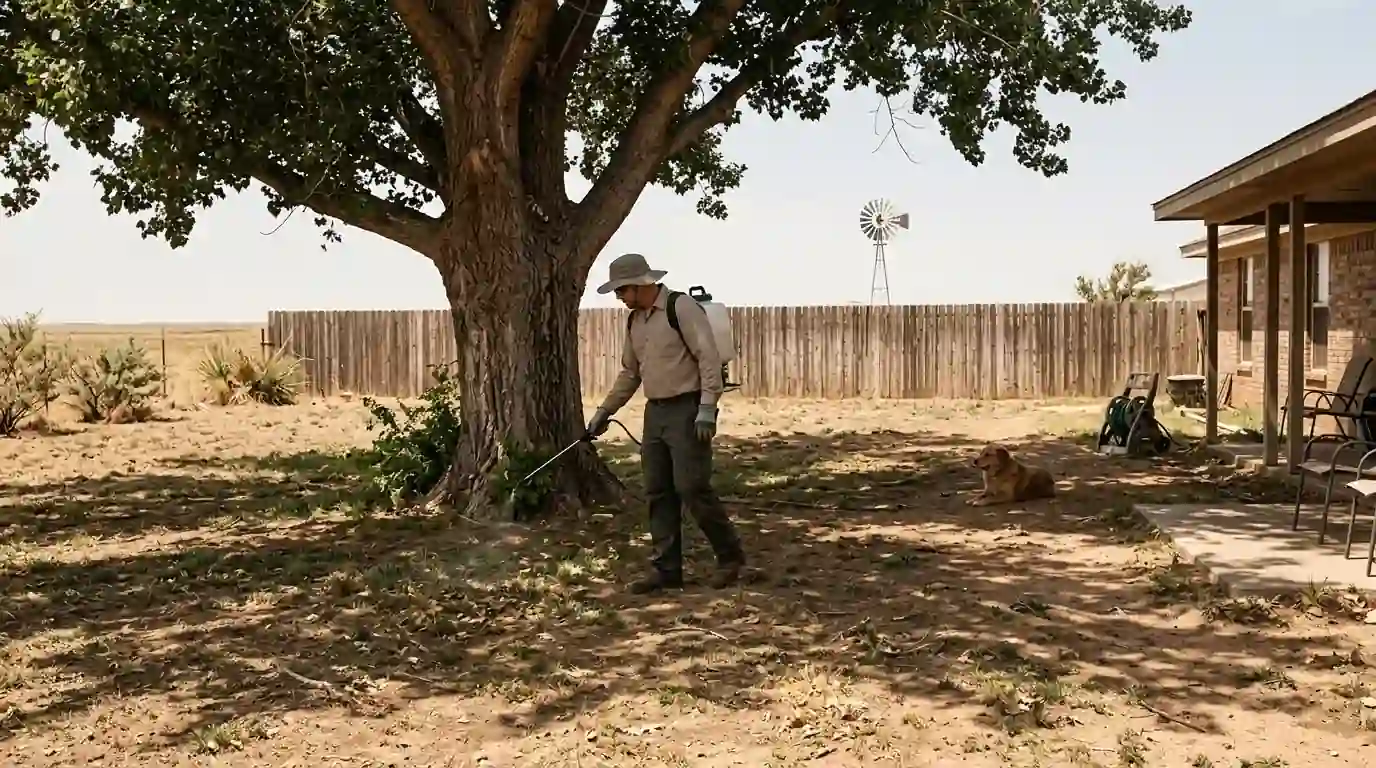
Outside, we treat shady spots where pets lie, under decks, along the north side of the house and beneath shrubs. Sunny open lawn does not need treatment because larvae die there.
Follow up as cocoons hatch
We explain what to expect over the next two weeks and come back if fleas are still active after that window, since a second treatment sometimes finishes off a heavy infestation.
Need flea control in Amarillo?
Call and tell us what you are seeing. The line is answered 24 hours a day, every day.
Where fleas survive in the Panhandle sun and wind
Flea larvae die in hot, dry, sunny soil, which works in our favor across much of an Amarillo yard. The Panhandle sun bakes open lawn and bare dirt in summer, and spring humidity can drop below 15 percent. Fleas cannot develop in those conditions. Instead, they gather in the few shady, protected spots: under a wooden deck, along the north side of the house, beneath dense shrubs, inside a dog house and in the dirt where a dog likes to lie in the shade of a tree.
Older neighborhoods with mature trees and pier-and-beam homes tend to have more of those spots. A crawlspace under a 1930s or 1940s house offers shade, cover and sometimes a den for a skunk, raccoon or stray cat, and an animal living there can keep a flea population going year round. Newer slab homes on the edges of town have fewer hiding places but can pick up fleas from feral cats or wildlife coming in from open land nearby.
Indoors, central heat keeps carpets warm enough for fleas all winter, so a flea problem inside the house does not wait for spring. Amarillo's average first freeze around October 20 slows fleas in the yard, but a dog that sleeps indoors carries the cycle straight through the cold months. Homes with pets that go in and out often see a jump in flea activity in late summer, when shaded beds stay damp after the thunderstorm season.
What you need to do for the treatment to work
Flea control is a team effort between us, you and your vet.
- Talk to your vet about a flea product for every dog and cat in the house, on the same day as our treatment.
- Vacuum carpets, rugs and furniture before the treatment, and empty the vacuum outdoors.
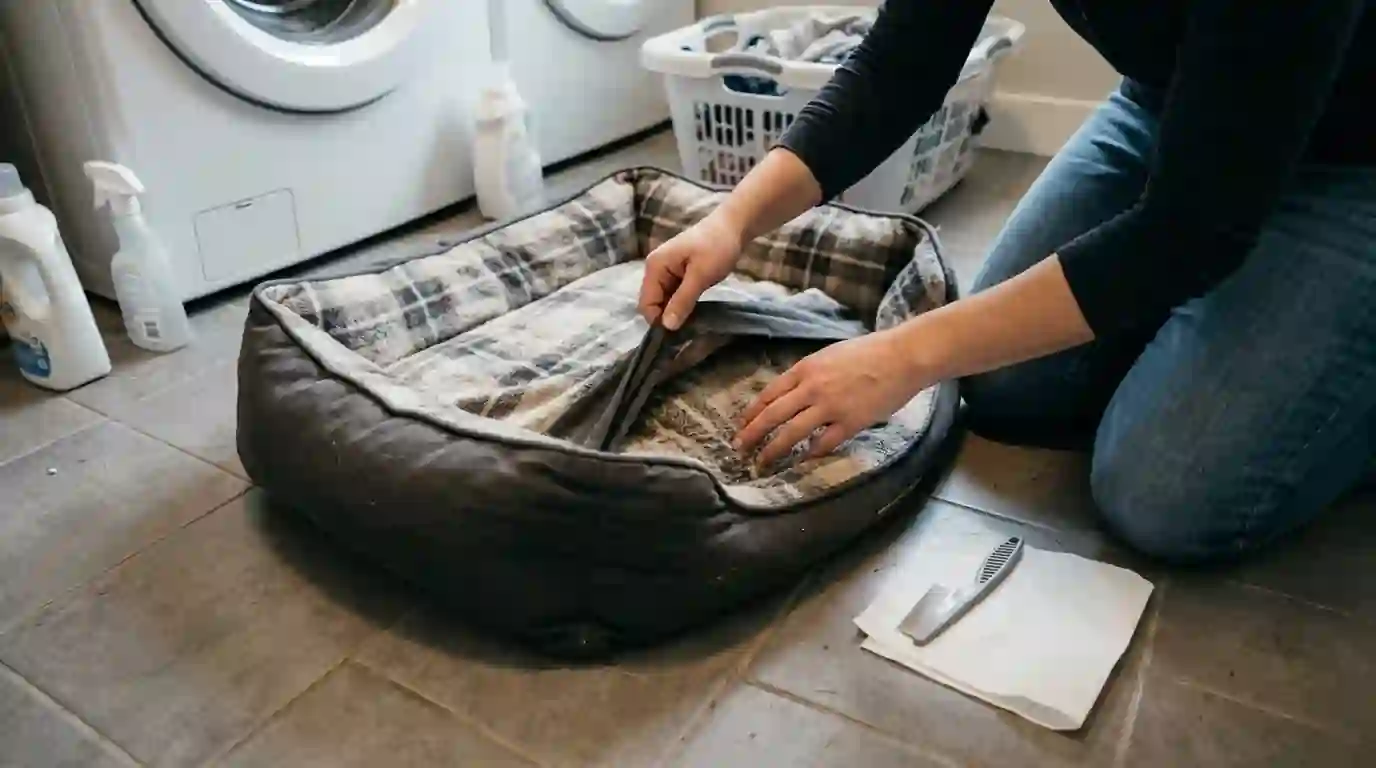
- Wash pet bedding, throw blankets and washable rugs in hot water.
- Pick up toys, clothes and items off the floor so the carpet can be treated.
- Vacuum every day for two weeks afterward, since vibration brings fleas out of their cocoons.
- Keep pets out of crawlspaces and away from areas where wildlife has been.
What changes the cost of flea control in Amarillo
Price depends on how much of the house and yard needs treatment and what is driving the fleas.
- Home size and flooring
- More rooms of carpet and rugs take more product and time than mostly hard floors.
- Yard treatment
- Adding shaded yard areas, decks and dog runs adds to the visit.
- Wildlife under the house
- If animals are living under the home, removing them and sealing the access is a separate job that must happen first.
- Severity and follow-up
- Heavy infestations, especially in vacant homes, sometimes need a second treatment.
We quote after an inspection, or by phone once we know the size of the home, the pets involved and what the yard looks like.
Product lines a technician may choose from, matched to the pest, the room and who lives there:
Where we handle flea control
Neighborhoods and towns we cover most often, with ZIP codes. The rest of Amarillo and the towns in our service area are covered too.
- City View79118
- Puckett79109
- Ridgecrest79109
- Sleepy Hollow79121
- Hollywood-Scotsman79110
- Windsor79109
- Belmar79106
- The Greenways79119
- Heritage Hills79119
- South Georgia Place79110
- Wolflin79109
- Eastridge79107
- Canyon79015
- Hereford79045
- Pampa79065
- Dumas79029
- Borger79007
- Bushland79012
Flea Control questions from Amarillo homeowners
Why does my new Amarillo house have fleas when I have no pets?
Because fleas from the previous owner's pets waited in their cocoons. Fully developed fleas can stay inside the cocoon for a long time, then hatch all at once when they sense footsteps, warmth or breath. That is why vacant homes and new rentals often seem to get fleas overnight. Treating the carpet with an adulticide and growth regulator, then vacuuming daily, clears them out.
Can you treat my dog or cat for fleas during the visit?
No. Pet treatment belongs with your veterinarian, who can pick the right product for your pet's age, weight and health. Treating the pets is still essential, so plan it for the same day we treat the house and yard. If the pets keep carrying fleas, the home treatment cannot keep up.
How long after flea treatment will I still see fleas in my Amarillo home?
Expect to see some fleas for up to about two weeks. Cocoons protect developing fleas from treatment, so new adults keep hatching and then die after contacting treated surfaces. Daily vacuuming speeds that up by triggering hatching. If you are still seeing a lot of fleas after two weeks, call us to recheck.
Do skunks or raccoons under the house cause flea problems?
They often do. Wildlife living in a crawlspace or under a porch carries fleas and drops eggs where it sleeps, which can keep reinfesting the house even after treatment. That is why we check under the home first. If animals are living there, they need to be removed and the access sealed before flea treatment will last.