Boxelder bug and elm leaf beetle control in Amarillo
When boxelder bugs coat a sunny wall in fall or elm leaf beetles crawl out of window frames in winter, they are looking for a warm place to wait out the cold.We treat the outside before they move in and seal the gaps they use. We answer 24/7.
How do you keep boxelder bugs and elm leaf beetles out of an Amarillo house?
You keep boxelder bugs and elm leaf beetles out by treating the sunny exterior walls in early fall, before they crawl inside, and sealing the cracks around windows, siding and attic vents. Our technician treats the south and west walls, eaves and window frames, and checks entry gaps. Bugs already inside should be vacuumed, not crushed, until spring.
Two fall invaders from Amarillo's shade trees
Boxelder bugs and elm leaf beetles come from different trees and look nothing alike, but they cause the same kind of trouble. Both spend the warm months feeding on a host tree, and both look for a protected spot to spend the winter when the weather turns. In Amarillo, that spot is often the inside of a wall, a window frame or an attic.
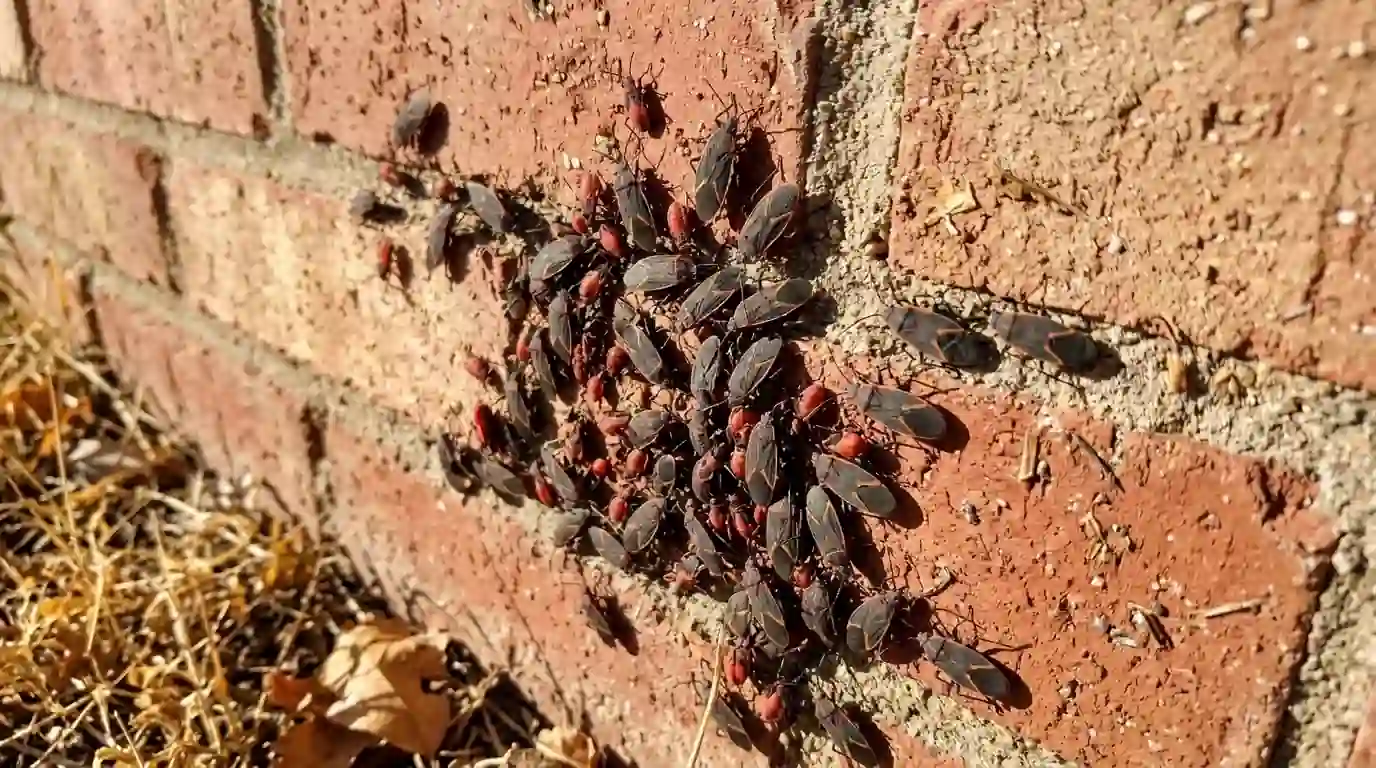
Boxelder bugs are about half an inch long, black with red or orange lines along the back and wing edges. They feed mostly on the seeds of female boxelder trees and also on maple and ash. Elm leaf beetles are smaller, about a quarter inch, yellowish to olive green with a dark stripe down each side of the back. They feed on elm leaves, especially Siberian and European elms. Neither bites people in any serious way, damages the house or breeds indoors. The problem is that they can show up in large numbers and keep appearing all winter.
Signs these overwintering bugs are moving in
These clues usually show up from late summer through the first warm days of spring.
Bugs massing on sunny walls
Boxelder bugs gather by the dozens or hundreds on the south and west sides of the house on warm fall afternoons, especially on light-colored siding and brick.
Rusty, lacy elm leaves
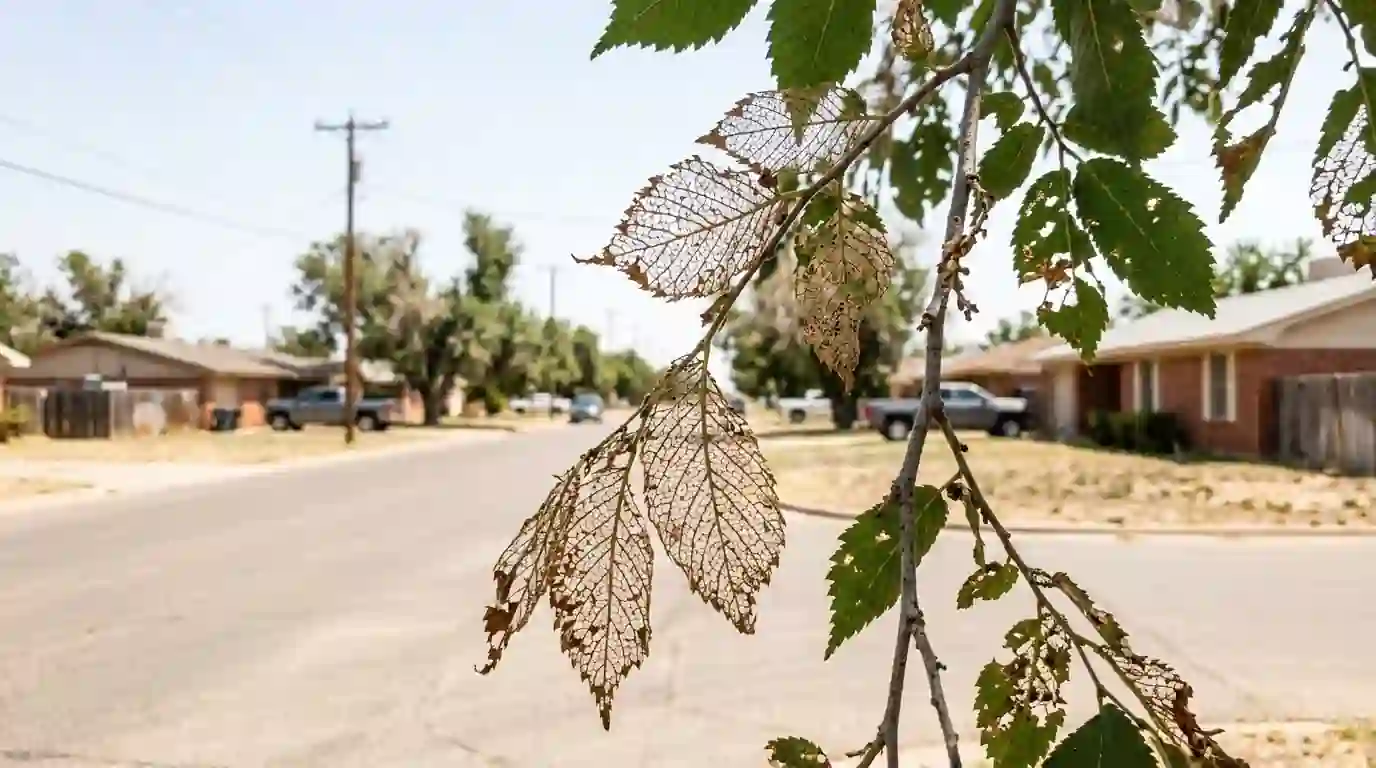
Elm leaf beetle larvae skeletonize leaves, eating the soft tissue between the veins so the leaves look lacy and turn rusty brown by midsummer.
Beetles in window frames
Small yellow-green beetles crawling in window tracks, around the frame or on curtains during fall and winter are usually elm leaf beetles.
Bugs on warm winter days
On a sunny winter afternoon, bugs that were sleeping in the walls wake up and wander into rooms, especially upstairs and near south windows.
Orange stains on curtains
Boxelder bugs can leave small reddish-orange spots on fabric, walls and curtains, particularly when crushed.
Clusters at the base of trees
Boxelder bug nymphs and adults gather on the trunks of boxelder trees and on the ground below them in late summer.
Siberian elms, boxelders and Amarillo's older neighborhoods
Siberian elms are tough trees that put up with wind and drought, and many of Amarillo's older neighborhoods still have them. Wolflin's historic streets are lined with Siberian elms, and the same kind of mature tree canopy runs through other established parts of town. Texas A&M AgriLife notes that elm leaf beetles prefer Siberian and European elms and can produce several generations a year on the South Plains. That means the beetles build up through the summer, and by fall, there can be a lot of adults looking for a warm place to hide.
Boxelder trees are less common than elms but turn up in older yards and along creeks and draws. A single female boxelder with a good seed crop can feed enough bugs to cover the sunny side of several houses. Older homes in these neighborhoods tend to have more gaps around wood windows, trim and attic vents than newer construction, which makes it easier for both insects to get into the walls.
Weather plays its part too. Amarillo's cold fronts can drop the temperature 50 to 60 degrees F in 12 hours, and the warm afternoon before a front often sends bugs scrambling for cover all at once. The reverse happens in winter. A string of mild, sunny days in January can wake bugs hiding in the walls, which is why people are surprised to find boxelder bugs on a bedroom window months after the trees dropped their seeds.
Need boxelder bug & elm beetle control in Amarillo?
Call and tell us what you are seeing. The line is answered 24 hours a day, every day.
How our technician treats for fall invaders
Timing matters more than anything, so the visit is built around catching the bugs on the outside.
Find the host trees
We look for boxelder and elm trees on your property and next door, and check the elms for the lacy brown leaf damage that tells us beetle numbers are high.
Inspect sunny walls and gaps
Our technician checks the south and west sides of the house, window frames, siding joints, soffits and attic vents for the gaps bugs use to get into the walls.
Treat the exterior in early fall
We apply a residual treatment to the sunny walls, eaves, window and door frames and the foundation line. Timed in late summer or early fall, before the bugs move inside, it knocks down the bugs as they land and crawl.
Seal the entry points
Small gaps around windows, trim and utility lines are sealed where practical on the visit, and we point out larger repairs like missing vent screens or loose siding.
Advise on bugs already inside
Once bugs are inside the walls, spraying indoors does little. We explain how to vacuum them as they appear and when to expect activity to stop.
What you can do before and after the bugs arrive
These steps cut down how many bugs spend the winter in your walls.
- Call for exterior treatment in late summer or early fall, before bugs start massing.
- Repair torn window screens and replace missing screens on attic and soffit vents.
- Caulk gaps around window frames, door trim and where cables and pipes enter the house.
- Vacuum bugs indoors rather than crushing them, which can leave stains.
- Rake up boxelder seeds and fallen elm leaves where bugs gather in fall.
- Keep shrubs and vines trimmed back from sunny walls.
What changes the cost of boxelder bug and elm leaf beetle control in Amarillo
Price comes down to the size of the exterior and how much sealing the house needs.
- Exterior wall area
- Two-story homes and houses with large sunny walls take longer to treat.
- Number of host trees
- Properties with several boxelders or a row of Siberian elms tend to need more thorough treatment.
- Gaps and older construction
- Older homes with wood windows and loose trim often need more sealing work.
- Timing and repeat visits
- An early fall treatment usually covers the season, but heavy years can call for a follow-up.
We quote after a look at the house, or by phone once we know the size of the home and the trees around it.
Product lines a technician may choose from, matched to the pest, the room and who lives there:
Where we handle boxelder bug & elm beetle control
Neighborhoods and towns we cover most often, with ZIP codes. The rest of Amarillo and the towns in our service area are covered too.
- City View79118
- Puckett79109
- Ridgecrest79109
- Sleepy Hollow79121
- Hollywood-Scotsman79110
- Windsor79109
- Belmar79106
- The Greenways79119
- Heritage Hills79119
- South Georgia Place79110
- Wolflin79109
- Eastridge79107
- Canyon79015
- Hereford79045
- Pampa79065
- Dumas79029
- Borger79007
- Bushland79012
Boxelder Bug & Elm Beetle Control questions from Amarillo homeowners
When is the best time to treat for boxelder bugs in Amarillo?
Late summer to early fall, before the bugs start crawling into the walls. Once they are inside, treatment has much less effect and you will be vacuuming them until spring. Watch for bugs gathering on sunny walls and tree trunks in late August and September; that is the cue to call.
Why do elm leaf beetles show up inside my Amarillo house in winter?
Adult elm leaf beetles spend the winter in warm, dry places, and the inside of a wall or a window frame qualifies. On a sunny winter day, the warmth wakes them up and they crawl into rooms. They are harmless and do not breed indoors. Exterior treatment in fall and sealing window gaps reduce how many get in.
Should I cut down the Siberian elm or boxelder tree causing the bugs?
That is your call, and it is a big one, since mature shade trees are hard to replace in the Panhandle. Removing a single tree does not always help, because neighboring trees produce bugs too. Most people get good results from timed exterior treatment and sealing. If the tree is already failing, removing it is a separate decision.
Do boxelder bugs damage the house or the boxelder tree?
Neither in any serious way. They feed on seeds and a little on leaves, so the tree is fine. Indoors, they do not chew wood, eat fabric or breed. The real issues are their numbers, the reddish stains they can leave on curtains and walls, and a smell when crushed. Vacuuming is the cleanest way to deal with ones inside.