Prairie dog control near Amarillo lots and acreage
A black-tailed prairie dog town on the lot next door can spread into your yard, pasture or horse pen within a season.We check the colony, rule out protected burrowing owls and plague warning signs, then lay out the options that fit your land.
How do you get rid of prairie dogs on property near Amarillo?
Prairie dog control starts with an inspection of the colony, not a treatment. Our technician maps active burrows, checks for burrowing owls (federally protected) and for signs of a plague die-off, then recommends a plan such as burrow treatment, removal of the animals, barriers or habitat changes. Most colonies need follow-up, and neighboring towns can recolonize treated ground.
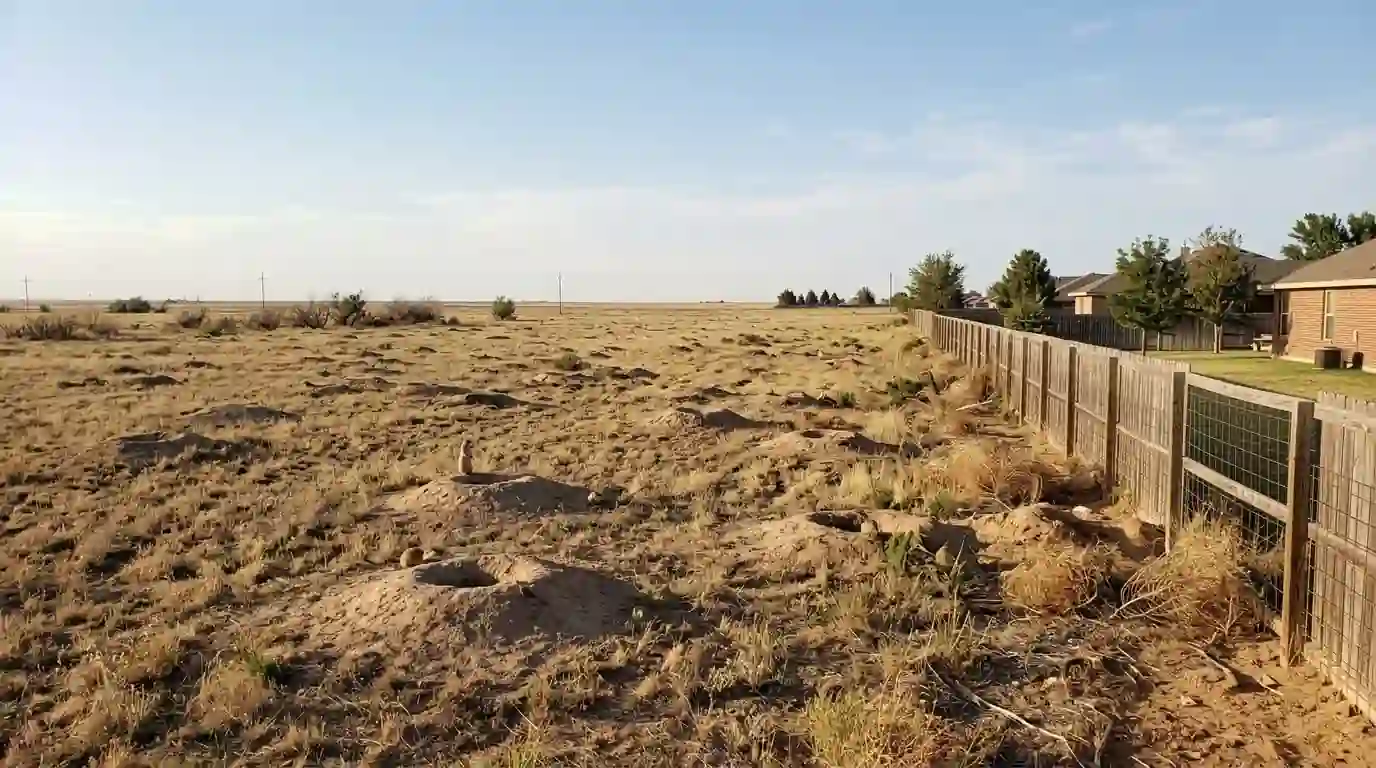
Prairie dogs on the Texas Panhandle and the rules around them
Black-tailed prairie dogs are part of the High Plains landscape, and towns turn up on vacant lots, highway edges, pasture corners and the open ground between new subdivisions around Amarillo. Texas Health and Safety Code section 825.036 declares prairie dogs a public nuisance, and it lets county commissioners courts buy poison for residents to use. In plain terms, Texas does not stop a landowner from controlling prairie dogs on their own property.
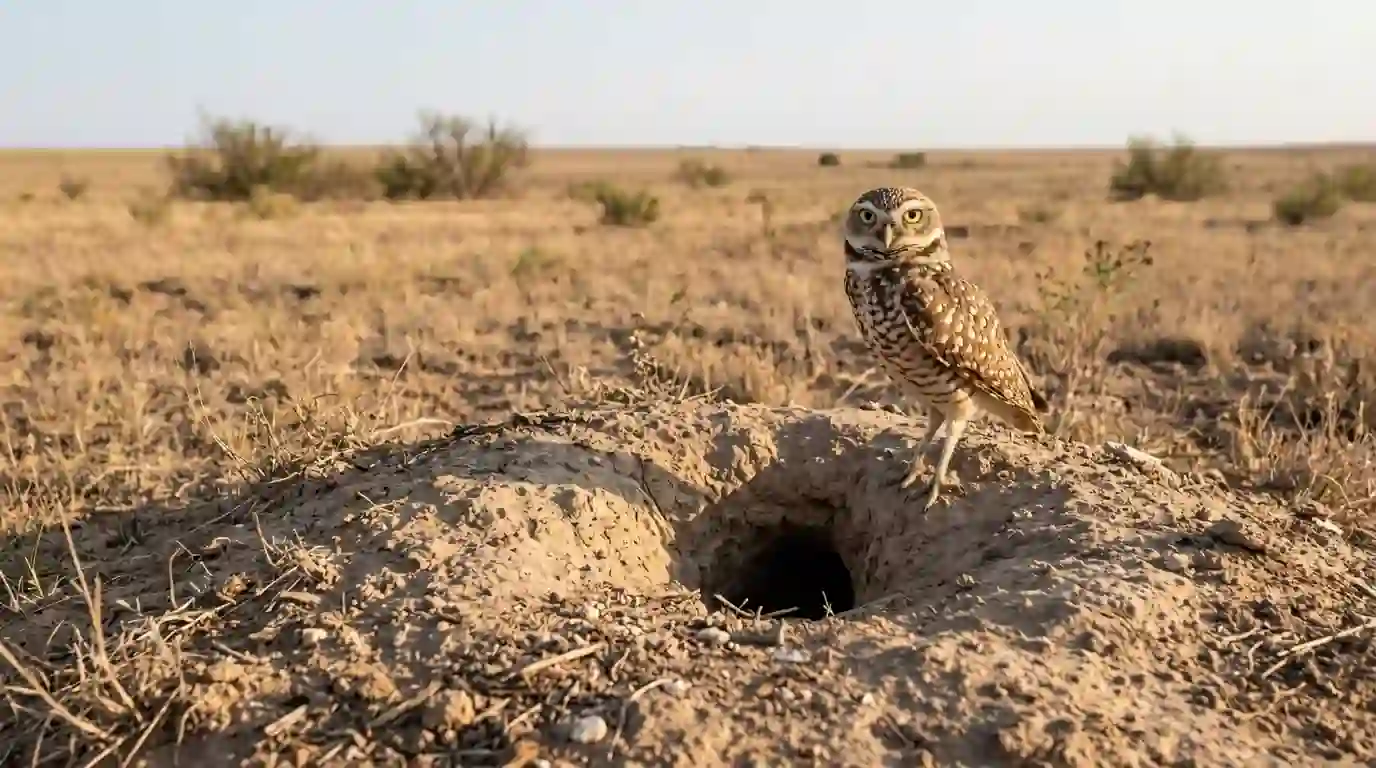
That does not mean anything goes. Plague is endemic in the Panhandle, and prairie dogs are the main regional reservoir for it. Burrowing owls often move into prairie dog burrows, and they are federally protected, so a treatment that harms them is a real legal problem. Cities also take their own approach: in March 2026 the City of Amarillo worked with a wildlife rehab group to relocate the colony at John Stiff Memorial Park rather than poison it.
Our job is to give you an accurate picture of the colony, what can be done on your land, what the risks are and how likely the prairie dogs are to come back from neighboring ground.
Signs a prairie dog town is moving onto your land
Prairie dogs spread at the edges first, so watch the side of your property closest to an existing colony.
New mounds at the fence line
Raised, cone or crater-shaped dirt mounds a few feet across, starting on the side nearest the neighboring town.
Clipped vegetation
Grass mowed down to bare ground around burrows, because prairie dogs clip tall plants to keep a clear view of predators.
Barking alarm calls
Sharp, repeated chirps when you or a dog walk toward the area, as sentries warn the colony.
Holes in horse pens or arenas
Burrow openings in pens, round pens and turnout areas, where a hoof can drop in.
Damage near foundations and slabs
Burrows dug along a shop slab, barn footing or septic field, where the soil is loose and easy to work.
Fresh dirt after rain
Mounds rebuilt within a day or two of a storm, which tells you the burrows are active.
Plague caution: what to watch for and how to stay safe
Plague in the Panhandle is carried by fleas, and prairie dogs are the animal most often caught up in outbreaks. A colony hit by plague can die off quickly. Warning signs include a town that suddenly goes quiet, dead prairie dogs on the surface, and spider webs stretched across burrow openings, which mean nothing has gone in or out for days.
If you see those signs, keep pets and children away from the colony, keep dogs leashed and do not handle any dead animals. Put flea control on dogs and cats that roam near the area. Report suspected die-offs to your local health department. Our technicians treat a quiet colony with webbed burrows as a reason to slow down and check before any work starts.
Active, noisy colonies still carry some risk, since fleas can be present without a die-off. We wear protective gear around burrows and recommend that you stay out of the colony itself.
Need prairie dog control in Amarillo?
Call and tell us what you are seeing. The line is answered 24 hours a day, every day.
How our technician approaches a prairie dog colony
Every prairie dog job starts on foot with a careful look at the whole town.
Walk and map the colony
We count active burrows, note where the town meets your property line and look at neighboring ground that could feed new prairie dogs back in. This tells us whether the colony is on your land or mostly next to it.
Check for burrowing owls
Before any treatment, we look for burrowing owls at burrow mouths, on fence posts and on nearby mounds. Burrows in use by owls are left alone, and we explain how that affects the plan.
Look for plague warning signs
We check for webbed burrows, dead animals and a quiet town. If a die-off looks likely, we hold off and point you to the health department.
Lay out the options
Depending on the colony size, land use and neighbors, options include burrow treatment, trapping and removal, filling collapsed burrows, barriers along a fence line and keeping grass taller at the edges. We explain what each can and cannot do.
Treat and fill
Once you choose a plan, we carry it out with precautions for pets, livestock and kids, then fill or collapse burrows where that helps us see which ones reopen.
Follow up on reopened burrows
Burrows that reopen after treatment get treated again on a return visit. Follow-up is a normal part of prairie dog work, not a sign something failed.
Honest limits of prairie dog control
Prairie dogs live in large family groups, and a town of any size usually has more animals than you can see on a single morning. Clearing a colony that sits entirely on your land is a goal we can usually reach. Keeping prairie dogs away when an untreated town lies right across the fence is much harder, because young prairie dogs disperse each year and will move into empty burrows on your side.
That is why we talk with you about the neighboring land at the start. In some cases the most practical goal is keeping a horse pen, arena or septic field clear and pushing the colony edge back, rather than wiping out the whole town. We would rather set a goal you can actually keep than promise a result the neighbors' pasture will undo.
What you can do on your property
These steps support any treatment and make your ground less inviting.
- Keep dogs leashed or out of the colony area, and keep them on flea control.
- Never handle dead prairie dogs; report webbed burrows or sudden die-offs to the health department.
- Let grass grow taller along the colony edge, since prairie dogs avoid areas where they cannot see.
- Fill and pack abandoned burrows in pens and arenas so you can spot new digging.
- Talk with neighbors about the colony; coordinated control across fence lines lasts longer.
- Do not disturb owls you see standing at burrow openings, and let us know where you saw them.
What changes the cost of prairie dog control in Amarillo
Prairie dog work is priced on the colony and the land, not per animal.
- Number of active burrows
- A few dozen burrows on a residential lot is a different job from a town spread across several acres.
- Method chosen
- Burrow treatment, trapping and removal, and barrier work each take different time and materials.
- Burrowing owl presence
- Owls on site mean more careful planning and sometimes working around certain burrows or timing.
- Neighboring colonies
- Pressure from adjacent untreated land usually means more follow-up visits.
- Access and land use
- Livestock pens, arenas and septic fields need extra precautions compared with open pasture.
We quote after walking the colony, or give a rough idea by phone once we know its size and location.
Product lines a technician may choose from, matched to the pest, the room and who lives there:
Where we handle prairie dog control
Neighborhoods and towns we cover most often, with ZIP codes. The rest of Amarillo and the towns in our service area are covered too.
- City View79118
- Puckett79109
- Ridgecrest79109
- Sleepy Hollow79121
- Hollywood-Scotsman79110
- Windsor79109
- Belmar79106
- The Greenways79119
- Heritage Hills79119
- South Georgia Place79110
- Wolflin79109
- Eastridge79107
- Canyon79015
- Hereford79045
- Pampa79065
- Dumas79029
- Borger79007
- Bushland79012
Prairie Dog Control questions from Amarillo homeowners
Is it legal to get rid of prairie dogs on my land near Amarillo?
Generally yes. Texas Health and Safety Code section 825.036 calls prairie dogs a public nuisance, and county commissioners courts may even buy poison for residents. The big exception is wildlife that shares the burrows: burrowing owls are federally protected, so any prairie dog control has to avoid harming them. Our technician checks for owls before treatment.
Can prairie dogs near my house spread plague?
Plague is endemic in the Panhandle, and prairie dogs are the main regional reservoir, with fleas carrying it between animals. The risk to people is low but real. Keep pets on flea control and away from the colony, never handle dead prairie dogs, and report webbed burrows or a sudden die-off to the health department.
Why do prairie dogs come back after control?
Prairie dogs return when a neighboring town sends young animals into empty burrows, which happens every year as colonies disperse. Treated ground next to an untreated colony is especially hard to keep clear. Follow-up visits, filling burrows, taller grass at the edge and coordinating with neighbors all help hold prairie dog control longer.
Can prairie dogs be relocated instead of killed near Amarillo?
Relocation is possible but it is a bigger project that depends on having somewhere approved to take the animals. The City of Amarillo relocated the John Stiff Memorial Park prairie dog colony in March 2026 with a wildlife rehab group. For private land, our technician can talk through whether trapping and removal fits your situation and what it involves.
How do I know if burrowing owls are using prairie dog burrows?
Look for small, long-legged owls standing at burrow openings or on nearby fence posts during the day, often bobbing when approached. Pellets and feathers near a burrow are another clue. Burrowing owls are federally protected, so if you see them, let us know before any prairie dog control begins and keep away from those burrows.