Brown recluse and mouse control in Hamlet, Amarillo (79107)
Hamlet's early 1950s homes on Magnolia, Oak and Sycamore have had decades for gaps to open where siding meets the foundation.Mice use those gaps, and brown recluse settle into the garages and closets where years of storage pile up.
ZIP 79107North-northeast AmarilloPotter County
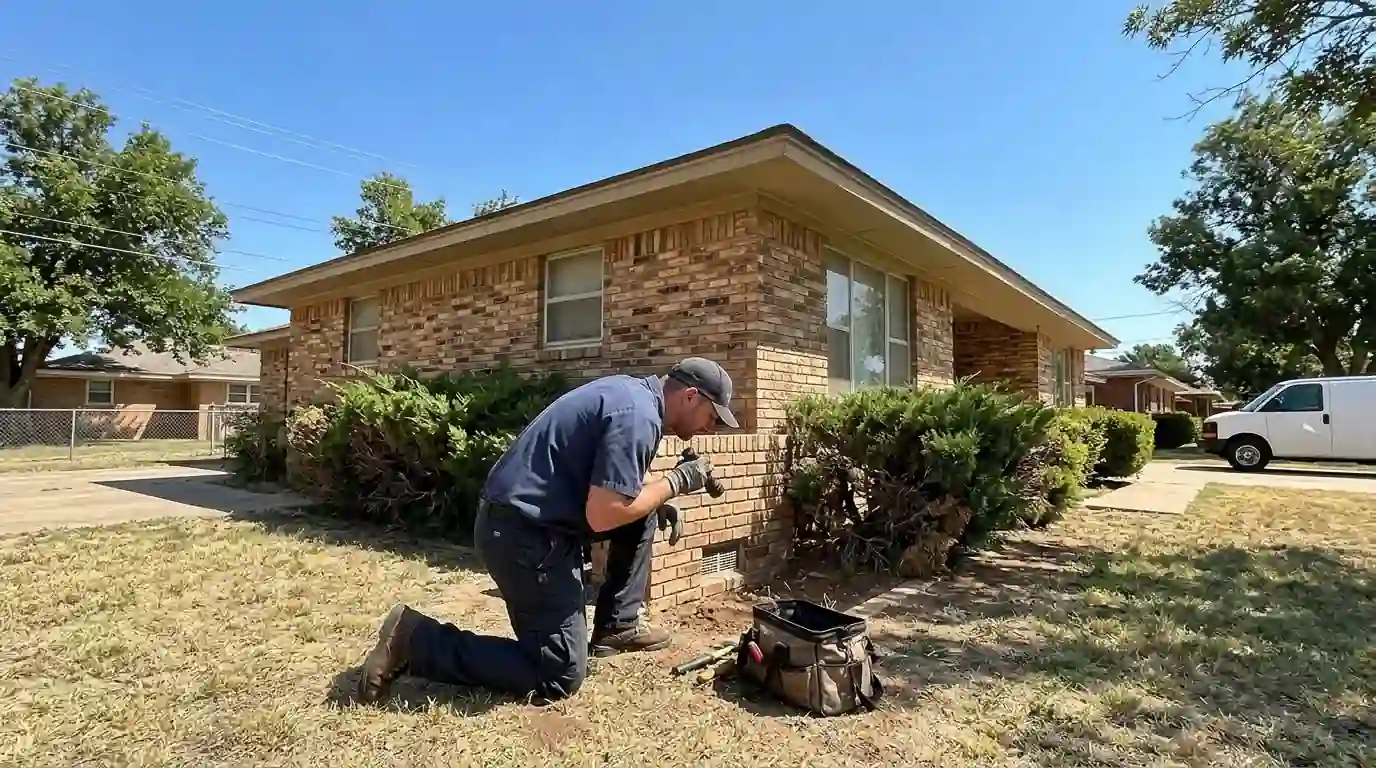
What does brown recluse treatment involve in a Hamlet home?
Brown recluse control in Hamlet starts with the storage. We check garages, closets and boxes for spiders and shed skins, place glue boards along walls to measure activity, and dust the wall voids and cracks where recluse hide by day. Then we seal gaps at the siding and foundation line, and suggest moving stored items out of cardboard into lidded tubs.
Tree-named streets and 1950s houses: where Hamlet pests start
Hamlet is a north-northeast Amarillo neighborhood in Potter County, known for streets named after trees, including Magnolia, Oak and Sycamore, with Hamlet Elementary on Sycamore St. Most of the houses date from the early 1950s. After roughly 70 years of Panhandle weather, homes in this part of the 79107 ZIP tend to share the same weak spots, no matter how carefully they are kept.
The most common is the joint where siding or brick meets the foundation. Wind, heat and hard freezes open hairline gaps there, and caulk from past repairs shrinks and peels away. Window frames and the bottom corners of garage doors wear in the same way. A house mouse can squeeze through an opening roughly a quarter inch across, and once inside it nests in walls, behind the stove and in garage boxes.
Storage is the other factor. Garages, sheds and hall closets in older homes tend to fill with boxes, and brown recluse love undisturbed cardboard, folded clothes and the space behind baseboards. Their mating season runs from April to July, when males roam and turn up in tubs, shoes and bedding. German cockroaches round out the list in kitchens and baths.
Telltale signs in a Hamlet garage, closet or kitchen
Recluse, mice and roaches each leave their own kind of evidence.
Papery skins in boxes
Pale shed skins at the bottom of storage boxes or along shelf edges mean recluse are growing up there.
A spider in the tub at dawn
Recluse that roam at night can't climb slick porcelain, so a morning find in the tub or sink is a common clue.
Violin-marked spiders on glue boards
A light brown spider with a darker violin shape behind the head, caught on a trap by a wall, confirms recluse.
Droppings by the water heater
Rice-sized droppings in the water heater closet, utility room or under the kitchen sink show a mouse runway.
Light at the garage door corners
Daylight showing at the bottom corners of the garage door marks a gap mice are probably already using.
Small tan roaches at night
Roaches scattering from cabinet hinges or behind the fridge when the light comes on are German cockroaches.
Pest problem in Hamlet?
Call and describe it. The phone is answered 24 hours a day.
How we close up a Hamlet house at the foundation and siding line
Treatment and sealing happen in the same visit.
Go through the storage areas
Our technician checks garage shelves, closets and boxes for recluse and skins, and places glue boards along walls so you can see where activity is highest.
Treat where recluse hide
Dust goes into wall voids, behind garage outlet covers and into cracks along baseboards. A liquid treatment covers the garage perimeter and door frames.
Trap the mice already inside
Snap traps go along runways near the water heater, kitchen and garage walls, out of reach of kids and pets.
Seal the foundation joint
We close gaps where siding or brick meets the foundation, around pipes and at weep holes, using steel mesh and sealant that mice can't chew.
Bait for roaches if needed
When German roaches are present, we place gel bait in kitchen and bath cracks along with a growth regulator.
A year of pests in a Hamlet home
Knowing what's active each season helps you plan the visit.
| Season | What's active | What helps most |
|---|---|---|
| Winter | Mice nesting in walls and garages | Traps inside, sealing before the next cold front |
| Spring | Recluse getting active, mating season starting in April | Glue boards in storage areas, void treatment |
| Summer | Recluse roaming into beds and shoes, roaches breeding fast | Shake out clothes, bait kitchens, pull beds off the wall |
| Late summer | Crickets at the doors, which feed spiders | Yellow bug lights and tight door sweeps |
| Fall | Mice moving in as fronts arrive | Seal the foundation joint in September |
Pest control services for Hamlet
Brown Recluse Control
Brown recluses hide in closets, garages and stored boxes, and most people only notice them when one turns up in a shoe or a...
Spider Control
Webs under the eaves, wolf spiders in the garage and black widows in the meter box are all part of life in the Panhandle.
Rodent Control
Droppings in a kitchen drawer or scratching in the attic at night usually mean house mice, and gnawed feed sacks in a barn often...
Rodent Exclusion & Sealing
Trapping clears the mice inside, but every gap a quarter inch or wider is an open door for the next ones.
Cockroach Control
Small brown roaches under the sink and big reddish ones coming up the floor drain are two different problems with two different fixes.
Cricket Control
Black field crickets can show up by the hundreds in late summer, chirping in the garage, piling against storefront glass and slipping under doors.
Pest control questions from Hamlet
Why do brown recluse show up more in Hamlet homes from April to July?
That is their mating season, when males leave their hiding spots and wander in search of females. In older Hamlet homes with full garages and closets, that wandering brings them into tubs, shoes and bedding. Most bites heal without lasting harm, and the poison center serving the Panhandle counts tissue damage in about one case out of ten, though a bite that spreads or darkens deserves a doctor's look.
Can mice get in where the siding meets the foundation on a Hamlet house?
Yes, and it is one of the most common entry points on early 1950s homes. Decades of wind and freeze-thaw open gaps along that joint, and a quarter-inch slot is plenty for a mouse. We seal those gaps with steel mesh and sealant, then trap the mice already inside so the house doesn't keep refilling.
Are the German roaches in my Hamlet kitchen coming from outside?
No. In Texas this roach is an indoor-only species. It hitches a ride in grocery sacks, cardboard, secondhand appliances and furniture, and moves in wherever it finds warmth and moisture. That is why outdoor spraying doesn't touch it. We bait the cracks under sinks and behind appliances, with a growth regulator mixed in to keep nymphs from ever reaching adulthood.