Rodent exclusion and sealing for Amarillo homes
Trapping clears the mice inside, but every gap a quarter inch or wider is an open door for the next ones.We find those openings around your house and close them with steel mesh, hardware cloth, seals and sealant that hold up.
How do you rodent-proof a house in Amarillo?
Rodent-proofing a house means sealing every gap a mouse can fit through, which is about a quarter inch. Our technician walks the foundation, garage, roofline and utility lines, marks each opening, then closes them with steel mesh, hardware cloth, weep hole screens, door seals and sealant chosen for that surface. Trapping finishes off any rodents sealed inside.
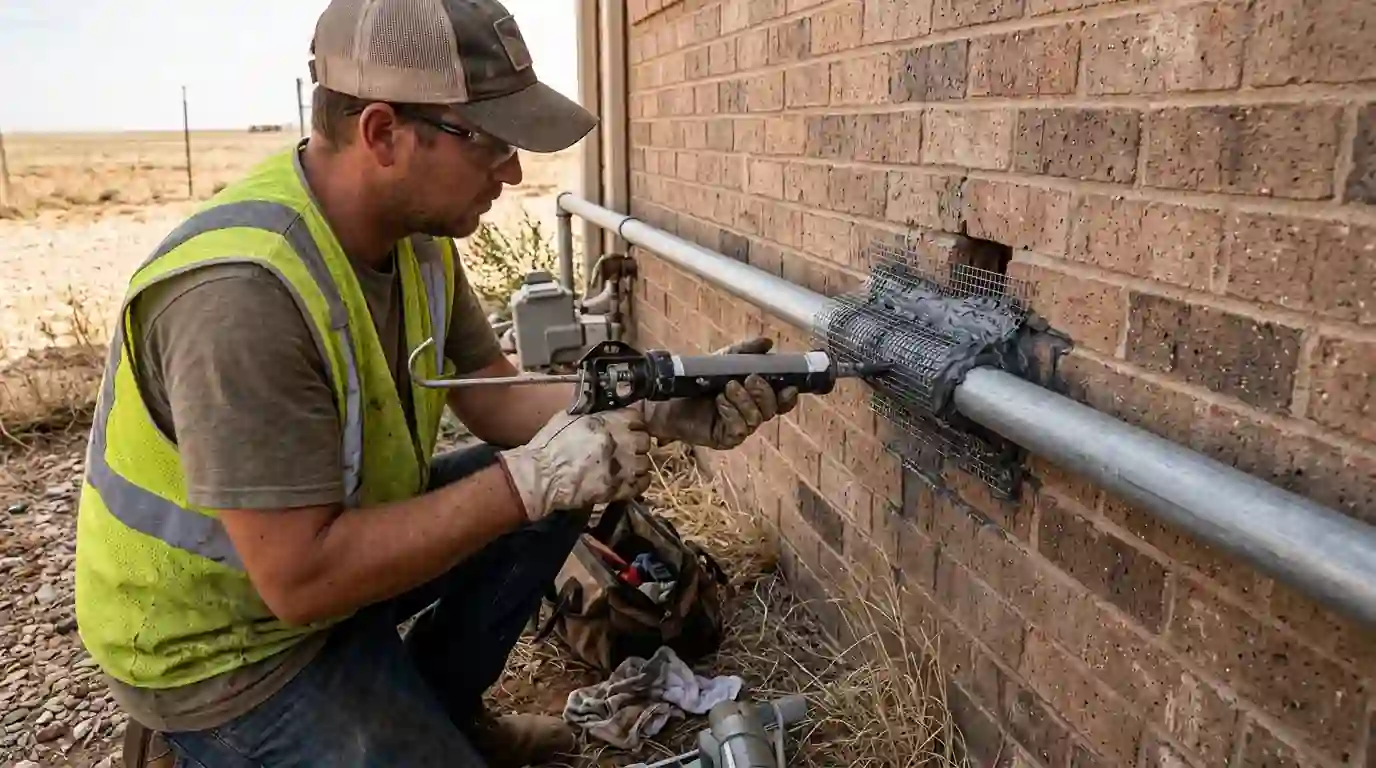
Why sealing matters more than any trap
A house mouse can get through a gap about a quarter inch wide, roughly the width of a pencil. Its skull is the widest hard part of its body, so if the head fits, the mouse follows. Norway rats need a bit more room, about a half inch, but they make up for it by gnawing to widen soft edges. That means the gaps that matter on a house are small, and there are usually more of them than people expect.
Traps and bait stations remove the rodents that are already inside, and they are the right first step. But a house with ten open gaps will keep inviting new mice from the alley, the pasture behind the fence and the neighbor's garage. Exclusion is what turns a seasonal rodent problem into a finished one, and it is why our technicians map entry points on every rodent visit.
Openings mice and rats use on Amarillo houses
These are the gaps our technician checks first, because they turn up on most homes we inspect.
Garage door corners
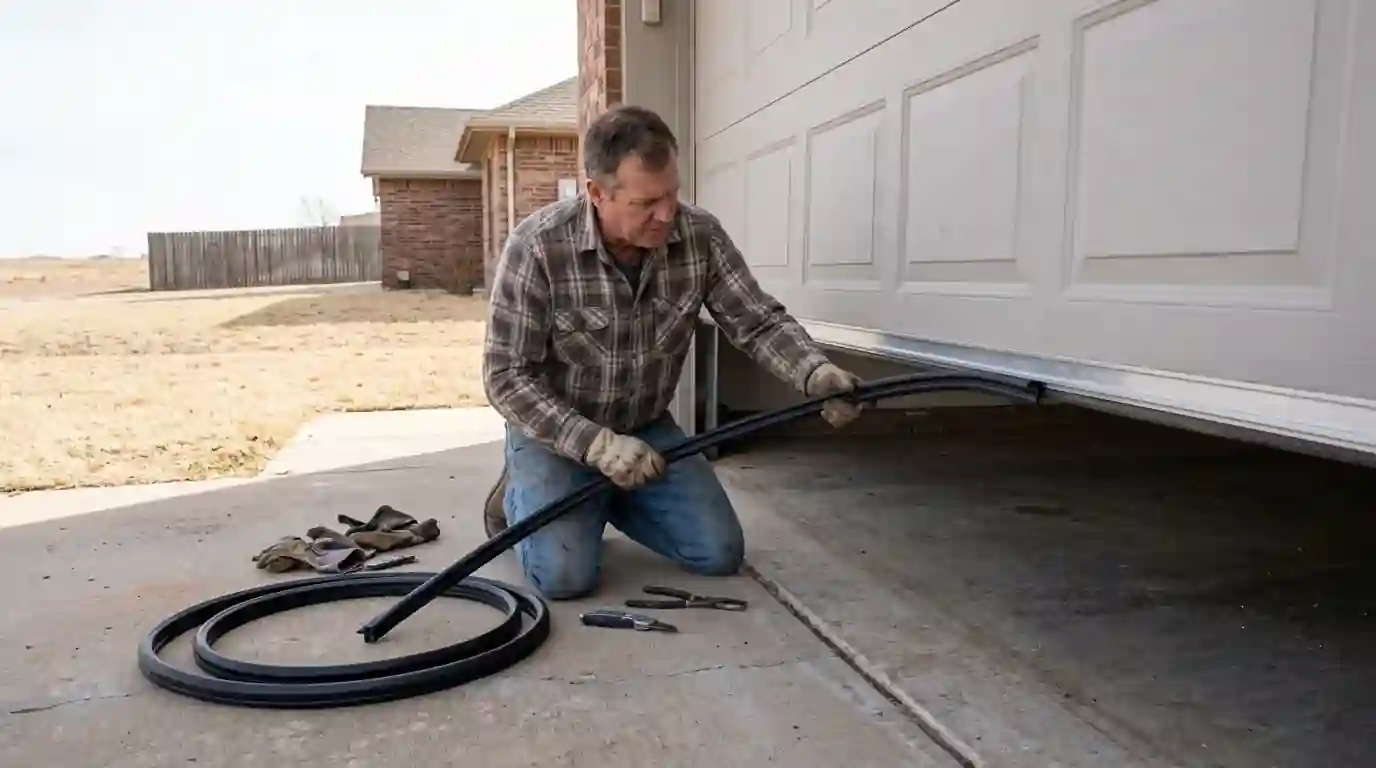
Worn or torn bottom seals and gaps at the two lower corners, where the door meets the jamb, are the most common entry point we find.
Utility penetrations
Gaps around the AC line set, gas line, dryer vent, hose bibs and cable or phone lines where they pass through brick or siding.
Open weep holes
Brick veneer has small vertical gaps near the bottom course that let moisture out, and an open weep hole leads straight into the wall cavity.
Roofline and eave gaps
Loose soffit panels, gaps where fascia meets the roof deck and open gable or foundation vents give mice a path to the attic.
Under sinks and behind appliances
Oversized holes cut for drain pipes, water lines and gas lines inside cabinets let rodents move from the wall void into the kitchen.
Entry door thresholds
Daylight showing under a back or side door, or a sweep that no longer touches the threshold, is wide enough for a mouse.
Which sealing material goes where
No single product fits every gap, so we match the material to the opening and the surface.
| Opening | Material we use | Why |
|---|---|---|
| Pipe and line penetrations | Copper or steel mesh packed tight, then sealant over it | Rodents cannot chew through the metal; sealant holds it and keeps out weather |
| Weep holes in brick | Stainless or plastic weep screens | Blocks rodents while still letting moisture drain out of the wall |
| Foundation and gable vents | Hardware cloth fastened over the opening | Keeps airflow moving but stops mice and larger animals |
| Garage door bottom and corners | New bottom seal and corner seals or brush strips | Closes the gap that worn rubber leaves at the slab |
| Entry doors | Door sweeps and threshold adjustments | Removes daylight under the door without making it hard to close |
| Larger gaps at the roofline | Sheet metal flashing or hardware cloth, then sealant | Stands up to gnawing and wind where foam alone would fail |
Need rodent exclusion & sealing in Amarillo?
Call and tell us what you are seeing. The line is answered 24 hours a day, every day.
What happens on a rodent exclusion visit
Exclusion is careful, detailed work, and it follows the same order on every house.
Full perimeter inspection
Our technician walks the outside of the house slowly, checking the foundation line, every penetration, the garage door, entry doors, vents and the roofline. Gaps are photographed or marked so you can see them too.
Attic and interior check
We look inside the attic, under sinks, behind the water heater and in the garage for rub marks and droppings that show which gaps are in active use.
Walk through the findings
Before any sealing, we show you the list of openings, which ones matter most and what material goes in each. You decide on the scope with the full picture in front of you.
Seal from the ground up
We close foundation-level gaps, utility penetrations and weep holes first, then the garage and doors, then the roofline. Metal goes in before sealant so nothing can be chewed out.
Trap anything sealed inside
Rodents still inside the walls or attic after sealing get trapped out, so they do not chew a new way through or die somewhere hard to reach.
Recheck later
A follow-up visit confirms that catches have stopped and that no new rub marks or droppings have appeared near the sealed spots.
How Amarillo weather and building styles affect sealing
Amarillo sits in one of the windiest regions in the country, and National Weather Service records show 50 mph gusts most years, mainly in winter and spring. Wind dries and cracks cheap caulk, rattles loose soffit panels and wears garage door seals faster than in calmer places. Spring humidity can drop below 15 percent, and big temperature swings make materials expand and shrink. That is why our technician relies on metal behind sealant instead of spray foam on its own, which rodents chew through.
Texas A&M AgriLife advises Panhandle homeowners to seal weep holes and fix weather stripping and screens, because heat and drought push rodents, scorpions and cockroaches indoors looking for water. The brick ranch homes across Amarillo have dozens of weep holes each, and older homes from the 1920s to 1940s often sit on pier-and-beam foundations with crawlspace vents that need hardware cloth. Newer homes on the south and southwest edge face open pasture, so their gaps get tested by more rodents.
Small sealing jobs you can check yourself
Between visits, these quick checks help you spot new openings early.
- Close the garage door at night and look for daylight at the bottom corners.
- Check door sweeps on back and side doors each fall, before the first freeze.
- Keep shrubs and vines trimmed back so you can see the foundation line.
- Store firewood away from the house so rodents do not shelter against the wall.
- After a cable, plumbing or AC repair, look for new holes left in the wall.
- Tell us if you see fresh droppings near a spot we sealed, so we can check it.
What changes the cost of rodent exclusion in Amarillo
Exclusion is priced on the house in front of us, not a flat number.
- Number of openings
- A tight newer home may need a handful of seals, while an older home can have dozens of gaps.
- Roofline work
- Gaps at the eaves, fascia and gable vents need ladders and more time than ground-level sealing.
- Foundation type
- Pier-and-beam homes with crawlspace vents need more hardware cloth than a slab home.
- Weep hole count
- Brick homes can have many weep holes to screen, and longer walls mean more of them.
- Garage and door hardware
- Replacing a full garage door bottom seal and corner seals adds material beyond simple gap filling.
We quote exclusion after an inspection, since the price depends on what we find around the house.
Product lines a technician may choose from, matched to the pest, the room and who lives there:
Where we handle rodent exclusion & sealing
Neighborhoods and towns we cover most often, with ZIP codes. The rest of Amarillo and the towns in our service area are covered too.
- City View79118
- Puckett79109
- Ridgecrest79109
- Sleepy Hollow79121
- Hollywood-Scotsman79110
- Windsor79109
- Belmar79106
- The Greenways79119
- Heritage Hills79119
- South Georgia Place79110
- Wolflin79109
- Eastridge79107
- Canyon79015
- Hereford79045
- Pampa79065
- Dumas79029
- Borger79007
- Bushland79012
Rodent Exclusion & Sealing questions from Amarillo homeowners
What size gap can a mouse fit through in an Amarillo home?
A house mouse can squeeze through a gap about a quarter inch wide, roughly the size of a dime or a pencil. That is why rodent exclusion focuses on small openings: worn garage door corners, open weep holes, pipe penetrations and gaps under doors. If you can slide a pencil into a gap, a mouse can likely use it.
Does sealing weep holes cause moisture problems in brick?
Not when it is done right. Weep holes let moisture drain out of brick veneer, so they should never be filled with mortar or caulk. We fit weep hole screens instead, which block mice, scorpions and insects while still letting water out. Rodent exclusion should keep the wall breathing as it was designed to.
Why not just use spray foam for rodent exclusion?
Mice and rats chew through spray foam easily, and Amarillo's dry wind and temperature swings crack it over time. Foam is fine as a backer in some spots, but it should not be the barrier. We pack steel or copper mesh into gaps first and seal over it, or fasten hardware cloth or flashing, so the metal stops the gnawing.
Should rodent exclusion happen before or after trapping?
Usually trapping starts first, then sealing follows once activity is down, with traps left in place to catch anything sealed inside. Sealing a house full of active mice can trap them in the walls, where they chew new holes or die. Our technician times the rodent exclusion around what the follow-up checks show.
How do I know if rodent exclusion worked on my house?
The clearest sign is that trap catches stop and no fresh droppings or rub marks appear over the following weeks. Our follow-up visit checks sealed spots, the attic and the garage for new activity. If a mouse shows up later, it usually means a new gap opened after a repair or wind damage, and we find and close it.