Scorpion and spider control in Sleepy Hollow, Amarillo (79121)
Thirty to forty years of growth have given Sleepy Hollow some of the fullest landscaping on the west side, and scorpions and spiders use every shrub, vine and limb that touches the brick.We cut off their routes and treat where they actually travel.
ZIP 79121West-southwest AmarilloRandall County
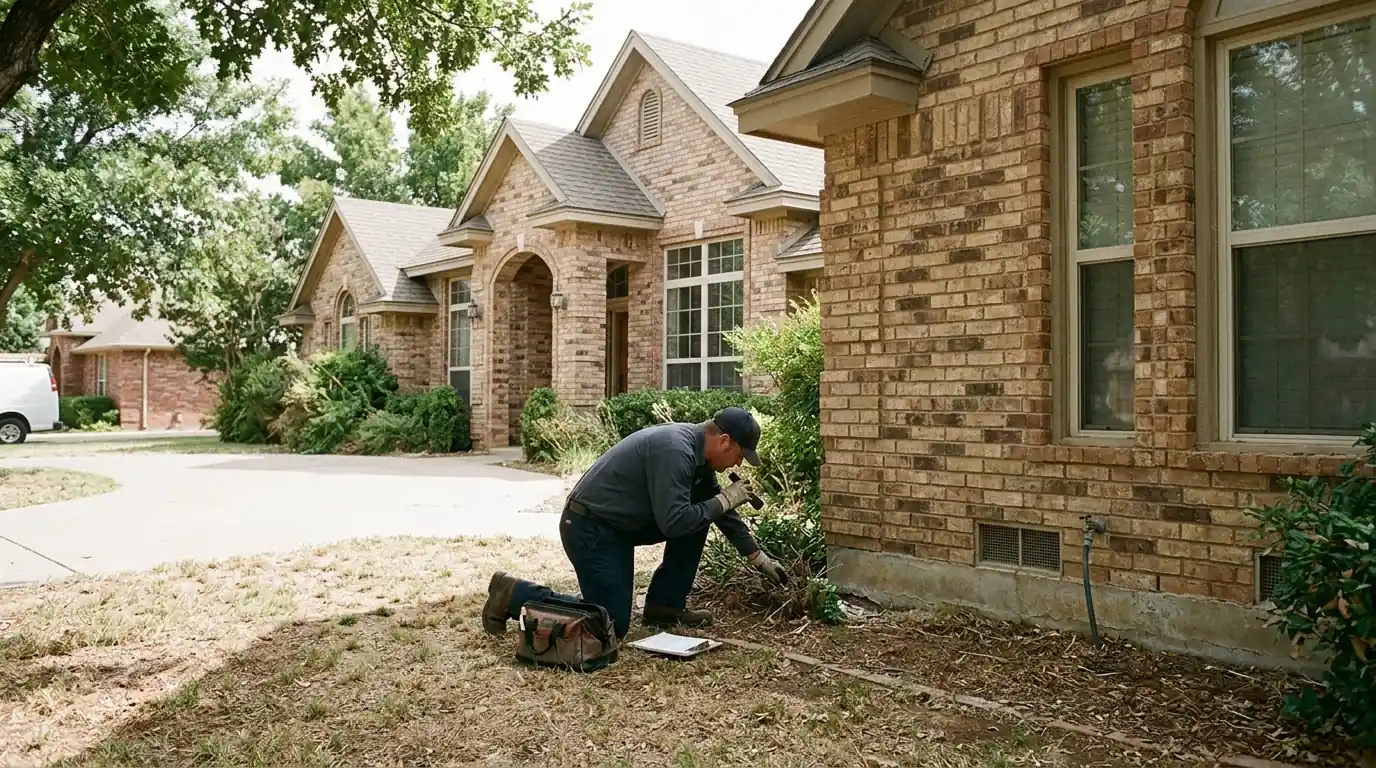
How do scorpions get into brick homes in Sleepy Hollow?
Scorpions reach Sleepy Hollow brick homes by climbing: up the brick, along shrubs and vines that touch the walls, and over tree limbs onto the roof and into the attic. In hot weather they move down into living areas. We treat the foundation, eaves and attic, dust the gaps they hide in, and point out the plant contact that gives them a bridge.
Why mature yards in Sleepy Hollow make scorpions harder to stop
Sleepy Hollow was built mostly in the 1980s and 1990s, and the brick homes along Sleepy Hollow Blvd, Brennan Blvd and the streets around Sleepy Hollow Elementary on Reeder Dr now sit among mature trees, tall shrubs and climbing vines. The Cloister and Versailles enclaves have the same full landscaping on tighter lots. It looks good, and it gives pests a highway to the roof.
The striped bark scorpion, the species found throughout Texas, climbs walls and trees with ease. It spends time in attics and moves down into living areas when the attic heats up in summer. A shrub pressed against the brick or a limb resting on the roof lets it skip a ground-level treatment entirely. Spiders use the same contact points to build webs under eaves and around windows.
Heat and drought push them indoors too. Texas A&M AgriLife notes that scorpions and other pests come inside looking for water in hot, dry spells. Irrigated beds against the foundation, common across the 79121 ZIP, keep a steady supply of crickets and other prey right at the wall all summer.
Where Sleepy Hollow homeowners find scorpions and spiders
Where they turn up tells us how they are getting in.
Ceilings and upper walls
A scorpion on a ceiling or high on a wall usually came down from the attic, not in from a door.
Bathtubs and sinks
Scorpions looking for water end up in tubs and sinks overnight and can't climb the slick sides back out.
Shoes and laundry piles
Scorpions and recluse spiders hide in fabric left on the floor, especially in closets and laundry rooms.
Webs around porch lights
Lights draw insects at night, and spiders build where the food gathers.
Black widows in the garage
Check under shelves, around stored pots and in the corner behind the water heater.
Glowing scorpions on patio walls
A blacklight walk around the patio after dark often shows scorpions glowing on brick and fence boards.
Pest problem in Sleepy Hollow?
Call and describe it. The phone is answered 24 hours a day.
Our scorpion treatment for a landscaped Sleepy Hollow lot
Treating only the ground misses most of the problem on a lot with this much growth.
Map plant contact
Our technician walks the house noting every shrub, vine and limb that touches the brick, gutters or roof. Those are the routes we treat and recommend trimming.
Treat high and low
We apply a residual product along the foundation, around windows and doors, and up under the eaves where scorpions and spiders shelter during the day.
Dust the attic and voids
In the attic we dust along the top plates and around penetrations. In living areas we dust gaps around plumbing under sinks and behind tub access panels.
Clear webs and egg sacs
We sweep eaves and porch corners so the treatment reaches bare surfaces and fewer new spiders hatch.
Time it to the season
Scorpion activity climbs as nights warm in late spring and stays high through summer, so we time treatments to stay ahead of the peak.
Yard changes that cut scorpion traffic in Sleepy Hollow
Small landscaping changes help each treatment last longer.
- Trim shrubs and vines so they sit at least a foot off the brick.
- Cut back tree limbs that rest on the roof or gutters.
- Move firewood and decorative rock piles away from the foundation.
- Switch porch lights to yellow bulbs to draw fewer insects.
- Keep shoes off closet floors and shake out towels left by the tub.
- Fit door sweeps tight enough that a credit card can't slide underneath.
Pest control services for Sleepy Hollow
Scorpion Control
Striped bark scorpions climb into attics, then drop into bedrooms and bathtubs when the summer heat builds.
Spider Control
Webs under the eaves, wolf spiders in the garage and black widows in the meter box are all part of life in the Panhandle.
Brown Recluse Control
Brown recluses hide in closets, garages and stored boxes, and most people only notice them when one turns up in a shoe or a...
Cricket Control
Black field crickets can show up by the hundreds in late summer, chirping in the garage, piling against storefront glass and slipping under doors.
Wasp & Yellowjacket Removal
A paper wasp nest over the front door, yellowjackets streaming out of a hole in the lawn or buzzing inside a wall all call...
Quarterly Pest Control Plans
Panhandle pests arrive in waves: moths in spring, scorpions in summer, crickets in late summer and mice when the first freeze hits.
Pest control questions from Sleepy Hollow
Are scorpions in Sleepy Hollow dangerous to kids and pets?
The striped bark scorpion's sting is painful but rarely serious for healthy adults. Small children, older adults and anyone with allergies should be watched closely after a sting, and medical care sought if symptoms spread. We choose treatment placements with kids and pets in mind and explain re-entry times before we leave.
Why do I see more scorpions in my Sleepy Hollow home in late summer?
Late summer heat makes attics too hot, so scorpions move down into the cooler living space. Dry spells also send them looking for water, which is why they turn up in bathrooms and kitchens. A treatment in late spring, before the heat builds, keeps the numbers lower when August arrives.
Do you treat homes in The Cloister and Versailles in Sleepy Hollow?
Yes. Homes in The Cloister and Versailles get the same scorpion and spider service as the rest of Sleepy Hollow. The tighter lots there mean a neighbor's landscaping can matter too, so we look at plant contact on every side of the house, not only in your own yard.