Termite inspections and WDI reports in Amarillo
Most Amarillo home sales include a Texas Wood Destroying Insect Report, and many owners want a yearly termite check anyway.Our inspector goes over the foundation, garage, attic access and yard, then writes up what was found on the state form.
What does a termite inspection and WDI report cover in Amarillo?
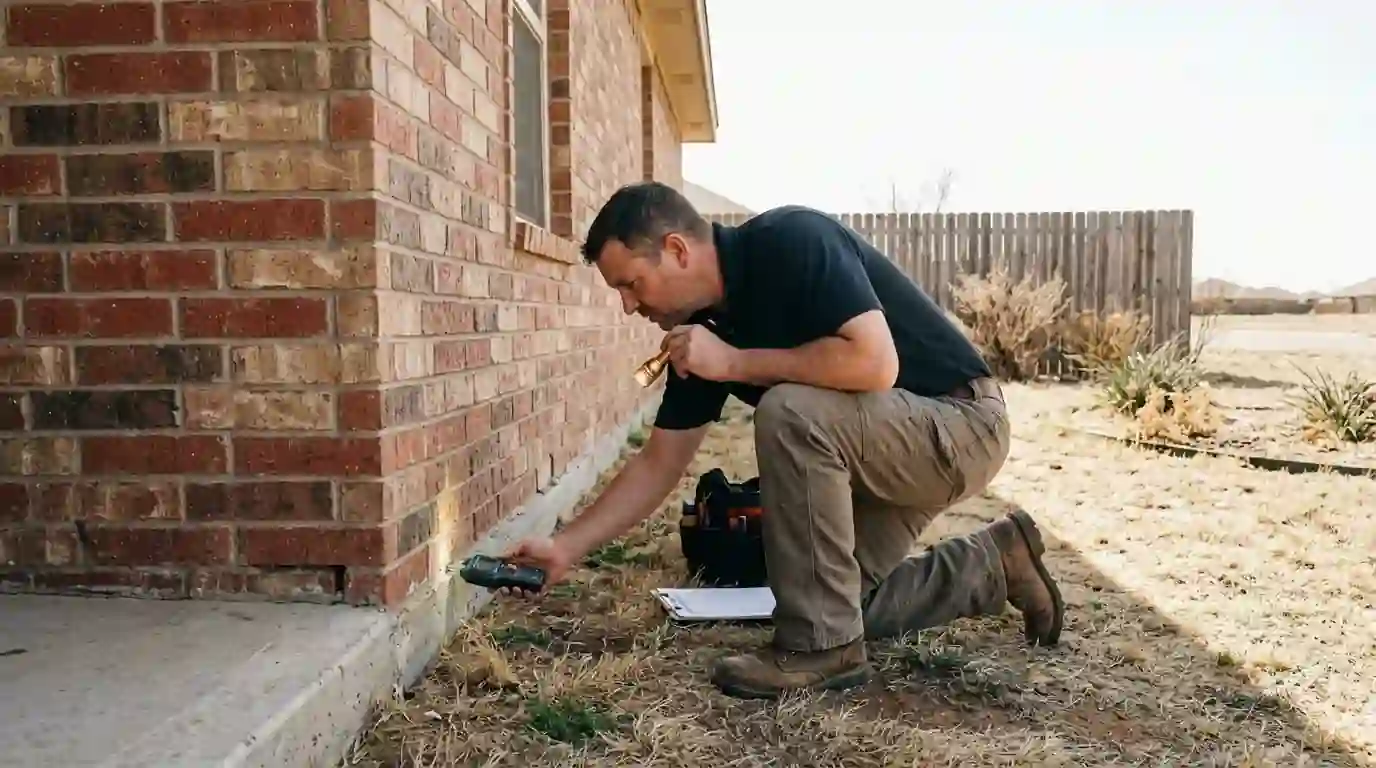
A termite inspection in Amarillo covers every accessible part of the house where wood-destroying insects could get in: the foundation line, garage, plumbing penetrations, attic access, crawlspace if there is one, and the yard next to the house. For real estate, findings are recorded on the state WDI form, TDA form SPCS/T-5, with photos attached when helpful.
When you need a termite inspection in Amarillo
Most WDI inspections we do are part of a home sale. A buyer's agent or lender asks for one during the option period, or a seller orders one ahead of listing to get any issue on the table early. The report records whether there is visible evidence of termites or other wood-destroying insects, any damage, and conditions that make an infestation more likely. Ordering it early in the deal gives both sides time to handle anything that turns up.
Yearly inspections are the other half. Native subterranean termites work quietly in the soil and inside walls, and a homeowner rarely sees them until a swarm or damage shows up. An annual check catches new mud tubes, moisture problems and soil creeping above the foundation before they turn into repairs. We schedule many of these just before the April and May swarm season.
What the inspector checks, room by room
A thorough inspection follows the same path around every house.
The outside foundation line
The inspector walks the full perimeter looking for mud tubes, cracks in the slab edge, wood touching soil and soil or rock piled over the weep holes. Downspouts, AC drains and faucets get a look for water pooling against the house.
Garage slab and walls
Garages often show termite activity first, at expansion joints, along the base of the walls and behind stored items. The inspector checks door frames and the bottom plate where the wall meets the slab.
Interior baseboards and plumbing
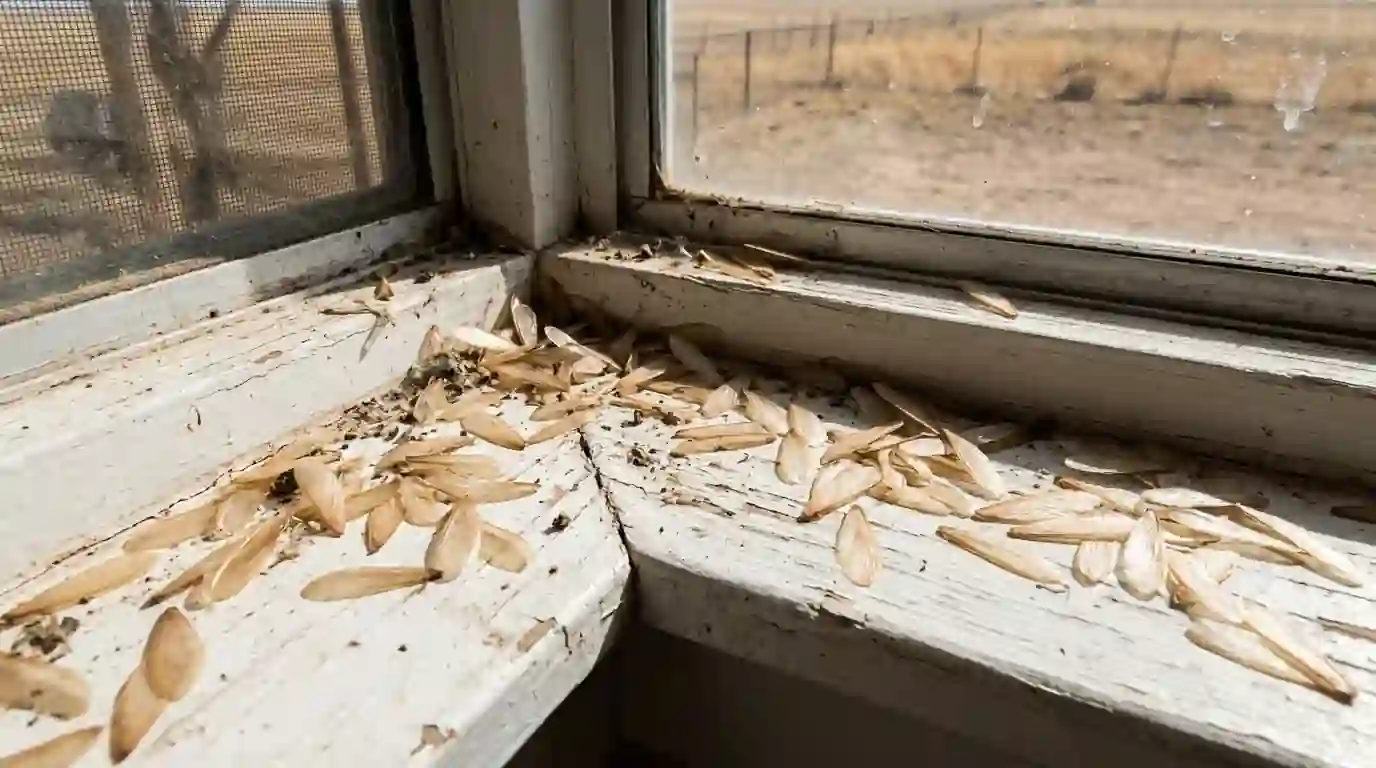
Inside, the inspector checks baseboards, door trim and wall areas near bathrooms and kitchens, especially plumbing that comes up through the slab. Soft wood, mud in cracks and swarmer wings on windowsills are all noted.
Attic access and crawlspace
The attic is checked from the access for damaged wood and moisture. On pier-and-beam homes, the inspector checks piers, beams and floor framing from the crawlspace when it can be entered safely.
Yard and outbuildings
Fences, decks, landscape timbers, woodpiles and sheds close to the house are checked, since activity there can point to a colony near the foundation.
Write up the findings
Everything goes on the report with a diagram showing where activity, damage or conducive conditions were found. Photos can be attached so the buyer and seller can see exactly what was noted.
How the Texas WDI report works
In Texas, a Wood Destroying Insect Report for a real estate deal goes on the Texas Department of Agriculture form, SPCS/T-5, under rule 4 TAC 7.176. It must be the department's own form, left unaltered, and attached photos are allowed as an addendum, which helps when a finding needs explaining. Copies go to whoever ordered the report, and records are kept for at least two years. Structural pest control in Texas, including these inspections, is overseen by the TDA Structural Pest Control Service.
The report is not a guess about hidden damage behind finished walls. It covers what is visible and accessible on the day of the inspection, and it notes areas that could not be inspected, like a finished basement wall, a blocked attic access or a garage packed to the ceiling. Knowing those limits helps buyers decide whether to ask for more access or further evaluation.
Panhandle conditions show up on these reports in predictable ways. Brick slab homes often have rock or mulch beds covering weep holes, AC condensate lines draining against the slab, and wood fences fastened to the house. Older pier-and-beam homes from the 1920s to 1940s get extra attention in the crawlspace.
Need termite inspections & wdi reports in Amarillo?
Call and tell us what you are seeing. The line is answered 24 hours a day, every day.
Conducive conditions that show up on Amarillo reports
These items do not mean termites are present, but they make an infestation more likely and are often noted.
Soil or rock above the slab
Landscape beds built up above the top of the foundation hide termite entry and cover weep holes.
Wood touching soil
Fence posts, trellises, deck supports or siding that reach the ground give termites a direct path.
Water against the foundation
Leaky faucets, AC condensate lines and short downspouts keep soil wet right where termites enter.
Cellulose debris under the house
Scrap lumber, cardboard or old form boards left in a crawlspace or against the slab feed colonies.
Firewood stacked against walls
Woodpiles against the house shelter termites and hide the foundation from view.
Inaccessible areas
Packed garages, blocked attic access or covered crawlspace openings limit what can be inspected and are recorded.
How to get your Amarillo house ready for inspection
Clear access means a more complete report and fewer areas listed as not inspected.
- Pull stored items a foot or two away from garage walls.
- Make sure the attic access is clear and not blocked by shelving or boxes.
- Clear the path to the crawlspace opening on a pier-and-beam home.
- Move items out from under kitchen and bathroom sinks.
- Leave the gate open and keep pets inside or away from the yard.
- Have any past termite treatment records ready to share.
- Tell us about swarms, wings or mud tubes you have seen, even if you cleaned them up.
What changes the cost of a termite inspection in Amarillo
Inspection pricing mostly follows the size and layout of the property.
- Size of the house
- Bigger houses have more slab edge to walk, more rooms to check and more time on site.
- Foundation type
- Crawlspace homes take longer, since the inspector has to get under the floor framing rather than just walk a slab edge.
- Outbuildings
- Detached garages, shops and sheds that need to be included add time.
- Report for a sale or a yearly check
- A WDI report for a real estate deal involves the state form and copies for the parties involved.
- Timing
- A rush inspection to meet a short option period may affect scheduling and price.
We quote inspections by phone once we know the address, the house size and why you need the report.
Product lines a technician may choose from, matched to the pest, the room and who lives there:
Where we handle termite inspections & wdi reports
Neighborhoods and towns we cover most often, with ZIP codes. The rest of Amarillo and the towns in our service area are covered too.
- City View79118
- Puckett79109
- Ridgecrest79109
- Sleepy Hollow79121
- Hollywood-Scotsman79110
- Windsor79109
- Belmar79106
- The Greenways79119
- Heritage Hills79119
- South Georgia Place79110
- Wolflin79109
- Eastridge79107
- Canyon79015
- Hereford79045
- Pampa79065
- Dumas79029
- Borger79007
- Bushland79012
Termite Inspections & WDI Reports questions from Amarillo homeowners
How long is a Texas WDI report good for when selling an Amarillo house?
The report shows conditions on the day of the inspection, so it reflects that moment, not the future. Lenders and buyers often want one done close to closing, and many ask for it within a set number of days. Check with your agent or lender for the timeline they need, then call us so the inspection lands inside that window.
What happens if the Amarillo termite inspection finds termites?
The report records the activity, where it is and any visible damage. The buyer and seller then decide how to handle it, usually through treatment before closing and sometimes repairs. We can explain the treatment options, liquid barrier or bait stations, and give a quote. The inspection itself does not commit anyone to treatment with us.
Can a regular home inspection replace a termite inspection in Texas?
In Texas, a Wood Destroying Insect Report is a separate inspection on the TDA form SPCS/T-5, overseen by the Texas Department of Agriculture Structural Pest Control Service. A general home inspection looks at the whole house but does not take the place of the WDI report when a buyer or lender asks for one. Many buyers order both.
How often should I get a termite inspection on my Amarillo home?
Once a year is a good rule for most homes, ideally in late winter or early spring before the April and May swarm season. Homes with a termite history, pier-and-beam foundations, or a lot of wood or moisture near the slab benefit most. An annual check finds new activity early, when treatment is simpler and damage is minor.