Termite baiting and pest control in Westover Park, Amarillo (79119)
Westover Park homes went up in the 1990s and early 2000s, and whatever termite treatment went under those slabs has had decades of weather, digging and new landscaping since.We check where that protection stands and add bait stations or a fresh barrier where it has worn thin.
ZIP 79119Southwest AmarilloRandall County
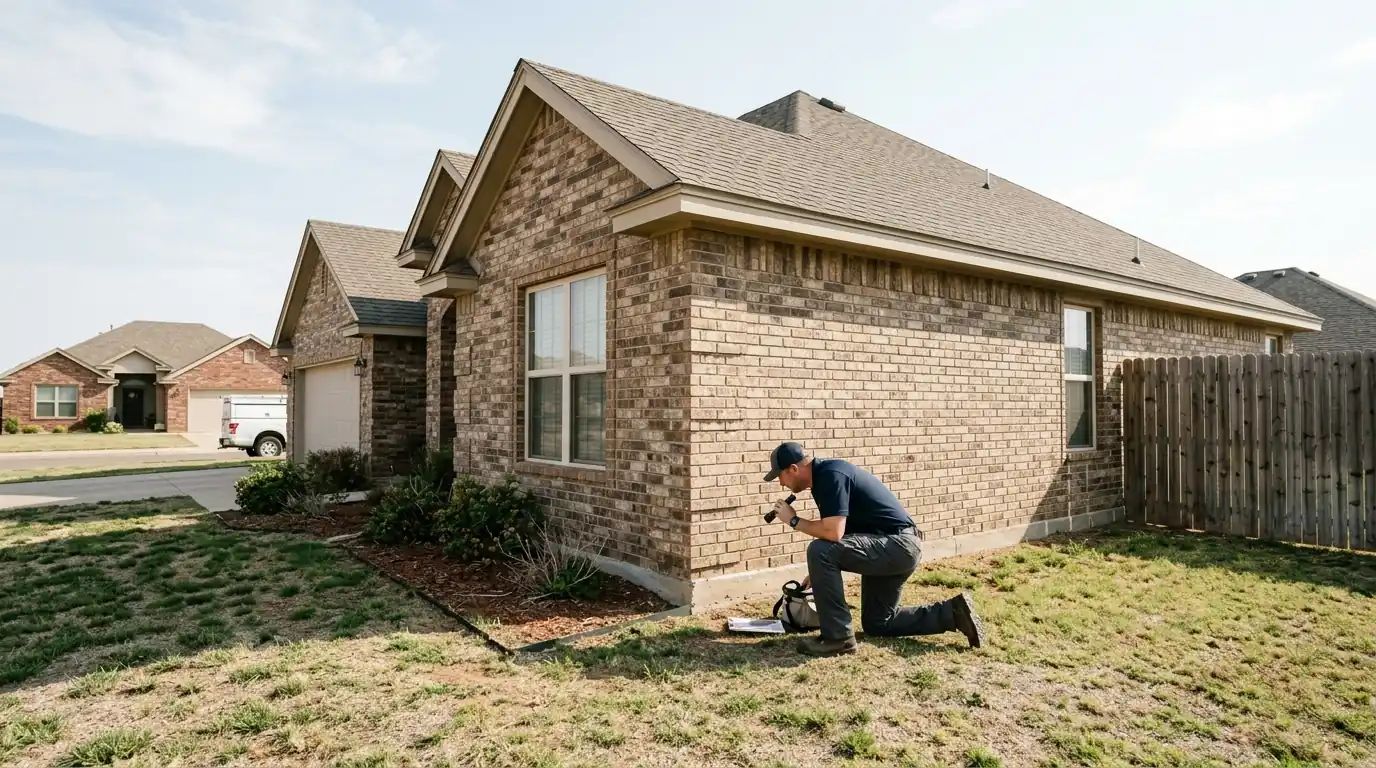
Does my 1990s Westover Park home still have termite protection?
Probably not as much as it once did. Soil treatments applied when Westover Park homes were built break down over time and get disturbed by patios, sprinklers and new beds. We inspect the slab edge, garage and baths for activity, review any records you have, and recommend a bait station system or a new liquid barrier depending on the yard and the house.
Why Westover Park homes are due for a termite check
Westover Park is a southwest Amarillo neighborhood built in the 1990s and early 2000s, around Arden Road Elementary on Learning Tree Ave and Arden Road School Park. Many of these homes are now twenty to thirty years old. That is old enough for the first owner's landscaping to have been torn out and redone, for a patio or pergola to have been added, and for a sprinkler system to have been installed along the foundation.
Each of those projects disturbs the soil right next to the slab, which is where any original termite treatment was placed. Native subterranean termites live throughout the Panhandle and travel from the soil to wood through slab cracks, plumbing penetrations and expansion joints. Panhandle swarms come in April and May, and a swarm inside the house is often the first sign homeowners in the 79119 ZIP notice.
Moisture makes it worse. AC condensate lines that drip by the foundation, sprinklers that spray the brick and soil or mulch piled above the slab line all draw termites toward the house. On a 1990s home, all three are common.
How bait stations protect an established Westover Park yard
A bait system works differently from a liquid barrier. Stations are set into the soil around the house at intervals. Each one holds a monitoring device, and when termites start feeding, the technician adds bait containing an insect growth regulator. Foraging termites carry it back to the colony, where it stops them from molting and the colony declines.
For many Westover Park homes, baiting fits well because these lots are finished. Trenching along the foundation means working around patios, flower beds and drives, and drilling through concrete in places. Stations go in with little disruption and give an ongoing early warning. Systems like Sentricon are one example. For homes with heavy activity or easy access along the slab, a non-repellent liquid barrier like Termidor can be the better choice, and we explain both before you decide.
Pest problem in Westover Park?
Call and describe it. The phone is answered 24 hours a day.
What happens when we install termite bait stations in Westover Park
Installation is quick, but the value comes from the monitoring visits that follow.
Inspect first
Our technician checks the slab edge, garage, bathrooms and any wood near soil for mud tubes, damage and swarm wings. Active termites change where stations go first.
Plan the layout
We mark station spots around the house, favoring damp areas near downspouts, AC lines and sprinklers where termites are most likely to forage.
Install the stations
Stations are set flush with the soil so mowers pass over them. Each one gets a monitoring device to show when termites arrive.
Monitor and bait
On regular visits we open each station. When we find termite feeding, we add bait and keep checking until activity stops.
Signs a Westover Park home needs more than termite monitoring
These point to termites already active, which calls for faster treatment.
Swarmers indoors in spring
Winged termites coming out of a wall, tub surround or window frame in April or May.
Mud tubes in the garage
Dirt tubes running up the garage stem wall or along a crack in the garage floor.
Soft trim near a bathroom
Baseboards or door frames near a tub or toilet that feel soft or sound hollow.
Damage in a redone bed
Termites found in landscape timbers or edging after a bed was rebuilt against the house.
Scorpions in the attic
Not a termite sign, but common here. Our technician checks for scorpions and spiders on the same visit.
Pest control services for Westover Park
Termite Bait Stations
Termite bait stations sit in the soil around your house and quietly intercept foraging termites before they reach the foundation.
Termite Inspections & WDI Reports
Most Amarillo home sales include a Texas Wood Destroying Insect Report, and many owners want a yearly termite check anyway.
Termite Control
Native subterranean termites live in the soil under Amarillo and work their way into houses through mud tubes you rarely see.
Scorpion Control
Striped bark scorpions climb into attics, then drop into bedrooms and bathtubs when the summer heat builds.
Spider Control
Webs under the eaves, wolf spiders in the garage and black widows in the meter box are all part of life in the Panhandle.
Quarterly Pest Control Plans
Panhandle pests arrive in waves: moths in spring, scorpions in summer, crickets in late summer and mice when the first freeze hits.
Pest control questions from Westover Park
How often do you check termite bait stations at a Westover Park home?
Bait stations are checked on a regular schedule, often a few times a year and more often once termites are found feeding. Each visit, our technician opens every station, checks the monitor and adds bait where needed. The visits double as a quick look at the slab edge for mud tubes.
Can I rely on the termite treatment my Westover Park builder applied in the 1990s?
It is unlikely to protect the whole house today. Soil treatments lose strength over time, and twenty or more years of landscaping, patios and sprinkler work disturb the treated soil next to the slab. If you have the original paperwork, keep it, but have the home inspected to see what is needed now.
Do bait stations around my Westover Park home attract termites?
No. Termites forage at random through the soil, and stations simply put a monitor where they are likely to travel. They don't draw colonies from elsewhere. The point is to find foraging termites early and get bait into the colony before they reach the house.