Acreage wildlife and rodent control in Greyhawk Landing, Amarillo (79119)
Greyhawk Landing's 1 to 10 acre lots border open pasture on the southwest edge of Amarillo, and that ground sends prairie dogs, pocket gophers, snakes and skunks toward the house.We work the whole property, from the barn and fence line to the foundation.
ZIP 79119Southwest AmarilloRandall County
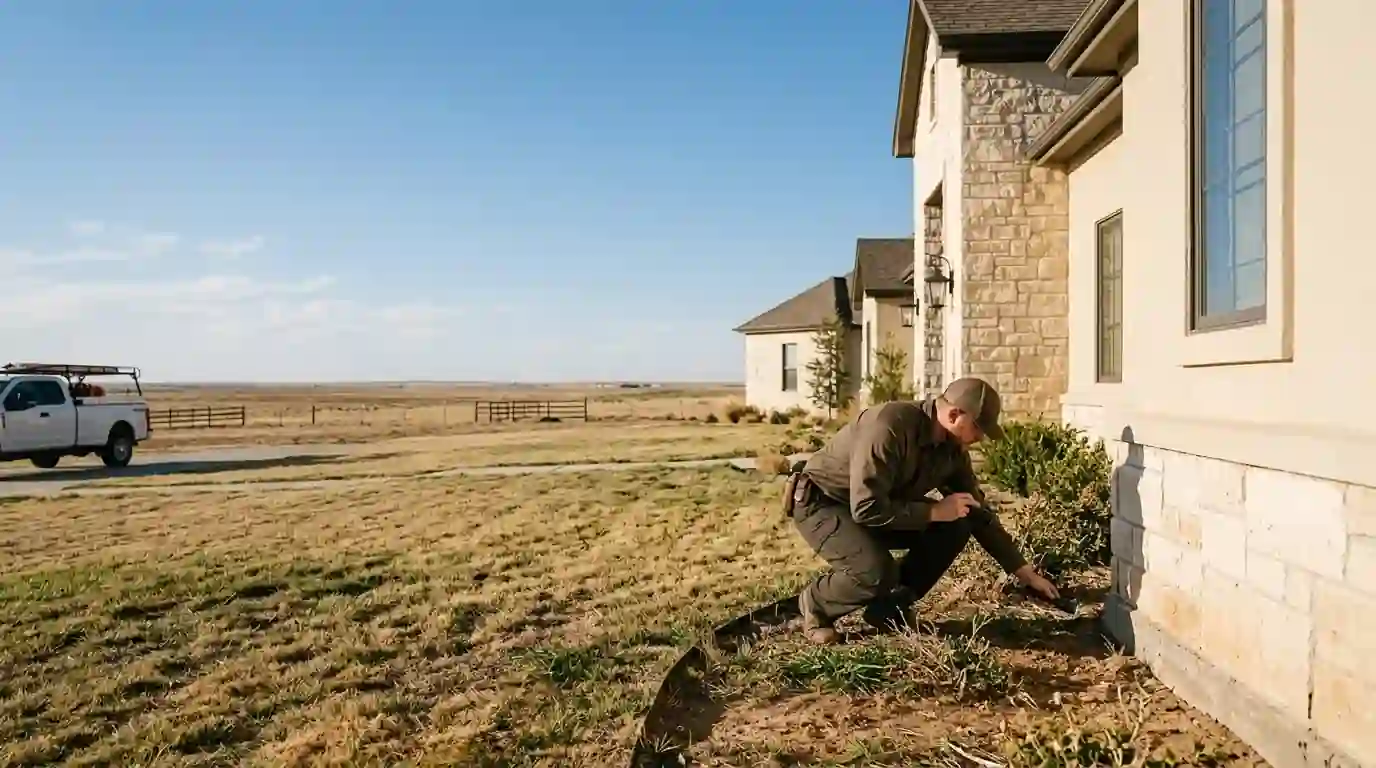
What pest control does a Greyhawk Landing acreage need?
A Greyhawk Landing acreage usually needs perimeter work rather than a simple house spray. We map burrowing activity along the pasture side, trap pocket gophers in their tunnels, and handle prairie dogs within Texas rules after checking for burrowing owls. Then we set rodent stations in barns and shops and seal the house and outbuildings, so snakes and skunks have less reason to come close.
Life on the pasture edge at Greyhawk Landing
Greyhawk Landing is a Randall County neighborhood of acreage homes on lots from 1 to 10 acres, out where the southwest edge of Amarillo meets open pasture. Many owners keep a barn, a shop, horse pens or a big garden, and some leave part of the lot in native grass. That mix is why pest work in this corner of the 79119 ZIP looks more like small-ranch work than a city visit.
Black-tailed prairie dogs are native to this part of Texas and spread readily into pasture and unmowed acreage. Texas law calls them a public nuisance, yet plague is endemic in the region and prairie dogs carry it, and burrowing owls, which are federally protected, nest in old burrows. Pocket gophers work the firmer soils, pushing up fan-shaped mounds in lawns, gardens and riding arenas.
Snakes follow the rodents. Rattlesnakes (western diamondbacks and prairie rattlers), bullsnakes and coachwhips all turn up where town meets grassland, and July and August bring the most local snakebites. Striped skunks den under sheds, porches and stacked lumber. House mice and Norway rats move into barns and feed rooms, especially once fall fronts start rolling through.
How we split a Greyhawk Landing lot into work zones
Each zone has its own pests, so we plan the visit around them.
| Zone | What we usually find | What we do |
|---|---|---|
| House and garage | Mice at door seals, crickets, spiders, the odd snake in the garage | Seal entries, treat the foundation band, set interior traps |
| Yard ring around the house | Gopher mounds, skunk digging, rock borders that shelter snakes | Trap gophers in main tunnels, close dens, suggest cover changes |
| Barn, shop and sheds | Mouse and rat droppings, chewed feed, skunk dens under floors | Bait stations, snap traps, wire buried along the base |
| Fence line facing pasture | Prairie dog burrows creeping closer, snake travel lanes | Map burrows, check for owls, recommend mowed strips |
| Arena or garden | Gopher tunnels and fresh mounds | Tunnel trapping and mesh under raised beds |
Pest problem in Greyhawk Landing?
Call and describe it. The phone is answered 24 hours a day.
A perimeter visit on Greyhawk Landing acreage, start to finish
We walk the outside of the property first, then work in toward the house.
Walk the property line
Our technician follows the fence on the pasture side looking for active burrows, fresh mounds, shed snakeskins and skunk trails. Webbed-over burrows or dead prairie dogs change the plan, since they can signal a plague die-off.
Check for burrowing owls
Before any prairie dog work, we look for owls using old burrows. They are federally protected, and finding one means those burrows are left alone.
Set gopher traps
We probe between fresh mounds to find the main tunnel and set traps there. Surface baiting rarely reaches gophers in firm Panhandle soil.
Work the outbuildings
Bait stations go along barn and shop walls, snap traps go in feed rooms, and we look under floors and stacked material for dens.
Seal the house last
Door sweeps, garage seals, weep holes and utility gaps are closed so mice and snakes stop finding a way into the home itself.
Acreage habits that make Greyhawk Landing less inviting to wildlife
Cover and food are what pull animals in from the pasture.
- Mow a wide strip along any fence that faces open ground.
- Keep feed, grain and pet food in metal bins with tight lids.
- Set lumber, pipe and hay on pallets or racks instead of bare ground.
- Clear rock and debris piles from near the house, where snakes shelter.
- Keep dogs out of prairie dog burrows and on flea prevention.
- Shut barn and shop doors at night through fall and winter.
Pest control services for Greyhawk Landing
Prairie Dog Control
A black-tailed prairie dog town on the lot next door can spread into your yard, pasture or horse pen within a season.
Pocket Gopher Control
Fresh fan-shaped dirt mounds popping up across a lawn or along a pasture edge usually mean a pocket gopher working underground.
Snake Removal
A snake coiled by the back door, in the garage or under the AC unit needs to be identified before anyone gets close.
Skunk Removal
A skunk denning under your porch, deck or shed brings odor, holes and a rabies concern for pets.
Rodent Control
Droppings in a kitchen drawer or scratching in the attic at night usually mean house mice, and gnawed feed sacks in a barn often...
Rodent Exclusion & Sealing
Trapping clears the mice inside, but every gap a quarter inch or wider is an open door for the next ones.
Pest control questions from Greyhawk Landing
Can you handle prairie dogs moving onto my Greyhawk Landing pasture?
Yes, with some care. Texas law lets landowners control prairie dogs, which the state labels a public nuisance, but burrowing owls nest in old burrows and are federally protected. We map the colony and check for owls and for webbed entrances that hint at disease. The method we pick depends on your land and animals, and mowed strips plus filled burrows slow their return.
Why do I keep finding snakes near the barn at my Greyhawk Landing place?
Snakes go where the food is, and a barn with feed and mice is a steady meal. Western diamondbacks, prairie rattlesnakes and bullsnakes all hunt rodents along pasture edges in warm months. We remove the snake, then bring down the mice with bait stations and traps and close gaps under doors and walls so the barn draws fewer of them.
Do skunks den under sheds and outbuildings on Greyhawk Landing lots?
Often. A shed floor raised on blocks or a pile of lumber makes ideal den space for a striped skunk, especially when females look for a spot in late winter. We confirm the den, check for young in spring, remove the skunk and bury wire mesh around the base so the next one can't dig under.