Tick control for Amarillo homes, yards and kennels
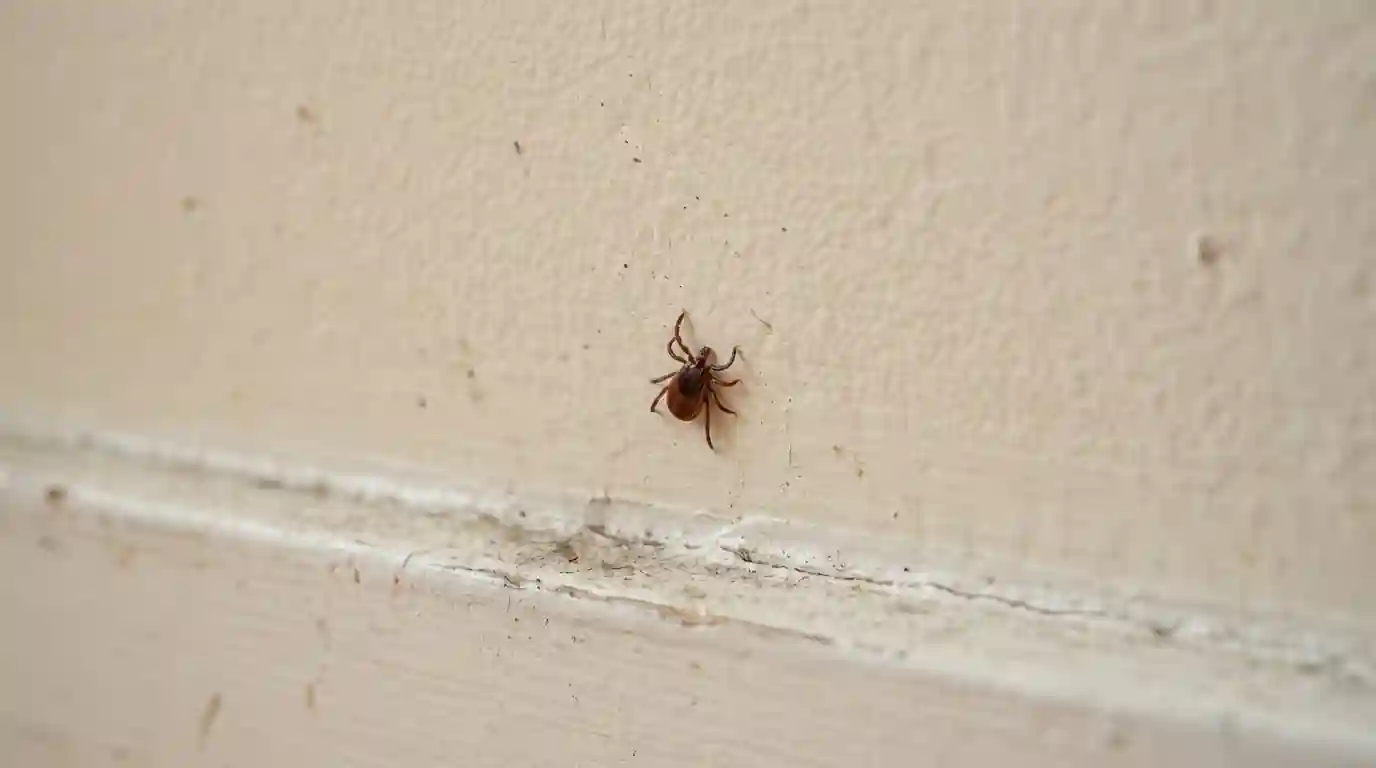
Ticks climbing the living room wall or clustered in a dog run usually mean brown dog ticks are breeding around the house, not just riding in from a walk.We treat the indoor cracks and outdoor resting areas where they hide, and we answer 24/7.
How do you get rid of ticks in an Amarillo house and yard?
You get rid of ticks around an Amarillo home by treating where they hide and lay eggs, indoors and out, while your vet protects the dogs. Our technician identifies the tick, treats cracks along baseboards, window frames and walls, and treats the dog run, kennel, fence lines and shaded resting spots. You keep the yard trimmed, wash pet bedding and check dogs daily.
Signs you have a tick problem, not just one hitchhiker
One tick on a dog after a walk is normal; these signs point to ticks breeding around the home.
Ticks climbing indoor walls
Brown dog ticks crawl up walls, curtains and door frames, especially in rooms where the dog sleeps. This is one of the clearest signs of an indoor population.
Ticks in cracks and baseboards
Clusters tucked behind baseboards, under rugs, in window frames and behind furniture where females hide to lay eggs.
Repeated ticks on the dog
Finding new ticks on a dog every day, often in the ears, between the toes and around the neck, even when the dog stays home.
Tiny ticks in pet bedding
Very small seed ticks, the larvae, crawling in dog beds, crates and blankets.
Ticks around the kennel
Ticks on kennel walls, fence posts, dog houses and in cracks of a concrete dog run.
Engorged ticks dropping off
Swollen gray ticks found on the floor, which are females that fed and dropped off to lay eggs nearby.
The brown dog tick, the one that lives indoors
Most ticks need woods, tall grass and wildlife to survive, and they rarely become an indoor problem. The brown dog tick is the exception. It feeds almost entirely on dogs and is perfectly happy living inside a home or kennel, completing its whole life cycle without ever going into the woods. After feeding, a female drops off the dog and crawls up and into a protected crack to lay eggs, and she can lay up to about 4,000 of them. That is why you see these ticks climbing walls and curtains: they are looking for a hiding place above the floor.
A single tick that rides in on a dog can start an indoor population that grows quickly, especially in a warm house where the dog sleeps in the same spot every night. The ticks hatch, climb onto the dog to feed, drop off and hide again, three times over their life. Each time they hide in the cracks of the house. So treating only the dog, or only the yard, rarely solves a brown dog tick problem.
Ticks, dogs and disease in the Texas Panhandle
Texas health officials note that in the Southwest the brown dog tick can carry ehrlichiosis and Rocky Mountain spotted fever. Ehrlichiosis is mainly a concern for dogs, while Rocky Mountain spotted fever can affect both dogs and people. That is one reason to take an indoor tick problem seriously and to talk to your vet about testing and prevention if your dog has had a lot of ticks. If anyone in the family gets a fever, rash or feels sick after a tick bite, call a doctor and mention the bite.
In and around Amarillo, the dry, windy climate keeps many open lawns from holding ticks for long, since they dry out in the sun. Where ticks do thrive is in sheltered places: kennels, garages, dog runs along a shaded fence, the space under a deck and inside the home. Homes on acreage around Bushland, Canyon and the edges of town, where dogs roam pasture and wildlife passes through, see more outdoor ticks along fence lines and tall grass at the property edge.
Need tick control in Amarillo?
Call and tell us what you are seeing. The line is answered 24 hours a day, every day.
How our technician treats a tick infestation
The treatment covers every place a tick hides between meals, indoors and out.
Identify the tick
Our technician confirms whether you have brown dog ticks or an outdoor species picked up on walks. Brown dog ticks need indoor treatment; other ticks are mainly a yard problem.
Treat indoor cracks and edges
We treat along baseboards, behind furniture, around window and door frames, under the edges of carpet and in the areas where the dog sleeps and eats. Ticks crawl high, so we treat cracks up the walls too.
Treat kennels and dog runs
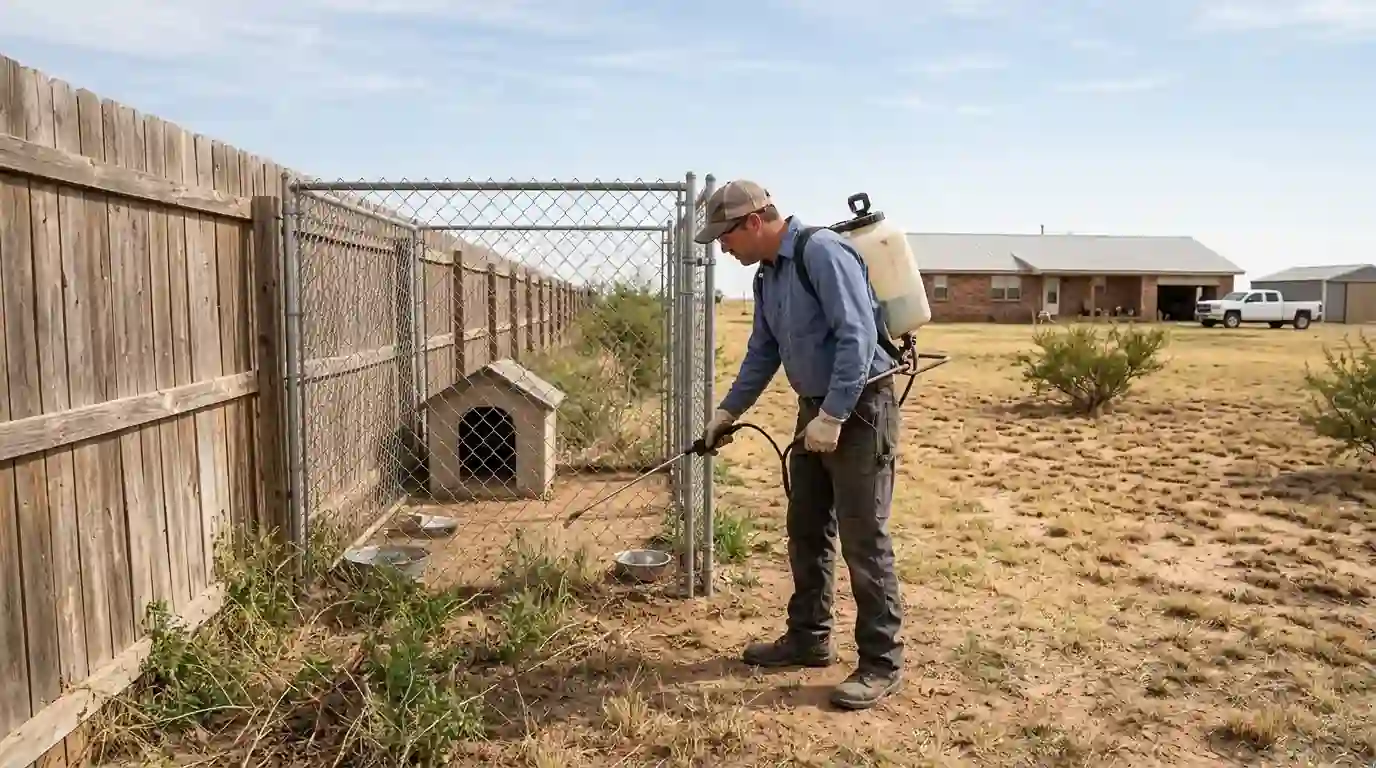
Kennel walls, dog houses, crates, fence posts and cracks in a concrete run get a residual treatment, since these are prime egg-laying spots.
Treat shaded yard areas
Outside, we treat shaded resting areas, under decks, along the foundation and fence lines, and any tall grass or brush at the property edge.
Plan a follow-up
Eggs hatch over a few weeks, so we return to retreat and check whether new ticks are still showing up.
Your part in clearing ticks for good
Treating the house only works if the dogs and their spaces are handled at the same time.
- Ask your vet about a tick preventive for every dog in the household.
- Check dogs daily, especially ears, between the toes, under the collar and around the tail.
- Wash dog bedding and blankets in hot water and dry on high heat.
- Vacuum along baseboards and under furniture, and empty the vacuum outdoors.
- Keep grass short and brush cleared along fence lines and the edges of the yard.
- Seal cracks in kennel walls and concrete dog runs where ticks hide.
Where ticks hide around an Amarillo property
These are the spots our technician checks first, and why each one matters.
| Spot | Why ticks use it | What we do there |
|---|---|---|
| Wall cracks near the dog bed | Females climb up to lay eggs close to the host | Crack-and-crevice treatment up the wall |
| Kennel and crate | The dog rests there daily, so ticks wait there | Residual treatment of walls, joints and floor cracks |
| Concrete dog run | Expansion joints and cracks shelter eggs | Treat joints and seal cracks where possible |
| Under the deck | Shade and cover out of the sun and wind | Treat the soil and framing underneath |
| Fence line and brushy edge | Tall grass holds outdoor ticks and wildlife | Treat the edge and recommend trimming |
What changes the cost of tick control in Amarillo
Tick jobs are priced by how many spaces the ticks have spread into.
- Indoor spread
- Ticks in one room are quicker to treat than ticks throughout the house.
- Kennels and runs
- Multiple kennels, dog houses and runs add treatment time.
- Yard size
- Acreage properties with long fence lines and brushy edges take longer than a city lot.
- Follow-up needs
- Heavy brown dog tick infestations usually need at least one follow-up treatment.
We quote after an inspection, or by phone once we know where you are seeing ticks and how many dogs are involved.
Product lines a technician may choose from, matched to the pest, the room and who lives there:
Where we handle tick control
Neighborhoods and towns we cover most often, with ZIP codes. The rest of Amarillo and the towns in our service area are covered too.
- City View79118
- Puckett79109
- Ridgecrest79109
- Sleepy Hollow79121
- Hollywood-Scotsman79110
- Windsor79109
- Belmar79106
- The Greenways79119
- Heritage Hills79119
- South Georgia Place79110
- Wolflin79109
- Eastridge79107
- Canyon79015
- Hereford79045
- Pampa79065
- Dumas79029
- Borger79007
- Bushland79012
Tick Control questions from Amarillo homeowners
Why are ticks crawling on the walls of my Amarillo home?
That is typical of the brown dog tick. After feeding on a dog, females drop off and crawl upward to find a protected crack to lay eggs. They often climb walls, curtains and door frames. It means ticks are breeding indoors, so the house, the dog's sleeping areas and the dog all need treatment at the same time.
Can brown dog ticks spread disease to people in the Texas Panhandle?
They can. Texas health sources note that in the Southwest the brown dog tick can carry Rocky Mountain spotted fever, which affects people and dogs, and ehrlichiosis, which mainly affects dogs. If anyone develops a fever or rash after a tick bite, see a doctor and mention it. Ask your vet about testing a dog that has had many ticks.
Do I need to treat my yard for ticks if my dog never leaves Amarillo?
Possibly. Brown dog ticks can live their whole life around a home and kennel, so a dog that stays home can still get ticks over and over. The yard spots that matter are the shaded areas where the dog rests, the kennel, the dog run and the fence line. Open sunny lawn usually does not hold ticks.
How long does it take to clear brown dog ticks from a house?
Usually several weeks. A female can lay up to about 4,000 eggs, and they hatch over time, so new ticks can keep appearing after the first treatment. A follow-up treatment, a vet-recommended preventive on the dogs and steady vacuuming are what end the cycle. Activity should drop clearly after the first visit.