Spider and silverfish control in Ridgecrest, Amarillo (79109)
Ridgecrest's split-level homes have a lower floor that stays cooler and damper than the rest of the house, and that is where silverfish, earwigs, centipedes and spiders settle in.We treat each level differently, because the pests on each floor are different.
ZIP 79109Southwest-central AmarilloRandall County
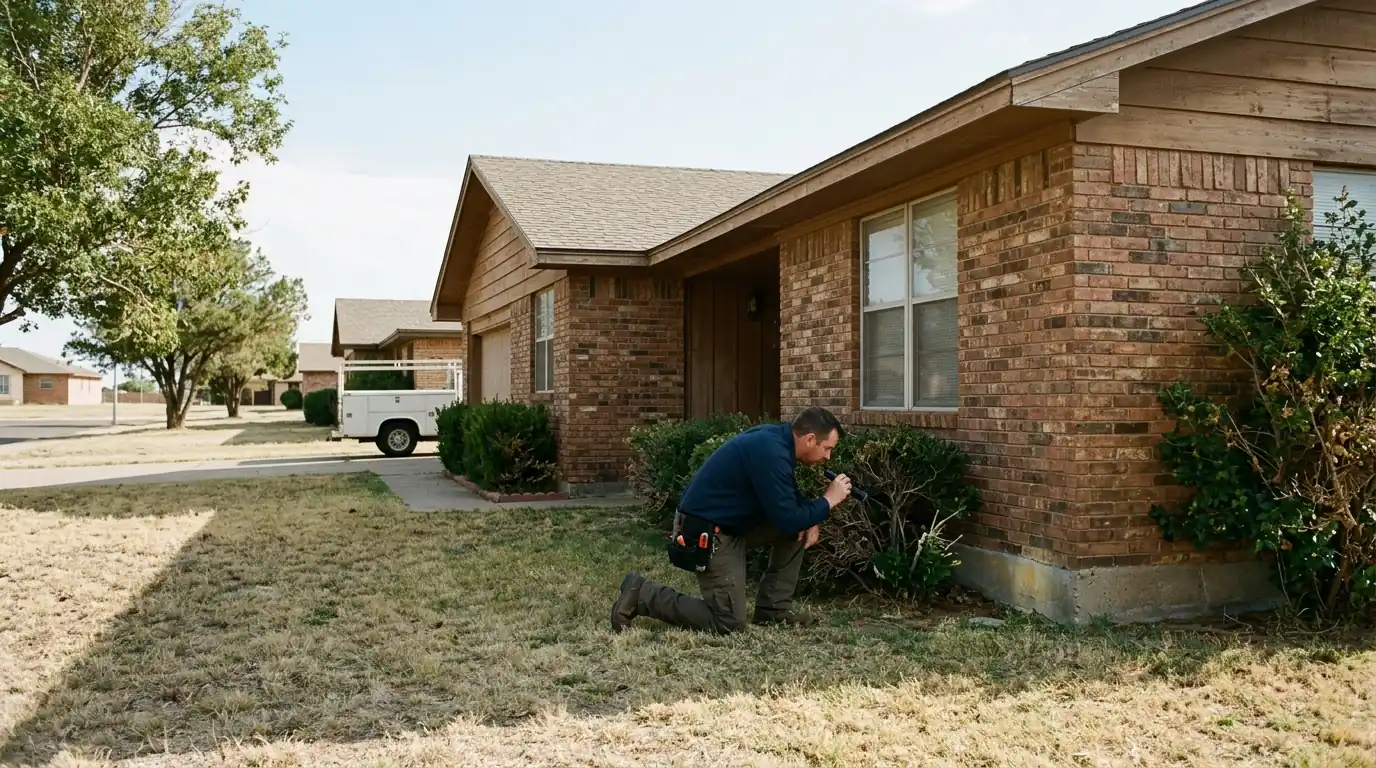
Why do I find silverfish and spiders in the lower level of my Ridgecrest split-level?
Lower levels in Ridgecrest split-levels sit partly below grade, so they stay cooler and hold more moisture than the upper floors, which suits silverfish, earwigs and centipedes. Spiders follow them to feed. We find the damp spots, treat cracks, baseboards and storage areas with dusts and residual products, set monitors, and show you which moisture fixes keep them from returning.
Which pests live on which floor of a Ridgecrest split-level
Split-levels sort pests by temperature and moisture, so the problem upstairs is rarely the problem downstairs.
| Part of the house | Common pests | What draws them |
|---|---|---|
| Lower-level family room | Silverfish, centipedes, earwigs | Cooler air, higher humidity, carpet over a slab |
| Laundry and utility room | Earwigs, spiders, crickets | Water lines, dryer heat, floor drains |
| Storage under the stairs | Brown recluse, silverfish | Cardboard boxes, stored paper and clothing |
| Main-level kitchen | Ants, occasional roaches | Food, sink and dishwasher moisture |
| Upper bedrooms and closets | Brown recluse, cellar spiders | Quiet closets and stored clothes |
| Garage | Black widows, crickets | Clutter, door gaps, lights at night |
How Ridgecrest homes built from 1960 to 1990 hold onto moisture
Ridgecrest grew over three decades, from the first brick ranch homes around 1960 to split-levels built into the 1980s. You can see the range along Kingston Rd, Teckla Blvd and SW 45th Ave, and on the streets around Ridgecrest Elementary on SW 37th. The split-levels are the homes most likely to have moisture-loving pests.
Amarillo's air is dry, with spring humidity sometimes falling below 15 percent, so silverfish and earwigs struggle in most of a house. A floor set partly into heavy clay soil is different. Clay holds water after summer thunderstorms, and that moisture wicks into a lower-level slab, behind paneling and into stored boxes. The 79109 ZIP has plenty of single-level brick ranch homes too, and in those the laundry room and bathrooms play the same role.
Older Ridgecrest homes also tend to hold decades of stored belongings in closets and under-stair spaces. Brown recluse spiders prefer exactly that: undisturbed boxes, stored clothing and the gap behind baseboards. Their mating season runs April to July, when they wander more and get noticed.
Pest problem in Ridgecrest?
Call and describe it. The phone is answered 24 hours a day.
How we treat a split-level from the bottom up
We start on the lowest floor, because that is usually where the problem begins.
Find the damp spots
Our technician checks the lower level for musty corners, water stains on paneling, sweating pipes and carpet that feels cool or damp. Moisture is the reason these pests are there.
Treat cracks and baseboards
We apply dust into wall gaps and along baseboards, plus a residual product at the lower-level perimeter. Silverfish and earwigs hide in narrow gaps, so that is where the product goes.
Work through storage
Under-stair closets and storage rooms get a close look for brown recluse and silverfish. We set glue monitors to show where activity is heaviest.
Seal the outside
Outside, we check weep holes, gaps under siding, the dryer vent and lower-level door thresholds, where crickets and centipedes walk in from the yard.
Things you can do in a Ridgecrest home between visits
A few changes make the lower level far less inviting.
- Run a dehumidifier in the lower level during summer storm season.
- Move stored paper and clothing from cardboard into lidded plastic bins.
- Keep stored boxes off the floor and a few inches away from walls.
- Fix dripping laundry faucets and wrap sweating cold water pipes.
- Keep soil and mulch below the foundation line outside lower-level walls.
- Shake out shoes and clothes that have sat in storage before wearing them.
Pest control services for Ridgecrest
Spider Control
Webs under the eaves, wolf spiders in the garage and black widows in the meter box are all part of life in the Panhandle.
Silverfish & Earwig Control
Silverfish in the bathtub and earwigs under the doormat both point to one thing: a damp spot the bugs have found in a dry...
Brown Recluse Control
Brown recluses hide in closets, garages and stored boxes, and most people only notice them when one turns up in a shoe or a...
Centipede & Millipede Control
A big redheaded centipede on the bathroom wall or a pile of curled-up millipedes by the patio door after a fall storm both send...
Cricket Control
Black field crickets can show up by the hundreds in late summer, chirping in the garage, piling against storefront glass and slipping under doors.
Quarterly Pest Control Plans
Panhandle pests arrive in waves: moths in spring, scorpions in summer, crickets in late summer and mice when the first freeze hits.
Pest control questions from Ridgecrest
Are silverfish in my Ridgecrest home a sign of a bigger moisture problem?
Not always, but they point to where moisture is collecting. Silverfish need humid spots, and in Amarillo's dry air that usually means a lower level, bathroom or laundry room. If they keep coming back after treatment, we look for a slow leak, a sweating pipe or poor drainage outside that wall.
How likely are brown recluse spiders in an older Ridgecrest house?
Brown recluse spiders are found indoors throughout Texas, and older homes with plenty of storage give them room. In Ridgecrest we check closets, under-stair storage, garages and boxes. The Texas Panhandle Poison Center has said only about 10 percent of recluse bites cause tissue damage, but any bite that worsens deserves a doctor's look.
Do centipedes in my Ridgecrest lower level mean I have other bugs too?
Usually, yes. Centipedes hunt insects, so a steady supply of them means silverfish, crickets or spiders are living nearby. Treating only the centipedes rarely lasts. We treat the prey insects and the moisture behind them, and the centipedes tend to leave along with their food.