Bee removal for Amarillo homes and buildings
A honey bee swarm resting on a fence post and a colony living inside your wall are two different problems, and both need a careful plan.We remove the bees and their comb, then close the gap they used. We answer 24/7.
How do you get rid of bees living in a wall in Amarillo?
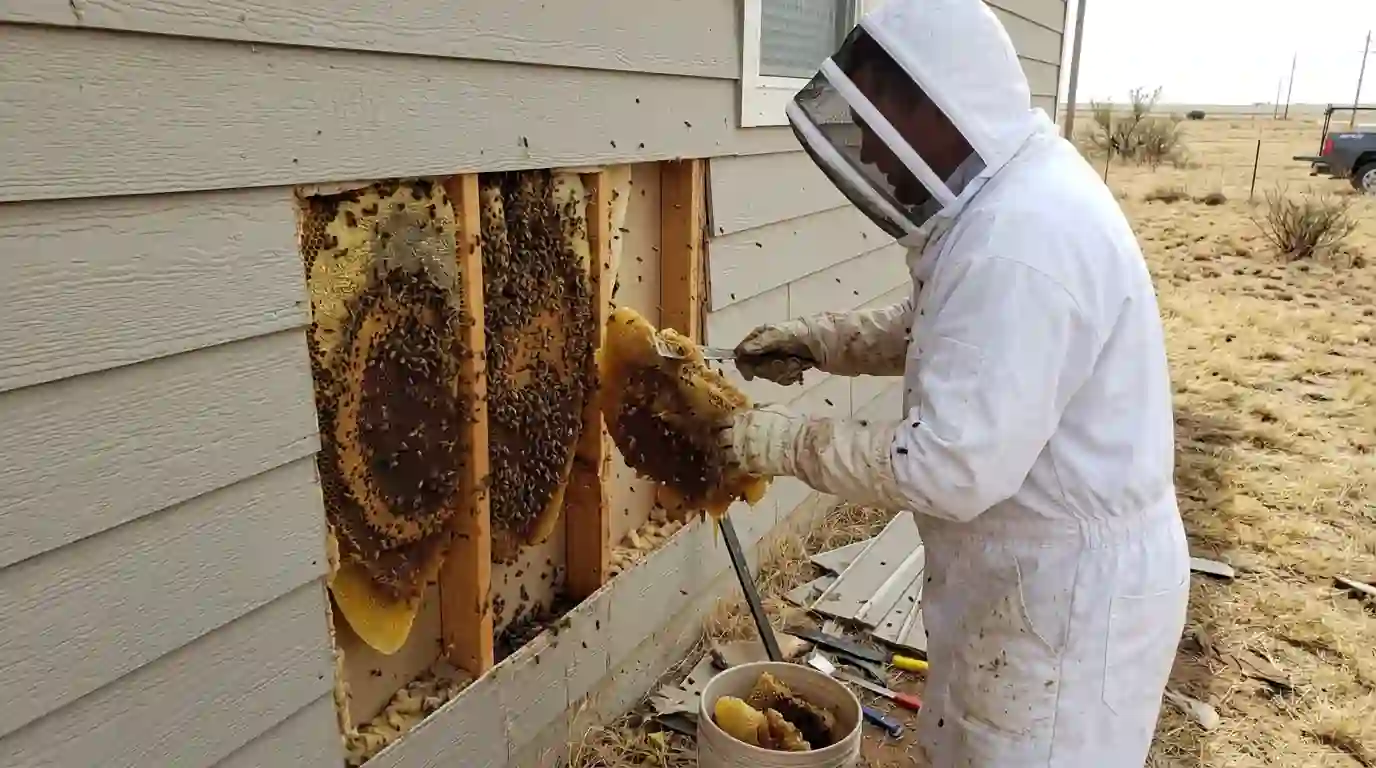
Bees living in a wall have to come out with their comb, not just be sprayed at the entrance. Our technician finds where the comb sits inside the cavity, removes or treats the bees, opens the wall over the comb, takes out the wax and honey, cleans the space and seals the entry gap so a new swarm is not drawn to the old scent.
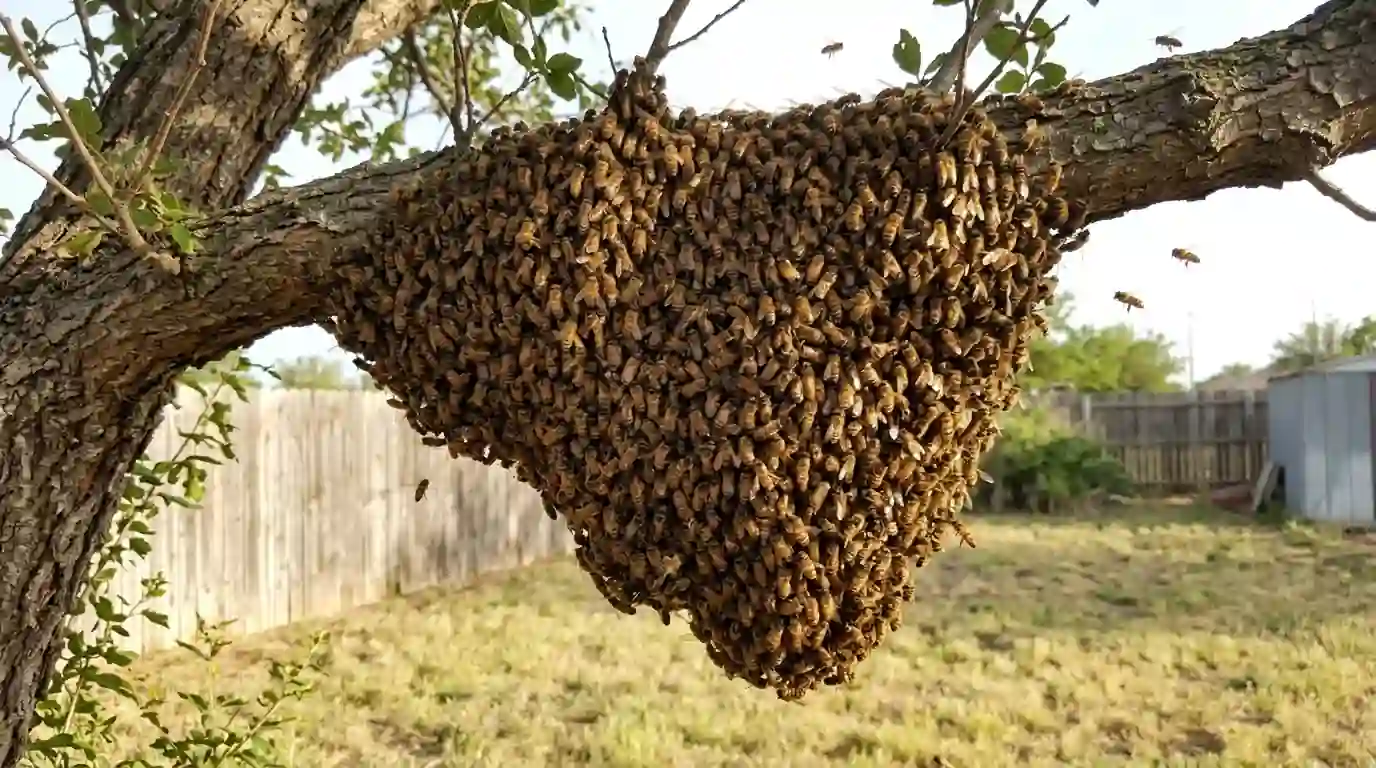
Swarm or settled colony: why the difference matters
A swarm is a cluster of honey bees that has left its old hive with a queen and is resting while scout bees look for a new home. You'll see it as a hanging ball of bees on a branch, fence, eave or even a car bumper, usually in spring. Swarming bees are full of honey and have no comb or brood to defend, so they are often calm. Many swarms move on within a day or two once the scouts agree on a site.
A settled colony is a different job. Once bees move into a wall void, soffit, chimney chase, water meter box or old shed, they start building wax comb, storing honey and raising brood. Now they have something to protect, and the colony grows through the warm months. Spraying the entrance may kill the foragers you can see, but it leaves pounds of comb behind and often pushes bees deeper into the house, sometimes out through a light fixture or ceiling vent. That is why our office asks how long the bees have been there when you call.
Signs bees have moved in instead of passing through
These clues point to a colony that has settled, not a swarm on the move.
Steady traffic at one gap
Bees flying straight in and out of the same crack, weep hole or vent all day, some of them carrying yellow or orange pollen on their legs.
A hum inside the wall
A low buzz you can hear through drywall or feel with a palm on the wall on a warm afternoon, often above a window or near the roofline.
Amber stains on siding or ceiling
Brown or amber streaks can mean honey or softened wax seeping through, especially on south and west walls that bake in summer.
Bees indoors on sunny days
Confused bees at windows or around ceiling lights mean the colony has found a path into the living space from the cavity.
Defensive bees near the ground
Bees that pour out at a mower, string trimmer or dog near a meter box, sprinkler valve box or old tire call for extra caution and distance.
Africanized bees in the Panhandle and what that changes
Texas A&M AgriLife reports that Africanized honey bees were first confirmed in the Panhandle in 2006, first in Armstrong County and then in Amarillo on the Randall County side. They look the same as gentler European honey bees, and only lab testing can tell the two apart, so our technicians treat every unknown colony with the same respect. What sets Africanized colonies apart is behavior: they tend to nest closer to the ground and defend a wider area around the nest, with more bees and for longer.
That is why ground-level nests worry us most. Water meter boxes, irrigation valve covers, stacked flowerpots, old appliances and the space under a shed floor all put a colony a foot or two from someone's ankles. AgriLife notes that mower vibration can set off a defensive colony.
Every spring, scout bees check houses for a dry, protected cavity, and brick ranch homes give them plenty of choices: open weep holes, gaps where siding meets brick, loose soffit panels and unscreened gable vents. AgriLife's advice is to seal gaps in siding and eaves, and closing those openings is the step that keeps next year's swarm from choosing the same house.
Need bee removal in Amarillo?
Call and tell us what you are seeing. The line is answered 24 hours a day, every day.
What to do while the bees are still there
If you find a colony or a swarm, these steps keep everyone out of range until our technician arrives.
- Keep children and pets indoors, and close doors and windows on that side of the house.
- Do not mow, edge, run a string trimmer or use a leaf blower anywhere near the bees.
- Do not spray the bees with a hose, wasp spray or gasoline; it agitates them and can contaminate the comb.
- Do not plug the entrance hole, which can drive bees into the living space.
- Note where the bees go in and out and roughly how long you have seen them.
- If someone is stung several times, get indoors or into a car and seek medical help, right away for anyone with a known allergy.
How our technician removes a bee colony from a wall
Every removal follows the same order so the bees, the comb and the opening all get dealt with.
Locate the comb
We watch the flight path, tap and listen along the wall and feel for the warm spot a colony gives off. The entrance hole and the comb are often several feet apart inside the cavity.
Protect the area
Our technician suits up, sets up on the side away from foot traffic and asks that people and pets stay inside. Ground nests are often worked early or late in the day, when bees are less active.
Deal with the bees
Depending on the location and how defensive the colony is, the bees are removed or treated so the comb can be reached safely. We explain which approach fits your situation and why.
Open the cavity and cut out comb
With your OK, we open the siding, soffit or interior drywall over the comb and cut out the wax, honey and brood. Comb left behind rots, draws ants and wax moths and invites the next swarm.
Clean and close
The cavity is scraped and wiped, and we fill or pack it so the old scent is covered. The entry gap is then sealed with materials that suit the surface, such as sealant, mesh or flashing.
Walk you through the repair
If we opened a wall or soffit, we show you exactly what was opened and what finish work remains, so nothing comes as a surprise.
Why honey and wax cannot stay in the wall
Once the bees are gone, nobody is left to fan the comb and keep it cool. In an Amarillo summer, a wall cavity on the sunny side of the house gets hot enough to soften wax, and honey can run down inside the wall, stain drywall and seep around outlets and trim. The sugar draws ants, roaches and wax moths, and fermenting honey gives off a sour smell that hangs around.
Old comb also carries the colony's scent, which is a strong signal to scout bees from future swarms. Homes where the comb was left in place often get a new colony in the same spot within a spring or two. Taking the comb out and sealing the gap is the difference between a one-time removal and a yearly event.
What changes the cost of bee removal in Amarillo
Bee jobs range from a quick swarm pickup to a full wall opening, and these details decide which.
- Swarm or colony
- A fresh swarm on a branch is a short visit. A colony with months of comb takes far more time and material.
- Height and access
- Comb under a second-story eave or in a chimney chase needs ladders and more setup, while a meter box sits at ground level.
- What has to be opened
- Removing siding, soffit, brick or drywall to reach the comb adds time, and some surfaces take more care than others.
- Size of the colony
- A colony in place for a season or longer can hold a large amount of comb and honey to remove and clean up.
- Defensive behavior
- A highly defensive colony near the ground needs more setup, more protective steps and sometimes a second visit.
We quote after an inspection, or by phone once we know where the bees are and how long they have been there.
Product lines a technician may choose from, matched to the pest, the room and who lives there:
Where we handle bee removal
Neighborhoods and towns we cover most often, with ZIP codes. The rest of Amarillo and the towns in our service area are covered too.
- City View79118
- Puckett79109
- Ridgecrest79109
- Sleepy Hollow79121
- Hollywood-Scotsman79110
- Windsor79109
- Belmar79106
- The Greenways79119
- Heritage Hills79119
- South Georgia Place79110
- Wolflin79109
- Eastridge79107
- Canyon79015
- Hereford79045
- Pampa79065
- Dumas79029
- Borger79007
- Bushland79012
Bee Removal questions from Amarillo homeowners
Are the bees in my Amarillo yard Africanized?
You can't tell by looking, and neither can we; only lab testing confirms Africanized honey bees. They were first confirmed in the Panhandle in 2006, so we handle every unknown colony with caution. What you can watch is behavior: bees that chase people or pets, pour out at a mower or nest low in a meter box deserve distance and a call before anyone gets close.
Will a honey bee swarm on my fence leave by itself?
Often it will, usually within a day or two once the scout bees choose a new home. A resting swarm is typically calm, so keep people and pets back and give it a little time. If the swarm hangs over a busy walkway, starts moving into a gap in your house or is still there after a few days, call us and we will plan a removal.
Can I just spray a bee colony inside my wall?
We don't recommend it. Spraying the entrance kills the foragers you see but leaves the comb, honey and brood inside the wall, where they rot, stain drywall and attract other pests. Surviving bees may also move deeper into the house. A proper bee removal takes the comb out and seals the gap, so a new swarm is not drawn to the leftover scent.
Do you have to open walls during bee removal?
Sometimes, yes, when the comb can't be reached any other way. Our technician first locates the comb by watching flight paths and checking the wall, then explains which section of siding, soffit or drywall needs to come off. We only open what is needed, and we tell you what finish repair remains afterward, so you can plan for it.
When do bees swarm around Amarillo?
Most bee swarms show up in spring, from around the mid-April last freeze into early summer, when colonies grow fast and split to reproduce. That is also when scout bees inspect houses for dry cavities. Sealing gaps in siding, eaves, weep holes and vents before the season starts is the best way to keep a swarm from moving into your walls.