Mouse control and exclusion in Puckett, Amarillo (79109)
When the first hard cold front rolls through Puckett in the fall, mice start testing every worn garage seal and open weep hole on these 1960s and 1970s brick homes.We trap what is inside, then close the gaps so the next front doesn't bring more.
ZIP 79109Southwest AmarilloRandall County
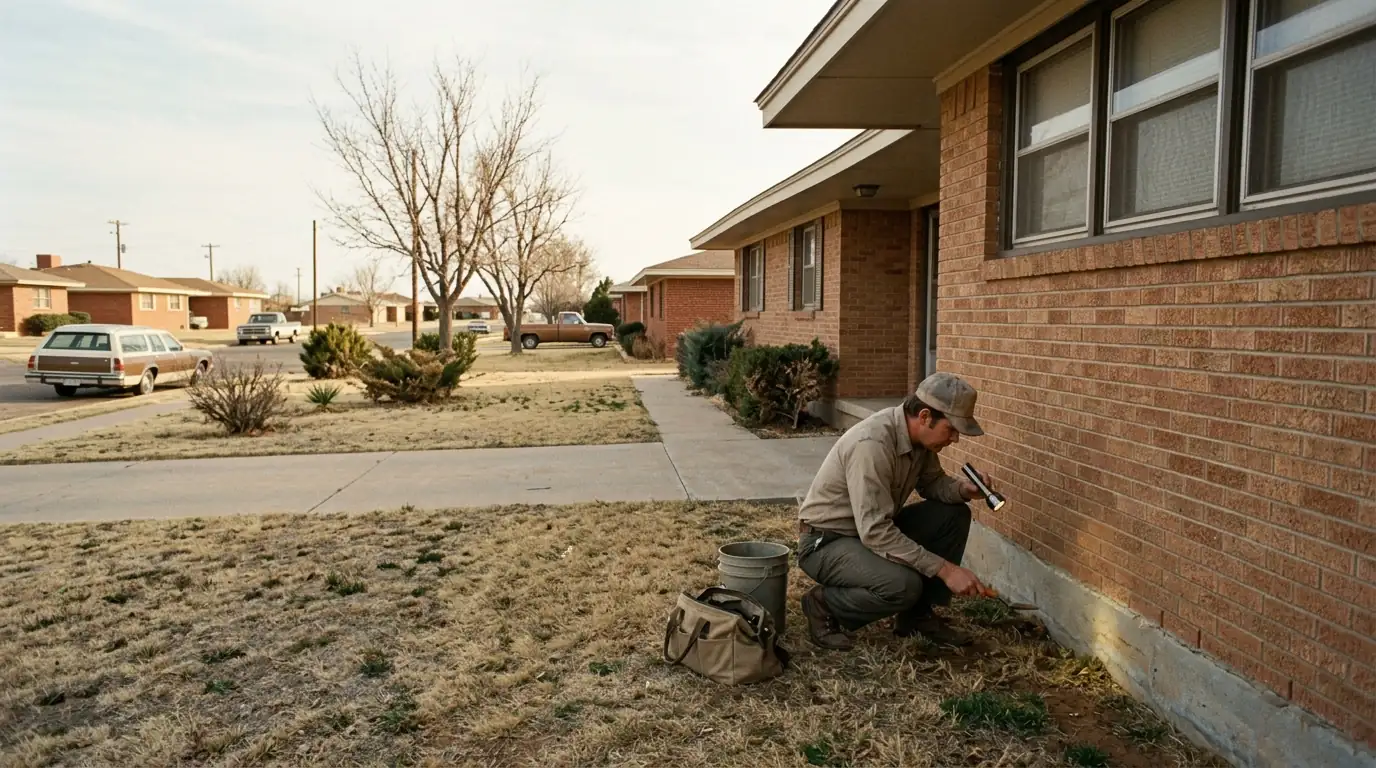
How do mice get into older brick homes in Puckett?
Mice get into Puckett's older brick homes mostly through worn garage door seals, gaps where pipes and lines pass through the brick, and uncovered weep holes at the base of the veneer. A house mouse needs only about a quarter-inch opening. We find the active runs, set snap traps or locked bait stations where they are safe, and seal openings with materials mice can't chew.
Why Puckett homes see mice every fall
Most of Puckett was built in the 1960s and 1970s, and many of those brick ranch homes are now more than fifty years old. Brick holds up well out here. The parts around it age faster: the rubber seal on the bottom of the garage door, the weather stripping on the side door, the mortar around the dryer vent and the foam someone sprayed around an AC line decades ago.
Amarillo cold fronts can drop the temperature 50 to 60 degrees in twelve hours, and mice feel that change the same night you do. A female house mouse can have many litters in a year, so the pair that slips under a garage door in October can turn into a winter problem in the attic, the pantry and the wall behind the stove by January.
Signs mice have moved into a Puckett house
Mice are quiet and mostly active at night, so the evidence usually shows up before the mouse does.
Droppings in drawers
Small, dark, rice-shaped droppings along the back edge of kitchen drawers or under the sink are the most common first sign.
Scratching after dark
Light scratching or scurrying in walls or the ceiling at night, especially near the kitchen or the wall shared with the garage.
Chewed packaging
Gnawed corners on cereal boxes, pet food bags or birdseed stored in the garage.
Rub marks on baseboards
Gray smudges where mice run the same route along a wall or squeeze through the same gap night after night.
Nesting in storage
Shredded paper, insulation or fabric tucked inside boxes, behind the water heater or in a drawer that rarely opens.
Pest problem in Puckett?
Call and describe it. The phone is answered 24 hours a day.
How we trap and seal a Puckett home
Trapping without sealing just makes room for the next mouse, so every visit covers both.
Trace the runs
Our technician follows droppings and rub marks to see where mice travel and where they are getting in. Garages and kitchens get the closest look.
Set traps where they work
Snap traps go along walls and inside cabinets where mice run. Locked, tamper-resistant bait stations go outside or in the garage, placed with kids and pets in mind.
Check the brick from outside
We walk the foundation looking at weep holes, pipe and wire entries, gaps under the eaves and the garage door seal. Any opening near a quarter inch counts.
Seal the openings
We close gaps with metal mesh and sealant mice can't chew, and fit vented weep hole covers that keep the brick able to drain.
Come back to check
A follow-up visit clears traps and confirms no new activity. If droppings keep appearing, we look again for a missed entry.
What Puckett's mature yards and cold fronts mean for rodents
Puckett sits on the southwest side of Amarillo near Bell Plaza and Fulton Dr, with Puckett Elementary on Oakhurst and Puckett School Park in the middle of the neighborhood. Yards here have had decades to fill in: shrubs pressed against the brick, ivy on the fences and woodpiles stacked beside the garage. All of that gives mice cover right up to the walls.
Rodent pressure in the 79109 ZIP tends to follow the weather. It climbs in October and November, jumps again after a sudden winter front and eases off in late spring. Sealing in late summer, before the first front, is the simplest way to stay ahead of it.
Pest control services for Puckett
Rodent Control
Droppings in a kitchen drawer or scratching in the attic at night usually mean house mice, and gnawed feed sacks in a barn often...
Rodent Exclusion & Sealing
Trapping clears the mice inside, but every gap a quarter inch or wider is an open door for the next ones.
Dead Animal Removal
A sweet, rotten smell that gets worse every day usually means an animal died in a wall, attic or crawlspace.
Spider Control
Webs under the eaves, wolf spiders in the garage and black widows in the meter box are all part of life in the Panhandle.
Cockroach Control
Small brown roaches under the sink and big reddish ones coming up the floor drain are two different problems with two different fixes.
Home Pest Control
Spiders in the garage, crickets at the back door and a mouse behind the stove are everyday problems in Amarillo houses.
Pest control questions from Puckett
Are weep holes in Puckett brick homes an entry point for mice?
They can be. Weep holes are the small gaps at the bottom of brick veneer that let moisture drain, and mice and insects use them to reach the wall cavity. They should never be mortared shut. Our technician fits vented covers that keep pests out while the wall still drains, and Texas A&M AgriLife lists sealing weep holes among its first steps against pests.
Should I use poison bait inside my Puckett house for mice?
Usually not inside the living space. A mouse that eats bait can die inside a wall and leave an odor for weeks. Indoors, we rely on snap traps placed where mice actually run. Bait, when it is used, goes into locked stations outside or in the garage, set where kids and pets can't reach it.
How long does it take to clear mice from a Puckett home?
Many homes go quiet within a few weeks once the entry points are sealed. Trapping removes the mice already inside, and sealing stops new ones from following. Homes with a garage full of pet food, birdseed or stored groceries can take longer, so moving those into sealed bins speeds things up.