Mouse and rat control in Amarillo
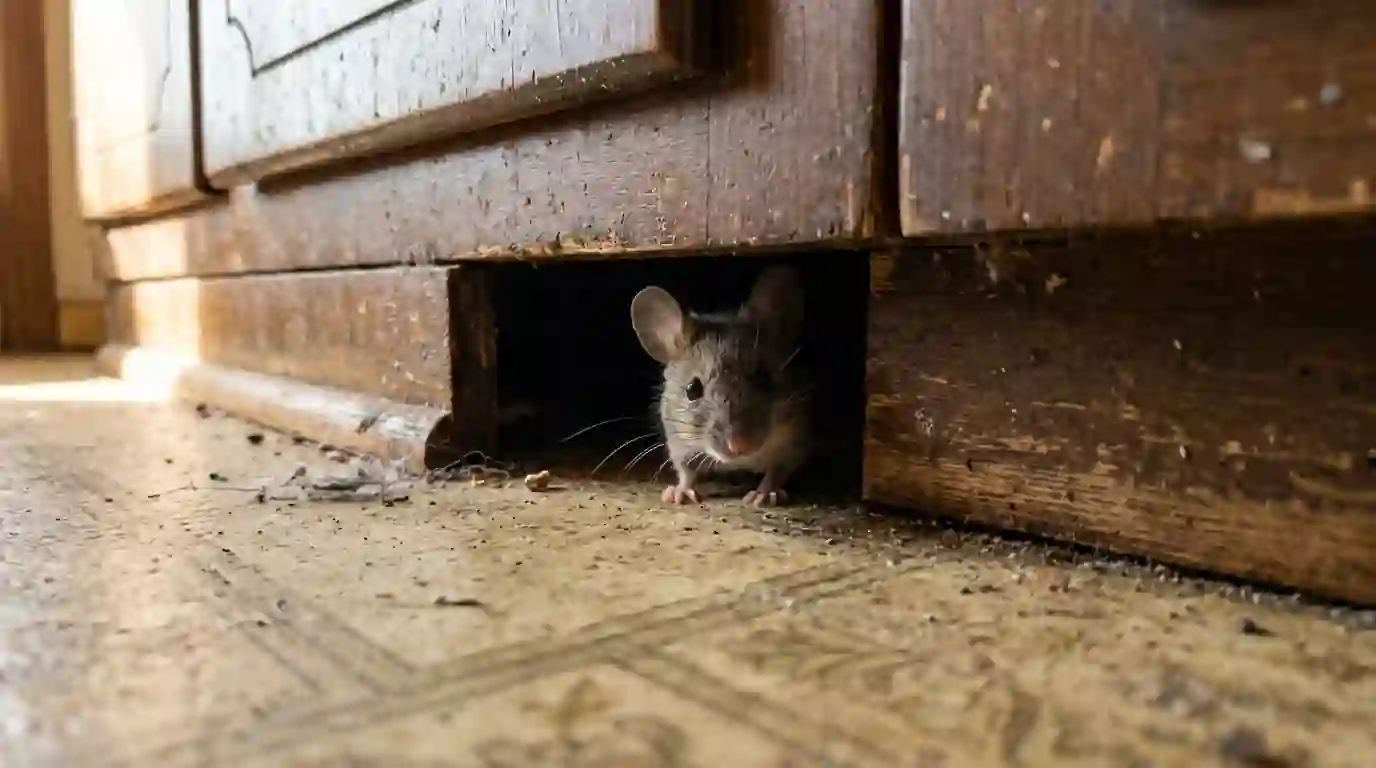
Droppings in a kitchen drawer or scratching in the attic at night usually mean house mice, and gnawed feed sacks in a barn often mean Norway rats.We trap and bait to clear the ones inside, then find how they got in.
How do you get rid of mice and rats in an Amarillo house?
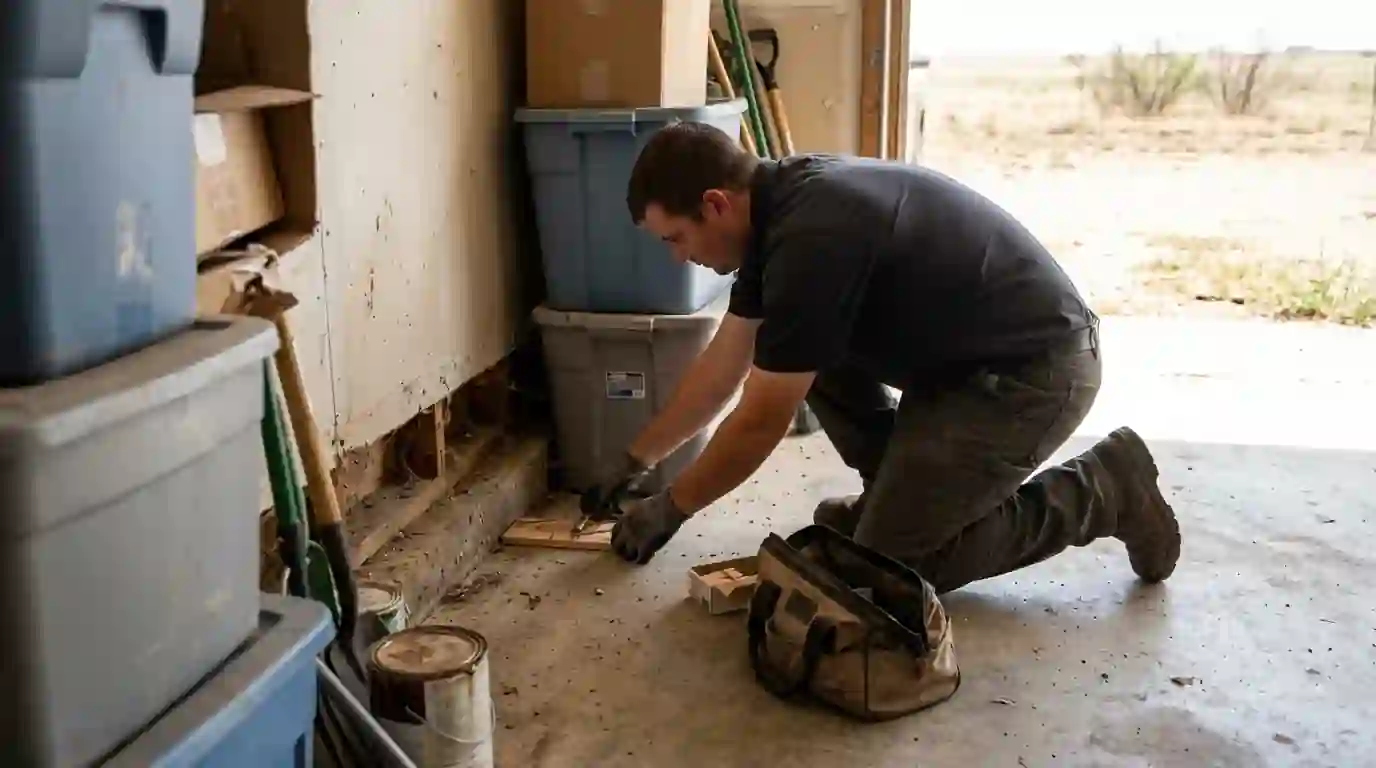
Getting rid of mice and rats takes three things: removing the rodents already inside, cutting off food and water, and closing the gaps they use. Our technician inspects the kitchen, garage, attic and outside walls, sets snap traps and locked bait stations placed with kids and pets in mind, then returns to check activity and recommend sealing.
How to tell you have mice or rats, and which one
Rodents are rarely seen in daylight, so most people find the evidence first.
Droppings and their size
Mouse droppings are about the size of a grain of rice with pointed ends. Norway rat droppings are much larger, closer to a raisin, with blunt ends.
Gnawed packaging
Chewed corners on cereal boxes, pet food bags, birdseed and grass seed, usually in a pantry, garage shelf or under the sink.
Noise after dark
Light scratching and scurrying in the ceiling or walls in the evening and early morning, louder once the house goes quiet.
Rub marks and trails
Gray, greasy smudges along baseboards and the edges of openings, where rodents brush the same path night after night.
Nests in stored items
Shredded paper, insulation or fabric packed into a drawer, a box in the garage, a furnace closet or the back of a cabinet.
Burrows near foundations
Fist-size holes under a slab edge, shed floor or chicken house, often with fresh dirt pushed out, point to Norway rats.
A musky smell
A stale, ammonia-like odor in a closed cabinet or closet, strongest where urine has built up over weeks.
House mice and Norway rats behave differently
House mice are the rodent most Amarillo homes deal with. They are curious, take small bites from many food sources and rarely travel more than a few rooms from their nest. A mouse can squeeze through a gap about a quarter inch wide, roughly the size of a dime, and a female can raise many litters a year. A pair that gets into a garage in October can become a kitchen problem by Thanksgiving.
Norway rats are bigger, heavier and warier. They dig burrows under slabs, sheds, woodpiles and outbuildings and are common around feed stores, barns and chicken houses, where grain and water are easy. They tend to avoid anything new in their path for a few days, which is why our technician sometimes leaves traps unset at first so the rats get used to them.
Roof rats live in attics in many Texas towns, but we have not seen them confirmed in Amarillo. If droppings in an attic look larger than a mouse's, our technician identifies them before choosing a plan rather than assuming.
Why rodent calls pick up around the first freeze in Amarillo
The National Weather Service puts Amarillo's average first fall freeze around October 20, and our phones follow that calendar. As nights cool, mice that spent the summer in fence lines, wheat stubble and vacant lots look for warmth, and a garage door that does not seal at the bottom is often their first stop. Cold fronts here can drop temperatures 50 to 60 degrees in half a day, and a sharp front often brings a burst of calls within a week.
Texas A&M AgriLife also notes that rodents come indoors during heat and drought looking for water. In a dry summer we find mice around AC condensate lines, pet water bowls in the garage, leaky hose bibs and the drip pans under refrigerators. The brick ranch homes common across south and west Amarillo have weep holes, garage door gaps and utility penetrations that a mouse can use. Homes on the edge of town that back onto pasture or new construction see more pressure, because ground disturbance pushes rodents toward the nearest buildings.
Need rodent control in Amarillo?
Call and tell us what you are seeing. The line is answered 24 hours a day, every day.
What our technician does on a rodent visit
A rodent job is an inspection first and a trapping plan second.
Inspect inside and out
We check the kitchen, pantry, laundry, water heater closet, garage and attic, then walk the outside of the house looking at the garage door, weep holes, AC line set and plumbing penetrations. Droppings, rub marks and gnawing tell us how many rodents and where they travel.
Set traps on the runways
Snap traps go along walls and behind appliances, where mice actually run, placed inside covered boxes or out of reach where kids and pets spend time. We use more traps than most people expect, because a few traps rarely catch a growing group.
Place locked bait stations outside
Where it fits, tamper-resistant bait stations go along the foundation, the garage edge or around outbuildings. They are anchored and locked, and we explain where each one is and why it was placed there.
Point out food and water
We show you what is feeding the rodents, such as open pet food, birdseed, grass seed or a leak, so the traps become the most attractive thing around.
Return and check
Follow-up visits clear traps, record catches and move traps to where activity continues. When catches stop, we know the group inside is gone.
Map the entry points
We note every gap that needs sealing and explain what our rodent exclusion visit would cover, so new mice do not replace the ones we caught.
Where we usually find rodents in Amarillo homes
The room tells us a lot about how the rodent got in and what it is after.
| Location | What we often find | Likely cause |
|---|---|---|
| Kitchen and pantry | Droppings in drawers, gnawed boxes | Gaps behind the stove or under the sink where pipes enter |
| Garage | Nests in boxes, chewed pet food and seed bags | Worn bottom seal or gaps at the door corners |
| Attic | Trails in insulation, droppings near the eaves | Gaps at roof edges, vents or the AC line set |
| Water heater or furnace closet | Nests near warm equipment | Open penetrations for gas and water lines |
| Barn, shed or chicken house | Burrows, large droppings, gnawed sacks | Spilled grain, open feed and easy water |
Things you can do before and after our visit
A few changes at home make every trap and bait station work harder.
- Move pet food, birdseed and grass seed into lidded metal or heavy plastic bins.
- Pick up pet bowls at night and fix dripping faucets and hose bibs.
- Clear boxes and clutter off the garage floor so runways are easy to see and trap.
- Do not move or open bait stations; call our office if one gets knocked loose.
- Wear gloves and wet droppings with a disinfectant before wiping them up; do not sweep or vacuum them dry.
- Keep firewood and stored lumber off the ground and away from the house walls.
- Note any new droppings after the visit so our technician knows where to look.
What changes the cost of rodent control in Amarillo
Rodent work varies with how established the problem is and how much ground there is to cover.
- Mice or rats
- Norway rats are warier and usually need more setup time and more follow-up checks than house mice.
- How long it has gone on
- A few mice caught early clears faster than a group that has been nesting in the attic all winter.
- Size of the property
- A house alone is different from a house with a barn, shop and chicken coop that all need stations.
- Number of follow-up visits
- Most jobs need at least one return trip; heavy activity or rats can need several.
- Sealing work
- Exclusion is priced on the number and type of gaps, and it is what keeps the problem from coming back.
We quote after an inspection, or over the phone once we know what you are seeing and where.
Product lines a technician may choose from, matched to the pest, the room and who lives there:
Where we handle rodent control
Neighborhoods and towns we cover most often, with ZIP codes. The rest of Amarillo and the towns in our service area are covered too.
- City View79118
- Puckett79109
- Ridgecrest79109
- Sleepy Hollow79121
- Hollywood-Scotsman79110
- Windsor79109
- Belmar79106
- The Greenways79119
- Heritage Hills79119
- South Georgia Place79110
- Wolflin79109
- Eastridge79107
- Canyon79015
- Hereford79045
- Pampa79065
- Dumas79029
- Borger79007
- Bushland79012
Rodent Control questions from Amarillo homeowners
Why do mice show up in Amarillo homes in October?
Mice come inside when nights turn cold, and Amarillo's average first freeze lands around October 20. Mice that lived outdoors all summer look for warm shelter, and a garage door with a worn seal or a gap around a pipe gives them a way in. A sharp cold front can bring a wave of mice into garages within days.
Are rodent bait stations safe around my kids and dog?
We place bait stations with kids and pets in mind, which means locked, tamper-resistant boxes anchored in place, usually outside along the foundation or around outbuildings. Our technician tells you where each one is and what precautions make sense for your household. Inside living areas we lean on snap traps in covered boxes or tucked behind appliances, out of the way of curious pets.
How many visits does it take to get rid of mice in a house?
Most homes need an initial visit and at least one follow-up to clear the mice. The first visit sets traps and finds the activity; the return trips clear traps, move them to where droppings continue and confirm when catches stop. Heavy activity, attic nests or Norway rats can take longer. Sealing entry points keeps the count from climbing again.
Do you handle Norway rats around barns and chicken coops near Amarillo?
Yes. Norway rats burrow under sheds, slabs and coops and feed on spilled grain, so barns and chicken houses on acreage around Amarillo are common spots. Our technician looks for burrows and runways, places anchored bait stations or traps with livestock and pets in mind, and recommends feed storage changes that cut off what the rats are eating.
Can I just use peppermint oil or ultrasonic devices for mice?
Those products rarely solve a mouse problem. Mice quickly get used to smells and sounds, and none of these devices remove the mice already nesting in your walls or close the gaps they use. Trapping along their runways, removing food and water and sealing entry points works far better, and it gives you a clear sign when the problem is over.