Pest control across Armstrong County, TX
Armstrong County is ranch land cut by the Palo Duro Canyon breaks, where scorpions, rattlesnakes and Africanized bees live close to homes and barns.We drive east on US-287 to ranches and rural homes across the county and answer 24/7.
County seat: ClaudePopulation 1,848
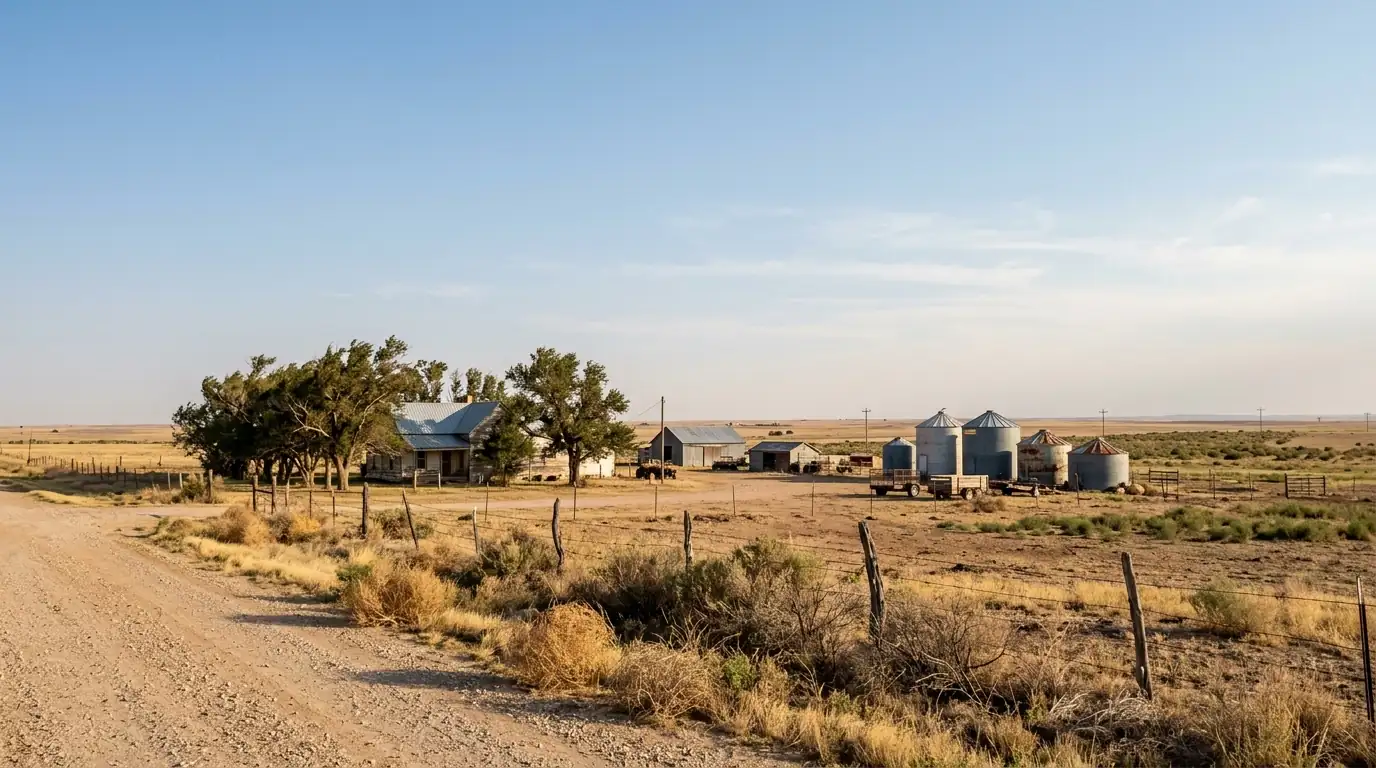
What pests do ranch homes near the canyon breaks in Armstrong County deal with?
Ranch homes near the Armstrong County canyon breaks mostly deal with three things. Striped bark scorpions climb into attics and walls, rattlesnakes and bullsnakes follow rodents to barns, and honey bees (possibly Africanized) nest in ground cavities, idle equipment and wall voids. We treat and seal the house, remove snakes and nests, and cut down the mice that draw snakes in.
Canyon breaks and open range: the Armstrong County pest picture
Armstrong County is thinly settled, with about 1,848 people. Claude, the county seat with its 1912 courthouse, sits on US-287 east of Amarillo and uses the 79019 ZIP. Beyond town, the county is ranch country, with farmhouses, barns and pens spread across open range and down toward the canyon, and that rural ground is where most of our county calls come from.
Palo Duro Canyon State Park lies partly in Armstrong County, and the breaks running off the canyon are rough, rocky ground. Prairie rattlesnakes favor that kind of arid grassland and canyon country, and western diamondbacks are the most widespread rattlesnake in Texas. Striped bark scorpions climb rock, walls and trees, spend time in attics and drop into living space when summer heat builds.
This is also the county where Africanized honey bees first turned up in the Panhandle; Texas A&M AgriLife confirmed them here in 2006. They nest closer to the ground than other honey bees, in meter boxes, old tires, idle equipment and holes in banks, and they defend a nest hard. Mower and tractor vibration can set them off, so routine ranch chores are when most run-ins happen.
What lives where on an Armstrong County ranch property
Where a pest shows up tells us how to handle it.
| Pest | Where we find it | When it peaks |
|---|---|---|
| Striped bark scorpion | Attics, wall voids, rock borders, woodpiles | Hot, dry stretches of summer |
| Rattlesnakes and bullsnakes | Barns, rock piles, under sheds, along draws | Warm months, with most bites in July and August |
| Honey bees, possibly Africanized | Ground cavities, idle equipment, wall voids | Spring and summer swarms |
| Paper wasps and yellowjackets | Eaves, sheds, holes in the ground | Yellowjackets peak in August and September |
| House mice and Norway rats | Feed rooms, barns, under slabs | Fall and winter cold fronts |
Pest problem in Armstrong County?
Call and describe it. The phone is answered 24 hours a day.
How we handle a ranch house near the Armstrong County breaks
The house and the outbuildings get treated as a pair.
Inspect for scorpions
Our technician checks the attic, garage, door frames, rock borders and woodpiles for scorpions and for the crickets and roaches they feed on.
Treat and seal the house
A residual treatment goes around the foundation, eaves and entry points, with dust in attic and wall voids. Weep holes, door sweeps and gaps at pipes get sealed.
Look for bee and wasp nests
We check meter boxes, sheds, idle equipment and eaves from a safe distance before anyone mows. Nests are treated and removed, and the cavity is closed.
Reduce what draws snakes
Snakes come for rodents, so bait stations go around barns and sheds, and we point out rock piles or debris near the house that give snakes cover.
Remove snakes when called
If a snake turns up in the garage, barn or house, we take it out and look for the gap or food source that brought it there.
Before you mow, haul or move equipment in Armstrong County
A few checks keep chores from turning into a sting or a bite.
- Walk the area first and listen for buzzing near the ground or inside equipment.
- Look before reaching into meter boxes, feed bins or under tarps.
- Wear boots and gloves when moving hay, lumber or rocks.
- Shake out boots and work clothes left in the barn overnight.
- Keep kids, dogs and horses back if bees start pouring out of a cavity.
- If bees chase you, get inside a truck or building rather than swatting.
Pest control services for Armstrong County
Scorpion Control
Striped bark scorpions climb into attics, then drop into bedrooms and bathtubs when the summer heat builds.
Snake Removal
A snake coiled by the back door, in the garage or under the AC unit needs to be identified before anyone gets close.
Bee Removal
A honey bee swarm resting on a fence post and a colony living inside your wall are two different problems, and both need a...
Wasp & Yellowjacket Removal
A paper wasp nest over the front door, yellowjackets streaming out of a hole in the lawn or buzzing inside a wall all call...
Rodent Control
Droppings in a kitchen drawer or scratching in the attic at night usually mean house mice, and gnawed feed sacks in a barn often...
Rodent Exclusion & Sealing
Trapping clears the mice inside, but every gap a quarter inch or wider is an open door for the next ones.
Pest control questions from Armstrong County
Do scorpions come up from the canyon breaks into Armstrong County homes?
Yes. Striped bark scorpions live in rocky canyon country and climb walls and trees with ease. In hot, dry spells they work into attics and then down into rooms looking for moisture and insects. Sealing weep holes and door gaps, treating the foundation and attic, and cutting down crickets around the house all reduce how many get inside.
What should I do about a bee colony in old ranch equipment in Armstrong County?
Leave it alone and keep people, pets and livestock back. This county is where the Panhandle's first Africanized bees were confirmed, and any honey bee colony near the ground should be treated as if it could be one. Don't start the equipment or mow nearby. We confirm what kind of insect it is, remove the colony and seal the cavity.
Which rattlesnakes live in the Armstrong County canyon country?
Prairie rattlesnakes and western diamondbacks are the two you are most likely to meet. Prairie rattlers prefer arid grassland and canyons, while diamondbacks range across most of Texas. Bullsnakes and coachwhips are common too and are harmless, though bullsnakes imitate rattlers. If you can't tell what you're looking at, keep your distance and call us.