Black widow or brown recluse: how to tell them apart
Two spiders cause most of the worry in Panhandle homes: the black widow and the brown recluse.Once you know what to check, they look nothing alike, and they tend to settle in different parts of the house and yard. Here is how to tell them apart, what a bite from each can mean and how to make both less likely to move in.
By Dolores Lankford, Pest Advice EditorPublished June 23, 2026Updated October 16, 2026
Body shape and markings: the quickest way to tell them apart
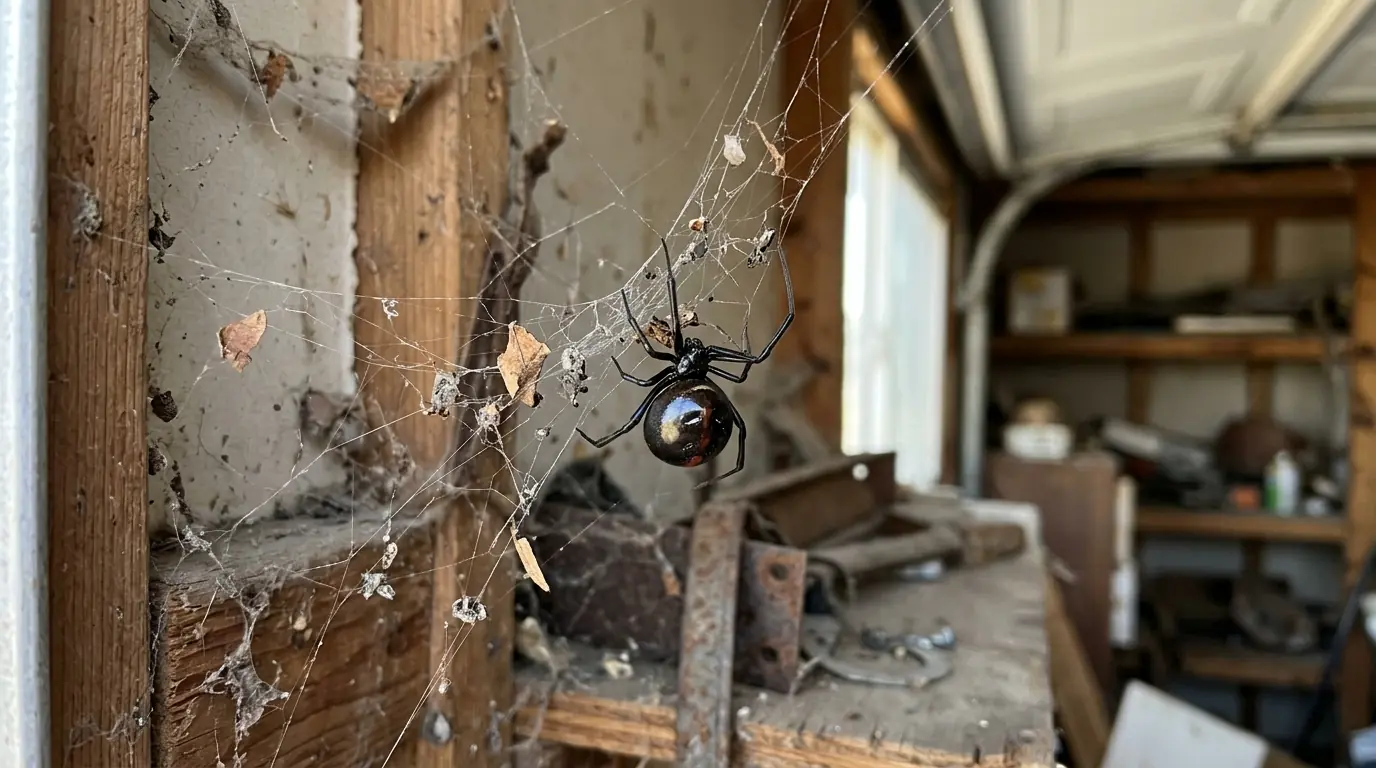
The female black widow (Latrodectus mactans) is the spider most people picture: glossy black, with a round, almost bead-like abdomen and a red hourglass on the underside. Her body is about half an inch long and her legs are long and thin. Males are much smaller, often brownish with pale markings, and they rarely bite. Young widows can be patterned in orange, white and tan before they darken, which catches a lot of people off guard.
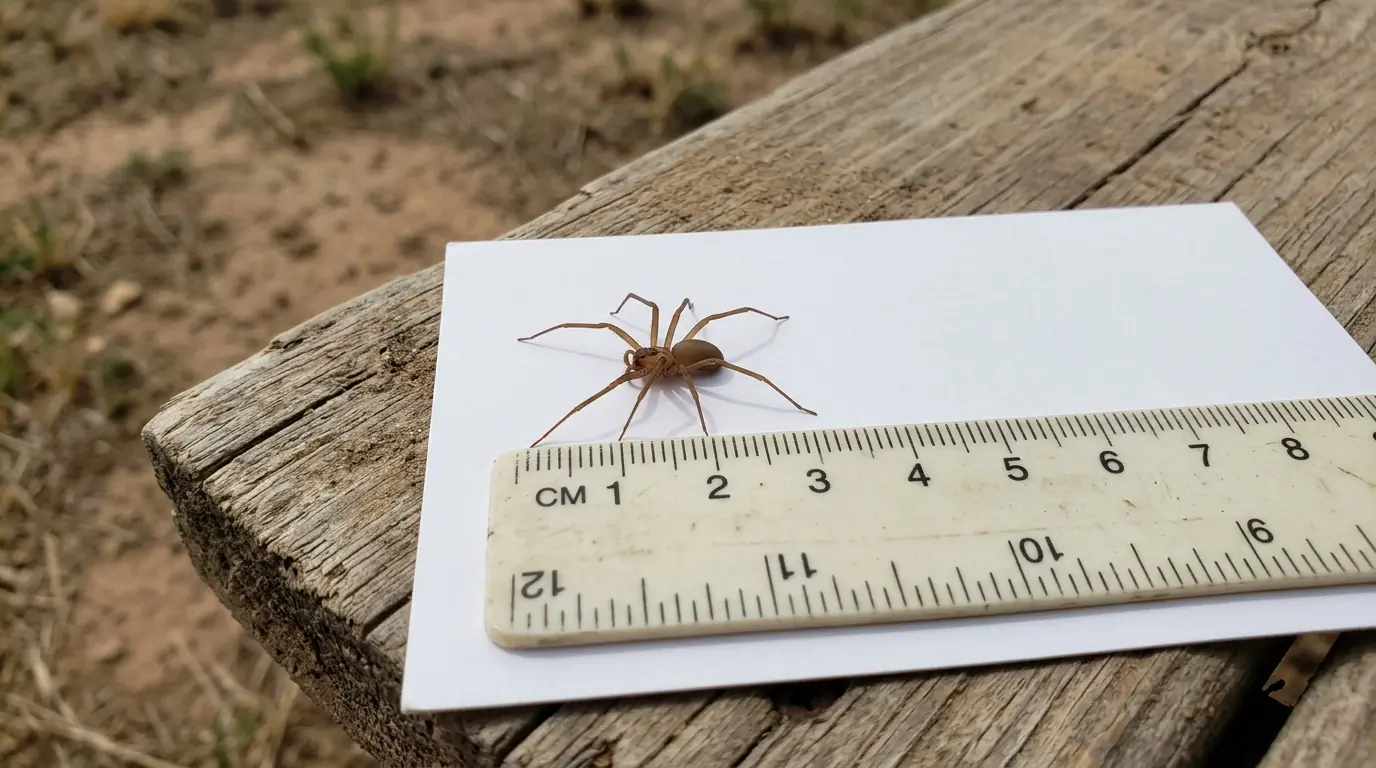
The brown recluse (Loxosceles reclusa) is plain by comparison. It is tan to medium brown, roughly the size of a quarter with its legs spread, and it carries a darker violin-shaped mark on the front body section, with the neck of the violin pointing back toward the abdomen. The legs are one solid color, with no bands or obvious spines, and the abdomen has no pattern at all.
Plenty of harmless brown spiders get blamed for being recluses, so look for the violin and the plain legs together. A simple rule covers most cases: shiny black with red usually means widow, and dull brown with a violin and nothing else may mean recluse. If you are unsure, trap the spider under a jar and have it identified before assuming anything.
How their webs differ, and what that tells you
Black widows build messy, tangled webs with tough, slightly sticky silk that feels stronger than ordinary cobweb when you brush through it. The web sits low, near the ground, in a sheltered corner, and at night the spider usually hangs upside down in the middle with the hourglass showing. By day she tucks into a crevice at the edge. If you walk into a shapeless web in a garage corner and it clings to your hand, there is a fair chance a widow built it.
Recluses do not use webs to catch food. They spin small, loose, off-white sheets as hiding spots in corners, behind objects and inside boxes, then leave at night to hunt. You may never notice the web at all. What people usually find instead is the spider itself, curled in a shoe or a folded towel, or stuck on a glue board along a baseboard.
Where each spider settles in Panhandle homes and garages
The two species split a property roughly between outdoors and indoors. Texas A&M AgriLife lists woodpiles, water meter boxes, the underside of eaves, garages and boxes as typical black widow spots. Recluses prefer the indoor side, from closets, boxes and stored clothes to the garage and the gap behind baseboards, and they are seen most from April to July, their mating season, when males roam. The garage is where the two ranges overlap, which is why we look it over carefully on any spider call.
In and around Amarillo houses, these are the places each one turns up most:
- Black widow: under the lids of water meter and sprinkler valve boxes.
- Black widow: in stacked firewood, lumber, landscape timbers and block walls.
- Black widow: beneath patio furniture, grills, flowerpots and outdoor toys.
- Brown recluse: on closet floors, inside boxes and in clothes left untouched for a season.
- Brown recluse: behind baseboards and furniture pushed against outside walls.
- Both: along garage walls, in boxes sitting on the slab and inside gloves or boots left on the floor.
Bite symptoms in general terms, and when to call for help
Neither spider hunts people. Bites happen when one gets pressed against skin: reaching into a meter box, pulling on a glove, rolling onto a recluse that wandered into bedding. The two bites behave differently, though, and knowing which spider was involved helps whoever treats you.
A black widow bite may feel like a pinprick at first, then cause pain that spreads outward from the bite, sometimes with muscle cramps, stiffness, sweating or nausea. Widow venom acts on the nerves, so symptoms show up through the body rather than only at the bite. A brown recluse bite is often painless at first. Most leave a small red spot that heals on its own, and according to the Texas Panhandle Poison Center, tissue damage develops in roughly 10 percent of recluse bites. When damage does happen, the spot can blister, darken and become a slow-healing sore.
For either spider, wash the bite with soap and water and apply a cool compress. Then call the Texas Panhandle Poison Center or your doctor for advice, and get medical care promptly for a child, an older adult, anyone with heart or breathing problems or anyone whose symptoms are spreading. If the spider can be trapped under a jar without risk, bring it along. A confirmed identification saves a lot of guesswork.
Habits that keep both spiders out of reach
Prevention for both spiders comes down to fewer hiding places, fewer insects to eat and fewer gaps to walk through. Spiders follow their food, so the crickets, roaches and moths that collect around porch lights and garage doors on summer nights draw spiders in behind them. Yellow bug lights, and fewer fixtures left burning all night, shrink that supply.
A few habits make the biggest difference:
- Wear gloves when you move firewood, carry out stored boxes or clear the garage.
- Flip a water meter or valve box lid with a tool, not your fingers.
- Pack garage and closet storage in plastic tubs with snug lids, up off the floor.
- Shake out shoes, gloves and jackets that have hung or sat unused for weeks.
- Knock down tangled webs in garage corners and under the eaves with a long-handled broom.
- Replace worn door sweeps and fit mesh into the weep holes along the brick.
- Keep the woodpile raised on a rack and several feet from the siding or brick.
How we treat a house with widows, recluses or both
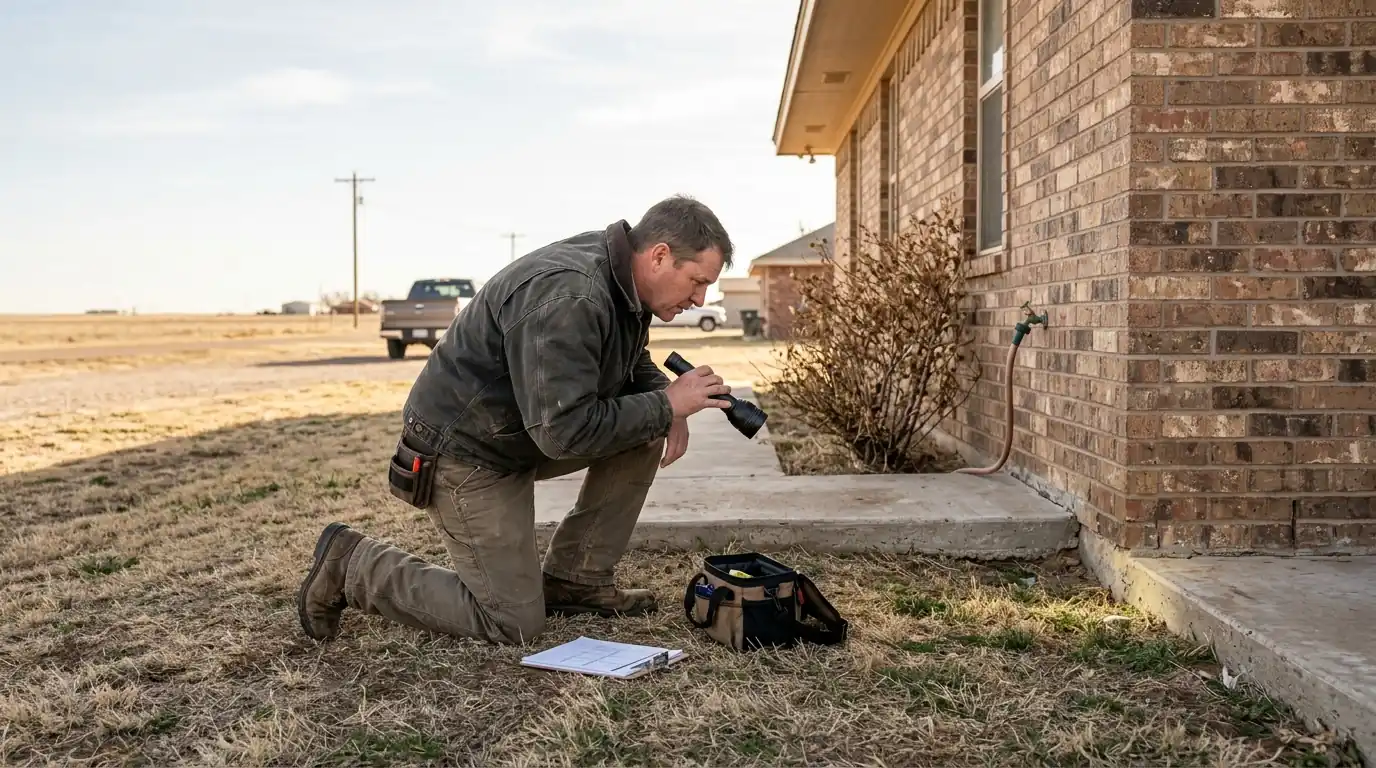
On a spider visit, our technician starts by confirming what you are dealing with, using spiders you caught, glue boards or the webs themselves. Black widow work is mostly outside: meter boxes, eaves, woodpiles, block walls and the garage, with webs swept away and a residual product applied where widows shelter. Recluse work is mostly inside, aimed at closets, baseboards, the attic and the garage, with dust in wall voids and fresh glue boards set out to track progress. Many Amarillo homes get both in one visit.
Recluses usually take more than one round, since they hide deep and turn up again after the first treatment. Quarterly service keeps a protective band around the house through the warm months, when both spiders are most active. Before leaving, our technician goes over re-entry times and how each placement was chosen around children and pets. If you are finding spiders you cannot identify, call (806) 552-3060 and we will help sort it out.
Dolores Lankford, Pest Advice Editor, edits the Pest Advice section for Pestcon, Inc.. Articles are checked against Texas A&M AgriLife, Texas Parks and Wildlife, Texas DSHS, NWS Amarillo and City of Amarillo guidance.
Questions about this article
Is a black widow or a brown recluse more likely in an Amarillo garage?
Both turn up in garages, but in different spots. Black widows build tangled webs low in corners, behind the water heater and under shelving near the door, especially where insects wander in. Brown recluses hide inside boxes, stored clothing and gloves, and along walls behind clutter. A garage with cardboard on the floor and a light left on at night can easily hold both at the same time.
Can black widows and brown recluses live in the same house?
Yes. They use different parts of the property, so they rarely compete: widows stay outside and in the garage, close to the ground, while recluses move through closets, baseboards and storage areas. That is why a spider inspection covers both the yard and the inside of the house. Treatment for each spider targets different spots, so both can be handled on the same visit.
Does a red hourglass always mean a black widow spider?
A red or orange hourglass on the underside of a shiny black, round-bodied spider is the classic mark of a female black widow. Some widows show a broken hourglass, two separate spots instead of one joined shape, and young ones look paler with lighter patterns. If the spider is dull brown or lacks the round abdomen, it is probably something else, though a jar sample is the surest way to know.
Services that go with this article
Spider Control
Webs under the eaves, wolf spiders in the garage and black widows in the meter box are all part of life in the Panhandle.
Brown Recluse Control
Brown recluses hide in closets, garages and stored boxes, and most people only notice them when one turns up in a shoe or a...
Quarterly Pest Control Plans
Panhandle pests arrive in waves: moths in spring, scorpions in summer, crickets in late summer and mice when the first freeze hits.