Why crickets swarm in late summer and how to cut them down
Some years, late August brings a sudden flood of black crickets to Panhandle storefronts, gas stations and front porches.They pile up under lights, chirp all night in the garage and turn up in closets and bathrooms. It feels random, but cricket swarms follow a pattern, and knowing it lets you get ahead of the worst of it.
By Dolores Lankford, Pest Advice EditorPublished August 18, 2026Updated October 16, 2026
What triggers the late-summer cricket swarm
The crickets in these swarms are black field crickets in the genus Gryllus. Texas A&M AgriLife describes fall swarms as predictable across most of Texas, mainly in August and September. They tend to be worst when rain and cooler weather arrive after a summer drought. Eggs laid the previous fall hatch in spring, the young grow through the summer, and by late summer a big crop of adults is ready to mate and move.
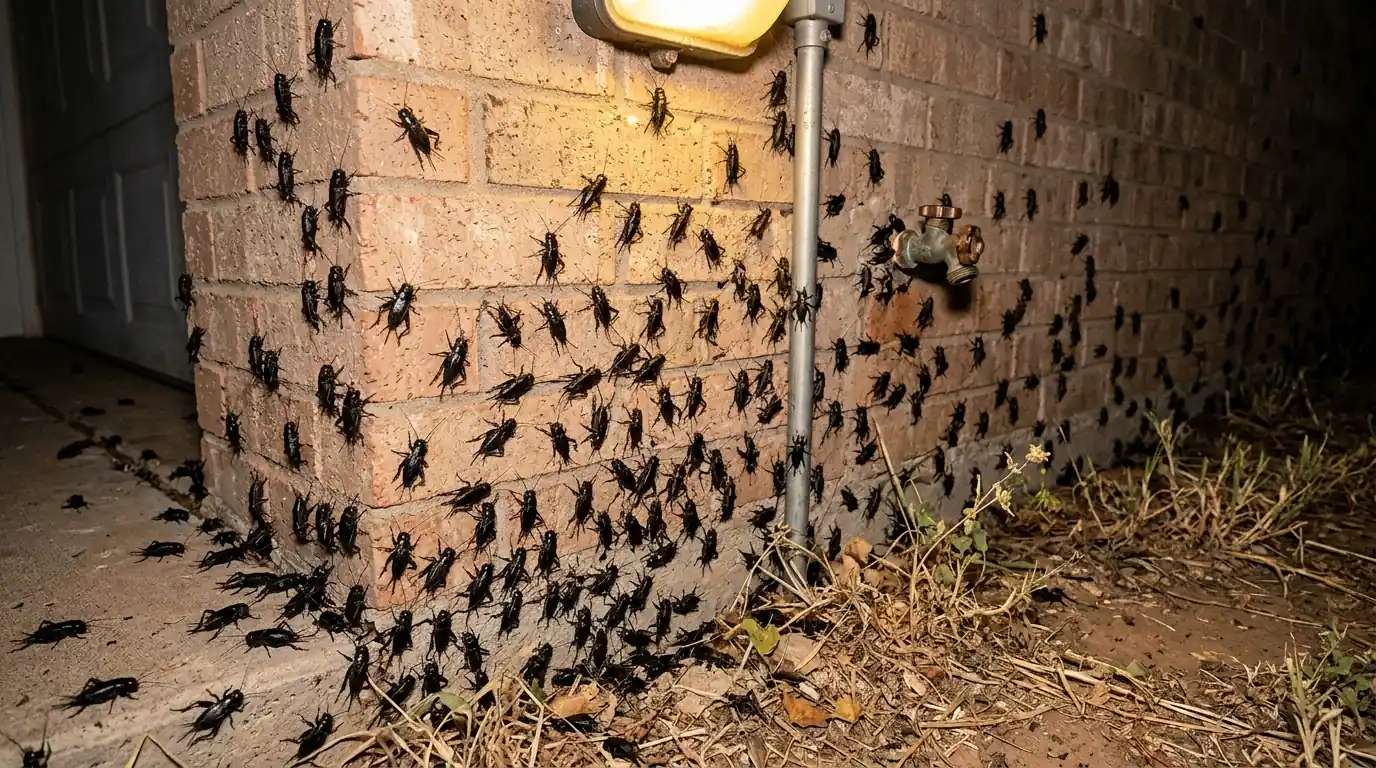
The mating flights last about one to two weeks. During that stretch, adult crickets fly at night, often in large numbers, and land wherever bright lights draw them. In the Panhandle, where summer rain comes in short, heavy thunderstorms, a soaking storm after a dry July can set off a swarm within days. Crickets stay active after the flights end, gradually thinning out as nights get cold toward the first freeze.
This is why you may see almost none for weeks and then thousands over a few nights. The swarm is a burst of adults on the move, not a colony building up in your house.
Lighting is the single biggest factor
AgriLife is clear that outdoor lighting is the main driver of cricket swarms around buildings. Crickets fly toward bright lights at night, land on the walls and pavement below, and crawl into the nearest crack by morning. That's why convenience stores, car washes and well-lit shopping strips see the heaviest piles, and why a home with bright floodlights draws more than its darker neighbors.
For homes, the fix is mostly about timing and type. Turn off porch, garage and landscape lights during the swarm weeks, or put them on motion sensors. Where you need steady light, yellow bug-light bulbs draw fewer crickets than bright white bulbs. Keep blinds closed at night on windows facing the street or open land.
Businesses can't always go dark, but they can move light away from the doors. Mounting floodlights on poles out in the lot so they shine back toward the building pulls crickets away from entrances instead of right onto the threshold.
How crickets get inside: thresholds and weep holes
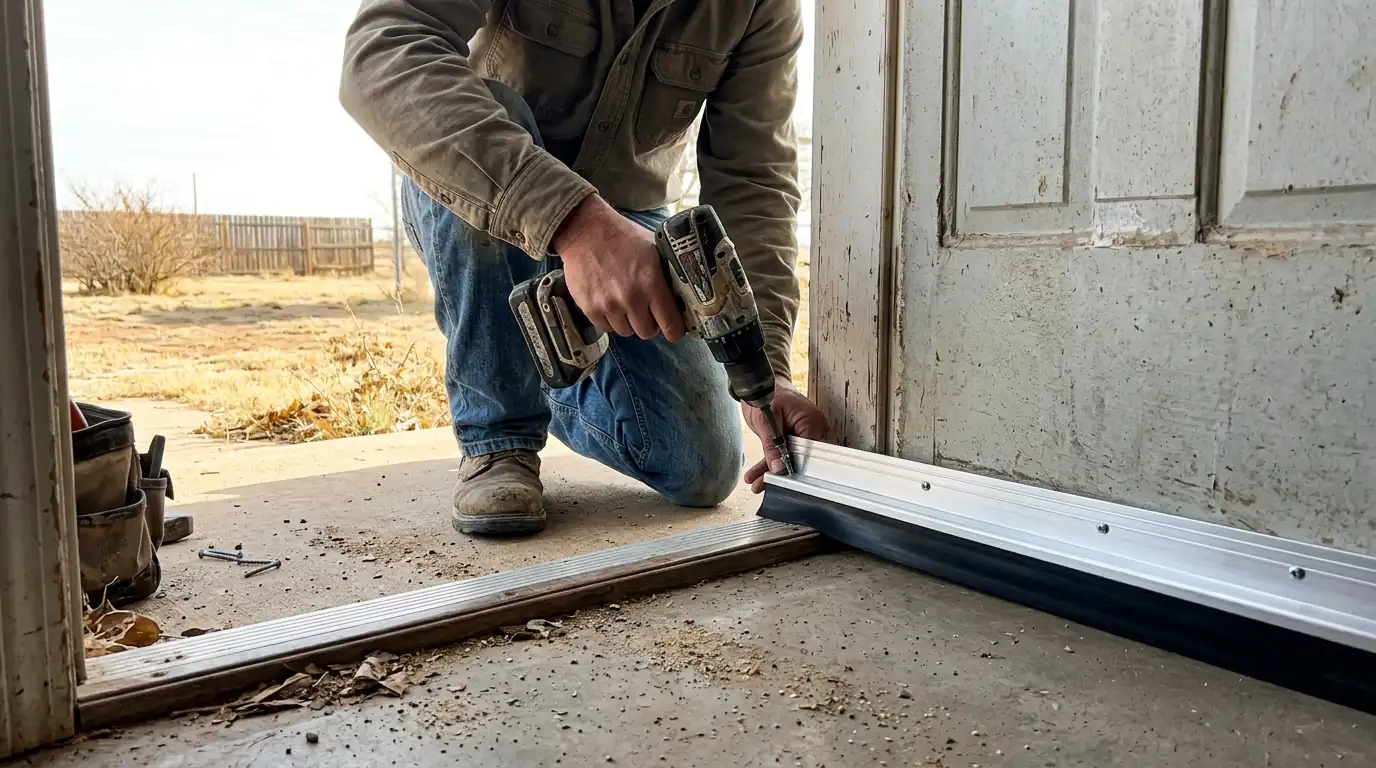
Crickets don't chew their way in. They walk in through gaps that are already there. The most common entry points are door thresholds with worn sweeps, the bottom seal of the overhead garage door, and weep holes in brick veneer at the base of the wall. Gaps around pipes, AC line sets and dryer vents let them in too.
Weep holes deserve special attention on brick homes. They're there to drain moisture from the wall cavity, so they shouldn't be sealed solid. Mesh or vented inserts made for weep holes keep crickets, scorpions and mice out while letting water drain. If you've noticed crickets chirping inside a wall, a weep hole near that spot is usually the reason.
A quick way to find your problem doors is to check them the morning after a heavy night. Crickets that got stuck halfway, or a cluster of dead ones just inside a threshold, show you exactly which sweep or seal is failing. Garages are the most common spot. A slab that has settled at one corner can leave a gap under the overhead door that no amount of sweeping will fix, and a replacement bottom seal or a thicker threshold strip usually closes it.
Do crickets cause damage indoors?
Field crickets don't breed indoors, so the ones that get in eventually die off, usually within a few weeks. The concerns are noise, the mess of dead crickets and the occasional damage. Crickets can chew on and stain fabrics, especially clothing or linens with food or sweat residue, and large numbers of dead crickets smell bad if left in a pile.
There's a knock-on effect too. Crickets are prey for spiders and scorpions. A heavy cricket year means more food for striped bark scorpions and other hunters around the foundation, so cutting crickets back helps keep those pests in check.
What to do this week while crickets are flying
If the swarm has started or a storm just broke a dry spell, these steps make the biggest difference:
- Turn off exterior lights at night, or switch to motion sensors or yellow bug-light bulbs.
- Close blinds on windows that face open land or bright street lights.
- Check door sweeps and the garage door bottom seal for daylight, and replace worn ones.
- Fit mesh inserts in weep holes rather than filling them solid.
- Move firewood, boards and stacked stone away from the foundation, since crickets hide under them by day.
- Sweep or vacuum dead crickets daily, and empty the vacuum outdoors.
- Set glue boards along garage walls and inside entry doors to catch strays.
- Keep grass trimmed short near the foundation for a few weeks.
Cricket swarms around businesses
For commercial buildings, cricket swarms are more than a nuisance. A sidewalk covered in crickets or dead piles inside the entryway looks bad to customers and can draw complaints. Restaurants, convenience stores and retail strips along the main highways in and around Amarillo feel this most, because they're lit all night.
Besides moving lights away from doors, businesses benefit from tight door sweeps, regular sweeping at entrances in the morning, and keeping doors closed after dark where possible. Treating the perimeter before the flights begin, timed to the first big rain after a dry spell, gives the best results.
What our technician does on a cricket visit
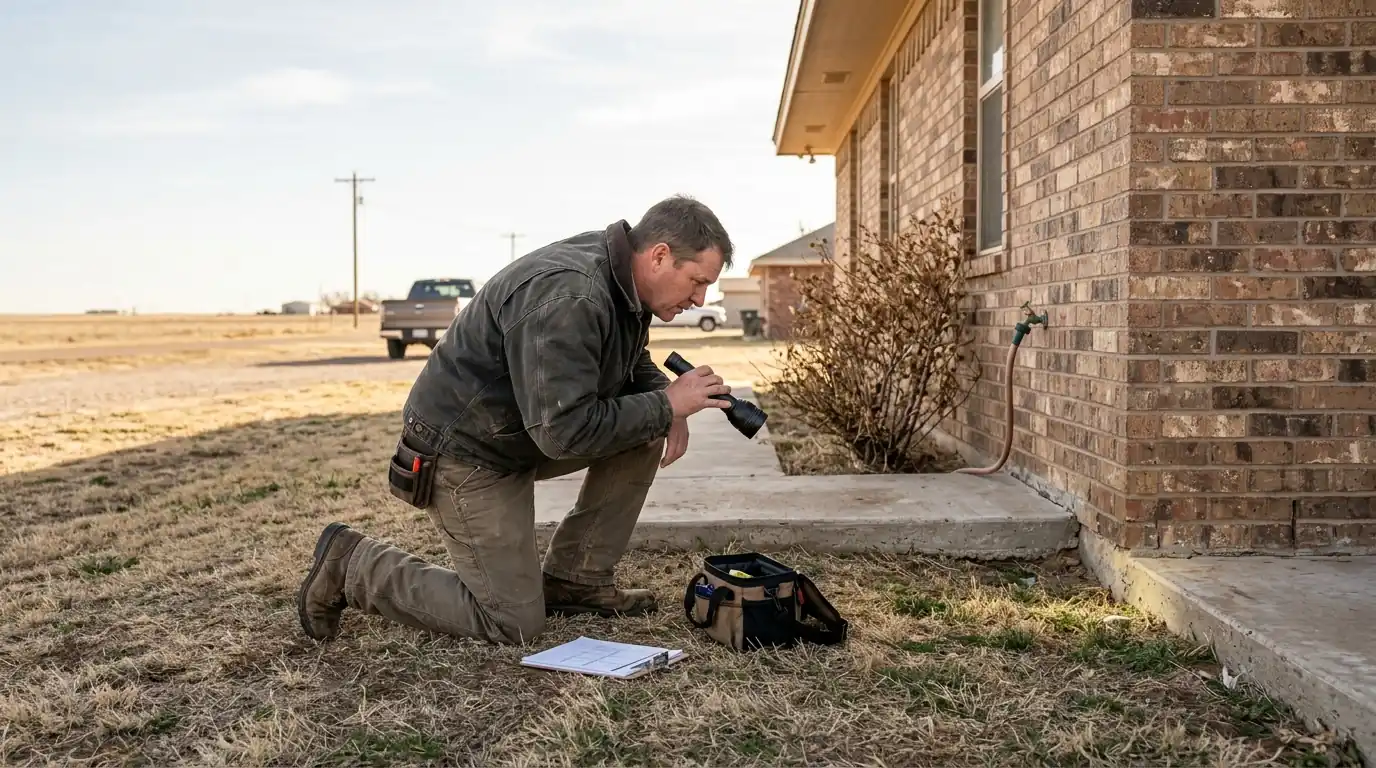
Our technician starts by looking at your lighting and entry points: thresholds, garage seals, weep holes and wall penetrations, and the clutter and vegetation where crickets hide by day. They seal small gaps on the spot and note any bigger repairs you'll want to make.
Treatment usually means a residual band around the foundation and lower walls, applied to the areas where crickets collect, plus granules in turf and mulch beds near the house. Inside, the focus is on garages and entry points rather than living areas. We explain re-entry times and keep kids and pets in mind when choosing placements. If crickets are pouring in, call (806) 552-3060; we answer 24/7.
Dolores Lankford, Pest Advice Editor, edits the Pest Advice section for Pestcon, Inc.. Articles are checked against Texas A&M AgriLife, Texas Parks and Wildlife, Texas DSHS, NWS Amarillo and City of Amarillo guidance.
Questions about this article
Why did crickets swarm right after the first big rain in late August?
Because that rain is often the trigger. Texas A&M AgriLife notes that field cricket swarms tend to be worst when rain and cooler weather end a summer drought. A big crop of adults is ready to mate by late summer, and a soaking storm sets off their night flights. They head for lights and pile up around buildings for about one to two weeks before the flights taper off.
Will the crickets chirping in my garage start breeding in there?
No. Black field crickets don't breed indoors. They lay eggs in soil outdoors, and the ones that wander into a garage or house will die off over a few weeks. The chirping is usually males calling for mates. You can cut down the noise by catching them on glue boards along the walls and fixing the garage door seal so more can't get in.
Services that go with this article
Cricket Control
Black field crickets can show up by the hundreds in late summer, chirping in the garage, piling against storefront glass and slipping under doors.
Scorpion Control
Striped bark scorpions climb into attics, then drop into bedrooms and bathtubs when the summer heat builds.
Commercial Pest Control
A mouse in a stockroom, roaches in a break room or birds over a loading dock can cost a business customers and a clean...
Home Pest Control
Spiders in the garage, crickets at the back door and a mouse behind the stove are everyday problems in Amarillo houses.