Miller moth season in Amarillo: why they get in and what actually helps
Every spring, usually from late April through May, Amarillo homeowners find gray-brown moths circling the porch light, tucked behind blinds and fluttering out of the garage.These are miller moths, and they are passing through on their way to the Colorado mountains. They cannot hurt you or your house, but they make a mess. Here is what draws them in and what keeps them out.
By Dolores Lankford, Pest Advice EditorPublished April 14, 2026Updated October 16, 2026
Where miller moths come from and why late April brings them
A miller moth is the adult form of the army cutworm (Euxoa auxiliaris). The larvae spend fall and winter feeding in wheat fields across the High Plains, which puts the Panhandle right in the middle of their life cycle. In spring the caterpillars pupate in the soil and the adults come up. A Texas A&M AgriLife integrated pest management agent has described the local flight as lasting a few weeks, from late April through May.
Once they emerge, the moths fly northwest toward Colorado, where they spend the summer feeding on wildflower nectar at higher elevation. In fall they head back and lay eggs in wheat ground, and the cycle starts again. Amarillo is a rest stop on that trip, not a destination. They fly at night and spend the day looking for a dark, tight space to hide, and a house with gaps around its doors and roofline offers plenty of them.
How many come through changes from year to year. Some springs you see a handful on the porch; other years they cover the garage door at dusk. Either way the season ends on its own once the flight passes, usually by the end of May.
How miller moths get into a brick ranch house
Most Amarillo homes give moths the same three ways in. The first is the garage: a door left open after dark, or a worn bottom seal, lets moths drift in toward the light over the workbench, and from there they slip under the door into the kitchen or laundry room. The second is the front and back door frames, where weatherstripping has shrunk or the sweep no longer touches the threshold. The third is the roofline, where moths tuck under shingle edges and around vents during the day.
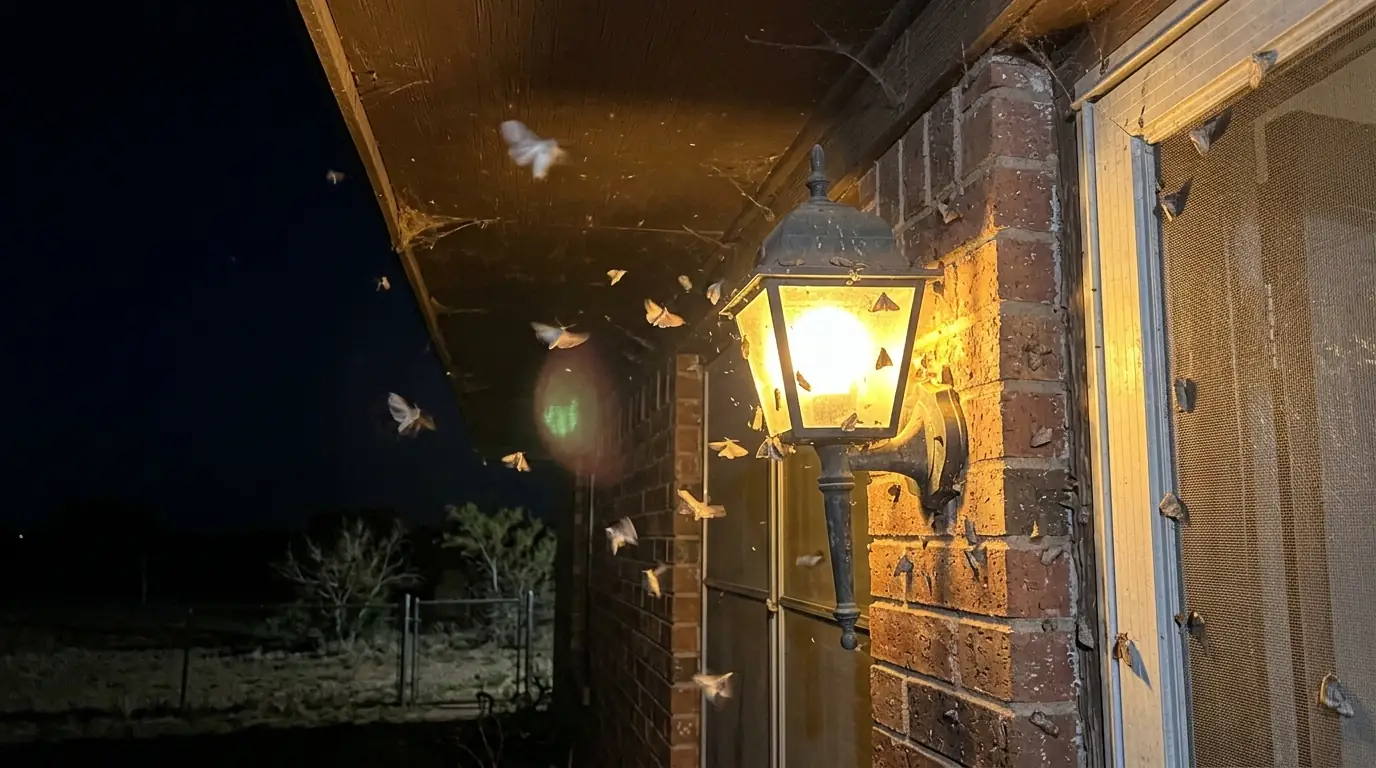
Spring wind plays a part too. When the gusts pick up, as they do most springs here, moths crowd into whatever sheltered crack they can find on the side of the house out of the wind. People often find them stacked behind the porch light fixture or folded into a patio umbrella in the morning.
Once inside, a miller moth does not feed, does not breed and will not lay eggs in your carpet or closet. It is looking for a dark place to wait out the day and a way back out at night. That is why they bump around windows and lamps after sunset: the indoor lights confuse them.
Lighting changes that cut the number of moths at your door
Light is the biggest single draw, so it is the biggest single fix. Moths flying at night home in on porch fixtures, garage lights and bright windows, land nearby and crawl into the closest gap at dawn. Turning off exterior lights for the few weeks of the flight often makes a visible difference. If you need light for safety, a motion-sensor fixture stays dark most of the evening.
Inside, close blinds and curtains at dusk on any window that faces a street light or a neighbor's floodlight. Keep the garage door shut once the sun sets, and switch off the garage light before you open the door into the house. If you have to work in the garage with the door up, aim a portable work light away from the opening.
What doesn't help with miller moths
Fogging the house or spraying the living room does very little. The moths inside are not a colony; they are travelers, and a new batch arrives each night as long as the flight lasts and the gaps stay open. Mothballs don't work either. Those are meant for clothes moths, a completely different insect, and the fumes are not something you want in a bedroom.
Swatting moths against walls and ceilings leaves powdery smudges from their wing scales, especially on light paint. A handheld vacuum, or a cup and a piece of paper, is cleaner. On bad nights a simple trap helps: set a shallow bowl of water with a drop of dish soap under a single lamp in a dark room, and many of the moths in that room end up in the bowl by morning.
Why the cleanup afterward matters: dead moths and carpet beetles
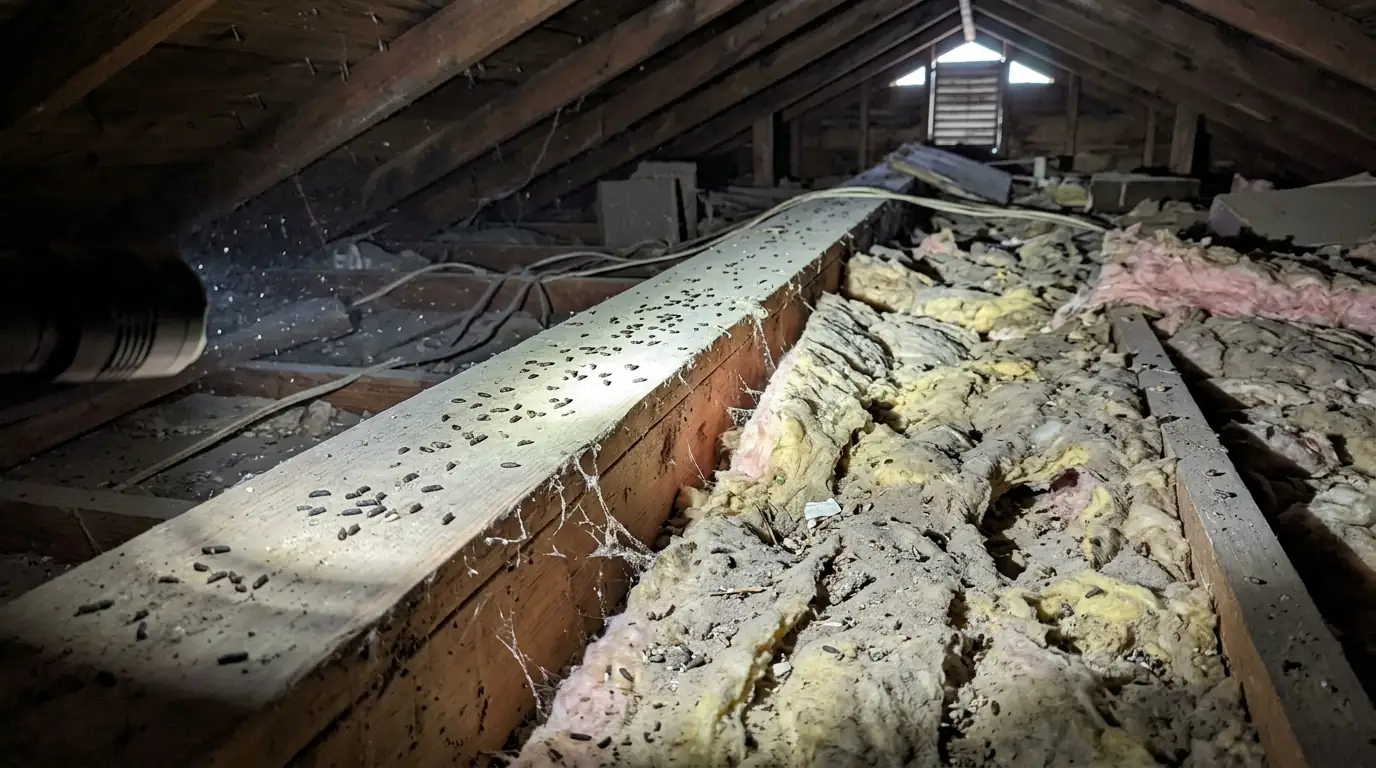
Moths that never find their way back out eventually die, and they pile up where nobody looks: inside ceiling light globes, along window tracks, behind the washer, in the attic over the garage. Colorado State University entomologists point out that those piles can feed carpet beetles. Carpet beetle larvae eat dead insects first, then move on to wool rugs, felt, stored sweaters and pet hair.
So in early June, after the flight passes, spend twenty minutes emptying light fixtures, vacuuming window tracks and sills, and sweeping the garage corners. If you notice small, round, mottled beetles on windowsills later in the summer, or bristly brown larvae near baseboards, the dead moths got used. When we handle a carpet beetle problem, old moth piles are one of the first places our technician checks.
What to do this week while the flight is on
A short list, in the order that gives you the most for your time:
- Turn off porch, patio and garage lights after dark until the end of May, or swap to motion-sensor fixtures.
- Close the garage door at sunset and check that the bottom seal touches the slab along its whole width.
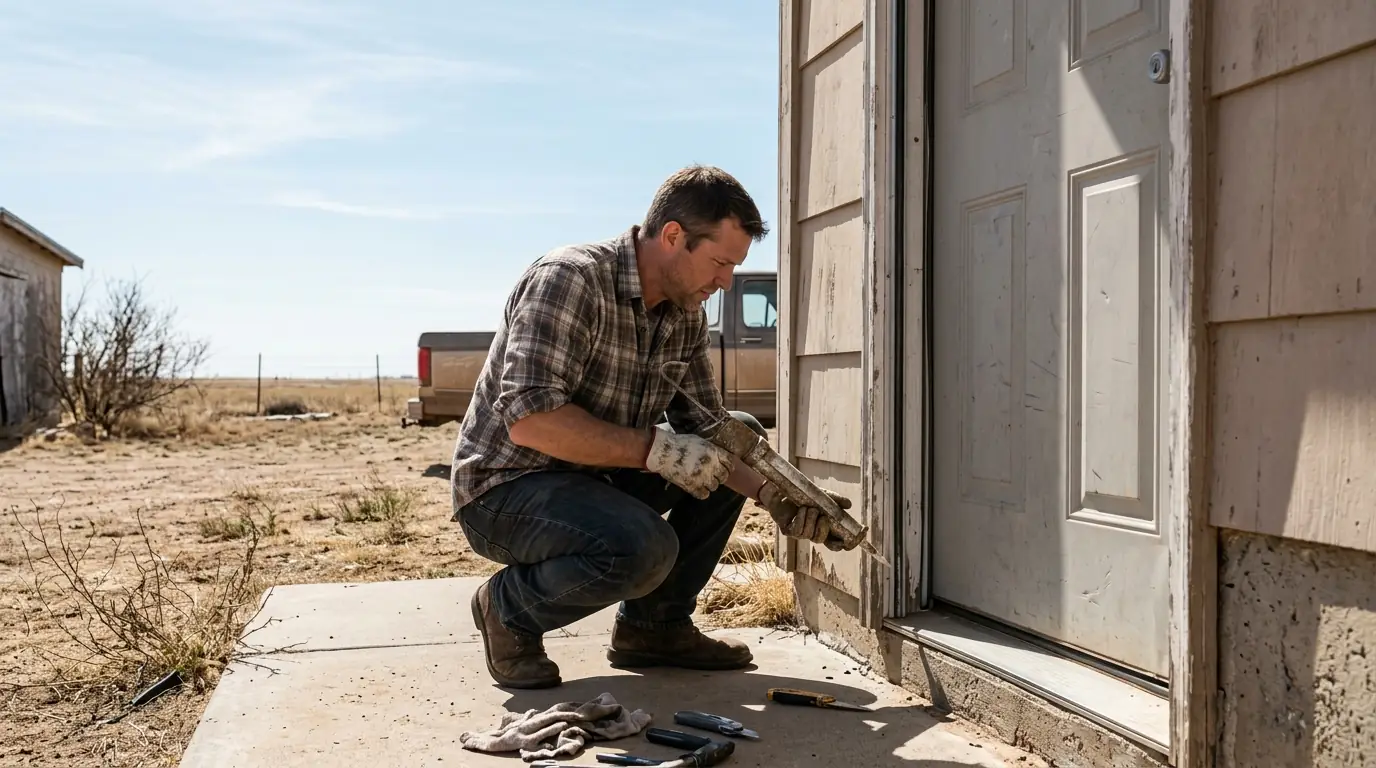
- Look for daylight under and around exterior doors, and replace a worn sweep or weatherstripping.
- Close blinds on windows that face street lights or a lit yard next door.
- Vacuum moths instead of swatting them, and empty the canister outside.
- Set a soapy water bowl under one lamp in a dark room on heavy nights.
- Put a reminder on your calendar for early June to clean out light globes, window tracks and garage corners.
When a visit makes sense, and what our technician does
Most households get through miller moth season with the steps above. A visit is worth it when moths keep turning up in bedrooms night after night even with the lights and doors handled, which usually means there is a gap you haven't found, or when you run a business and moths at the entrance look bad to customers.
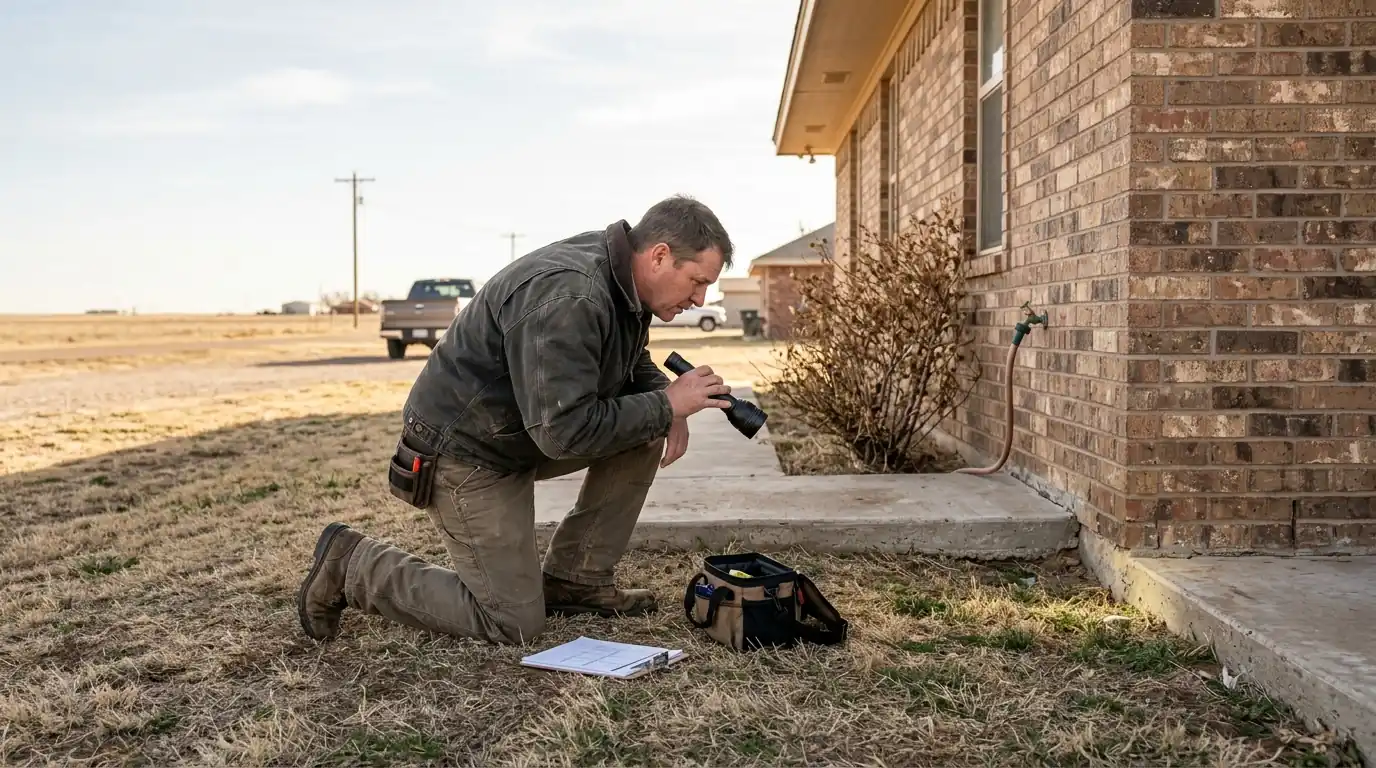
On a visit, our technician walks the outside of the house at the doors, garage, eaves and vents, looking for the cracks where moths rest during the day. They point out weatherstripping and sweep gaps, seal small openings on the spot, and treat door frames, garage door edges and the areas around light fixtures where moths land. Inside, the focus is on clearing resting spots and showing you where dead moths are collecting. We answer 24/7 at (806) 552-3060 all season.
Dolores Lankford, Pest Advice Editor, edits the Pest Advice section for Pestcon, Inc.. Articles are checked against Texas A&M AgriLife, Texas Parks and Wildlife, Texas DSHS, NWS Amarillo and City of Amarillo guidance.
Questions about this article
Will the miller moths in my garage lay eggs in my lawn this spring?
No. The miller moths passing through Amarillo in spring are not laying eggs; they are heading northwest to spend the summer in Colorado. Egg laying happens in fall, when the moths come back and lay in wheat fields and similar ground, where the larvae grow up as cutworms. A city lawn in late April isn't part of that cycle, and the moths in your garage will not breed there.
Do I need to wash clothes that miller moths landed on in the closet?
Usually not. Miller moths do not feed on fabric and do not lay eggs indoors, so a moth resting on a shirt leaves nothing behind except, at most, a little powder from its wings. Shake the garment out or brush it off. The bigger concern is a dead moth left on a closet floor or shelf for weeks, because that can attract carpet beetles, so vacuum closet corners once the season ends.
Why are there more miller moths around our house than the neighbor's?
Usually it comes down to light and shelter. A brighter porch, a garage that stays open in the evening or a lit window facing open ground draws more moths on any given night, and a house with more gaps around doors and shingles gives them more places to hide by day. The neighbor's house may simply be darker or tighter. Matching their lighting habits for a few weeks often closes most of the gap.
Services that go with this article
Miller Moth Control
Miller moths pour into Amarillo homes from late April through May, fluttering around lamps and piling up dead on window sills.
Carpet Beetle Control
Bald patches in a wool rug, holes in a stored sweater or bristly larvae under the bed point to carpet beetles feeding somewhere quiet.
Home Pest Control
Spiders in the garage, crickets at the back door and a mouse behind the stove are everyday problems in Amarillo houses.
Quarterly Pest Control Plans
Panhandle pests arrive in waves: moths in spring, scorpions in summer, crickets in late summer and mice when the first freeze hits.