Mosquitoes and West Nile in Amarillo: what the city sprays and what it doesn't
People often assume the city's mosquito program covers their backyard.It doesn't. The City of Amarillo does a lot of mosquito work, but it stops at the property line, and West Nile virus turns up in local mosquitoes almost every year. Knowing where the city's work ends tells you exactly what's left for you to handle at home.
By Dolores Lankford, Pest Advice EditorPublished July 21, 2026Updated October 16, 2026
Why mosquitoes do so well on the dry High Plains
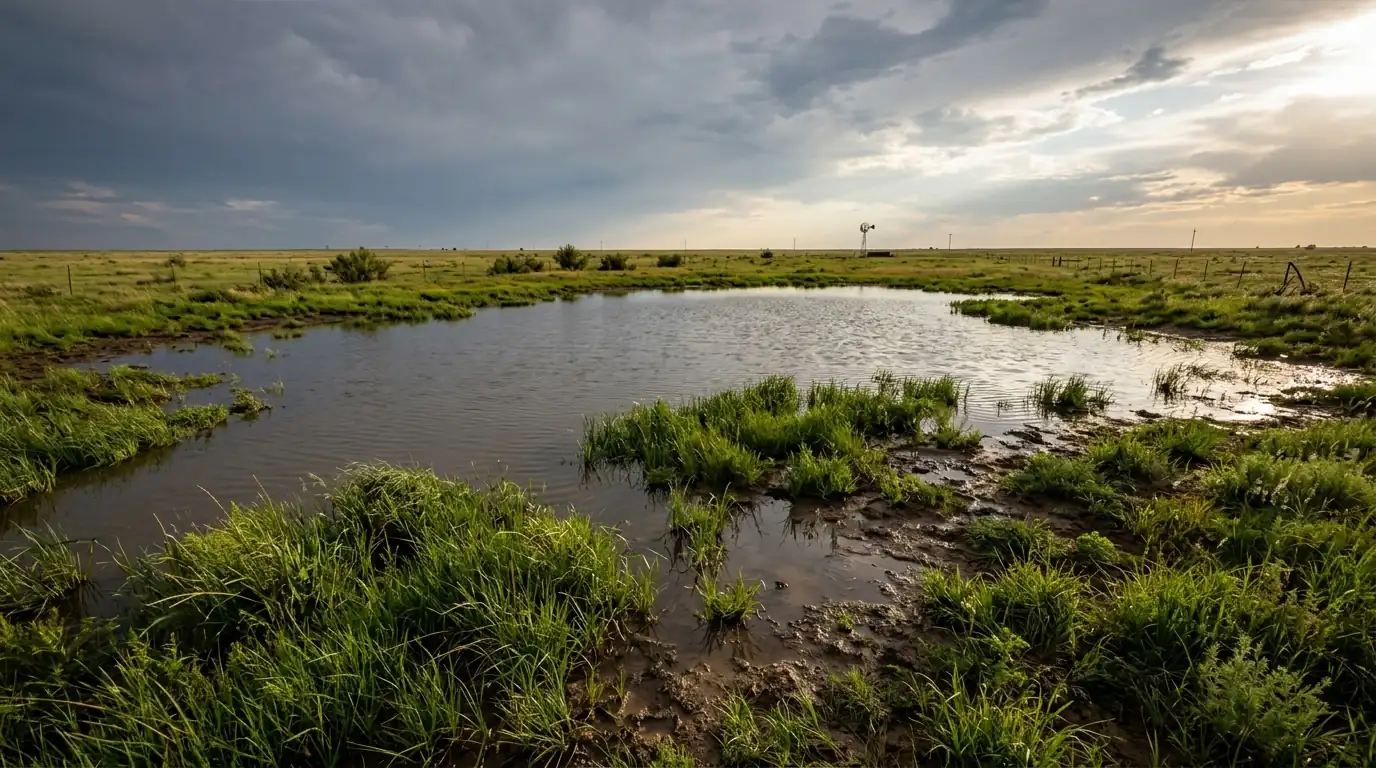
Amarillo gets about 19.7 inches of rain a year on average, which sounds too dry for a mosquito problem. The catch is when and how that rain falls. About three quarters of it comes between April and September, mostly in thunderstorms that dump a lot of water at once. The ground here is flat and the clay soil holds water, so runoff collects in low spots instead of draining away.
Those low spots are playa lakes. Texas Parks and Wildlife counts roughly 19,300 playas across the Texas High Plains, and many of them sit inside or right next to Amarillo neighborhoods, parks and drainage areas. After a big storm, playas, ditches and flooded lots can produce a wave of mosquitoes in about a week. A 2007 study tied playa coverage to human West Nile cases in the Panhandle.
Adult mosquitoes are most numerous from June through August. West Nile risk often peaks later, in September and October, when infected mosquitoes have built up in the population.
What the City of Amarillo does for mosquito control
The city runs an active program. It treats more than 100 standing-water sites around town and larvicides parks and ditches to kill mosquito larvae before they become biting adults. It also fogs for adult mosquitoes from April to October, with the timing and location set by trap counts and resident complaints.
City staff trap and test mosquitoes through the season, and West Nile shows up in local mosquitoes almost every year. A city official cited about 30 to 40 local human cases a year in 2024. In studies from nearby Lubbock County, Culex tarsalis carried most of the positive samples, a species that bites most around dusk and after dark.
If you notice heavy mosquito activity around a playa, park or drainage ditch near your home, reporting it to the city helps steer where they fog and treat.
What the city does not do: private property
The City of Amarillo does not spray private property. Fogging trucks drive public streets, and larvicide goes into public water sites, parks and ditches. Your backyard, side yard, patio and the clutter along your fence are outside that program, and so are the containers that breed mosquitoes on residential lots.
That matters, because many of the mosquitoes biting you on the patio hatched within a few hundred feet of it. A clogged gutter, an old tire, a pet water bowl left for a week or a saucer under a flowerpot can produce a steady supply all summer. Fogging on the street passes by quickly and doesn't reach water sitting in your yard.
Neighbors matter too. Mosquitoes from a container-heavy yard next door will happily cross a fence, so a quick word over the fence about birdbaths, kiddie pools and clogged gutters can do as much good as anything you treat on your own side.
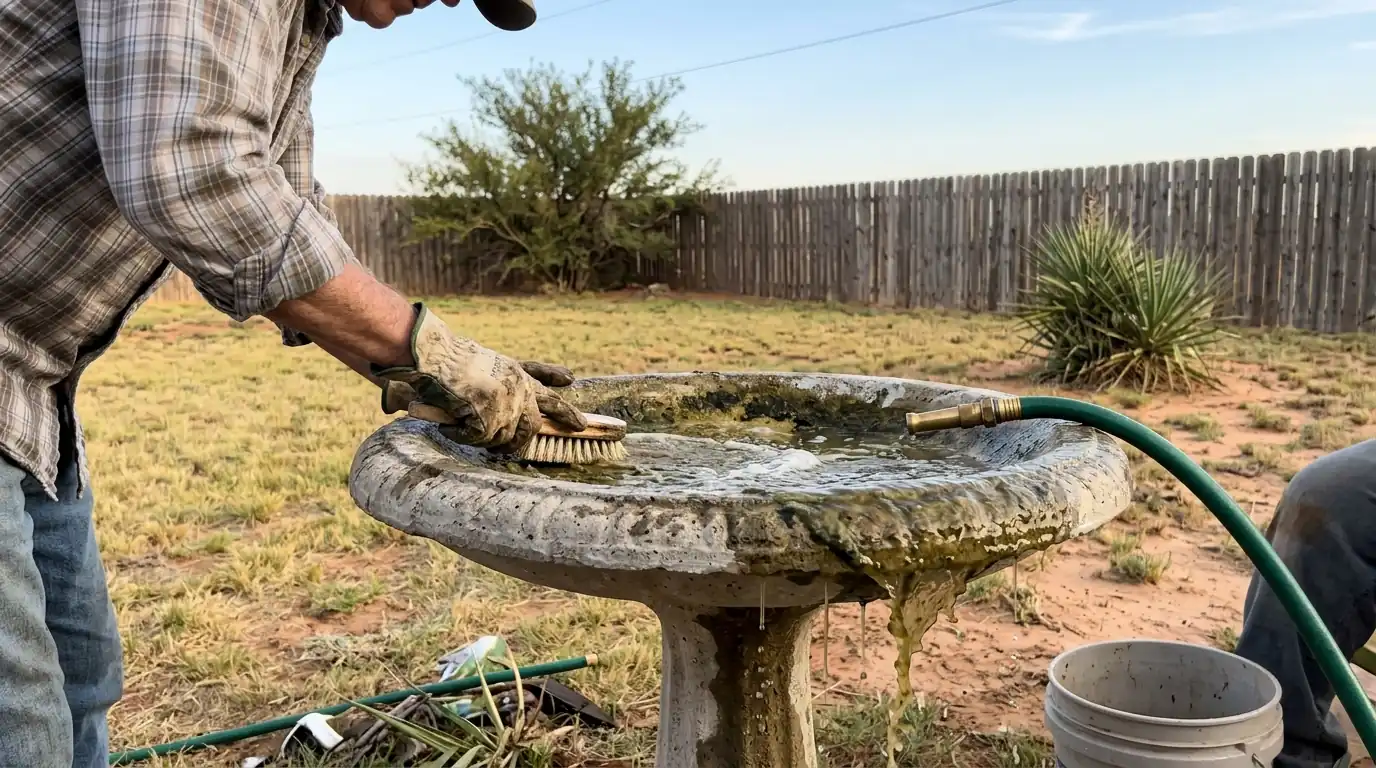
Yard steps that cut mosquito breeding
Mosquitoes need standing water for about a week to go from egg to adult, so the most effective steps are about water. Once a week, walk the yard and tip, empty or treat anything holding water:
- Empty and scrub birdbaths and pet water bowls weekly, or refill them every few days.
- Tip out saucers under flowerpots, buckets, wheelbarrows, tarps and kids' toys.
- Clean gutters and check that downspouts don't leave puddles at the foundation.
- Drill drain holes in tire swings and recycling bins, and get rid of old tires.
- Fix dripping outdoor faucets and AC condensate lines that pool water near the slab.
- Keep pool and hot tub covers from collecting rainwater on top.
- Use mosquito dunks with Bti in rain barrels, ornamental ponds and water features you can't drain.
- Trim shrubs and tall grass where adult mosquitoes rest during the heat of the day.
Protecting your family in West Nile season
Because West Nile risk often peaks in September and October, late summer evenings are when protection matters most. Culex mosquitoes bite mostly from dusk into the night, which overlaps with when people sit out on the patio after the heat breaks.
Use an EPA-registered repellent on exposed skin when you're outside at dusk and after dark, and follow the label, especially for children. Long sleeves and pants in light colors help. Check that window and door screens fit tightly and have no tears. If you're hosting an evening event in the yard, that's a good time to have the yard treated ahead of it.
Most people infected with West Nile have no symptoms, but some develop fever and a small number get seriously ill, especially older adults and people with weaker immune systems. Talk to a doctor if someone develops a high fever, severe headache or confusion after mosquito bites.
What to do this week before the evening biting picks up
If mosquitoes are already chasing you inside, start here:
- Do a full standing-water sweep of the yard today, including gutters and under decks.
- Put a weekly reminder on your phone to repeat it through October.
- Check door and window screens and patch any holes.
- Buy repellent and keep it by the back door for evening use.
- Note any playa, ditch or flooded lot nearby and report heavy activity to the city.
- Plan yard treatment ahead of any outdoor gathering in late summer.
What our technician does on a mosquito visit
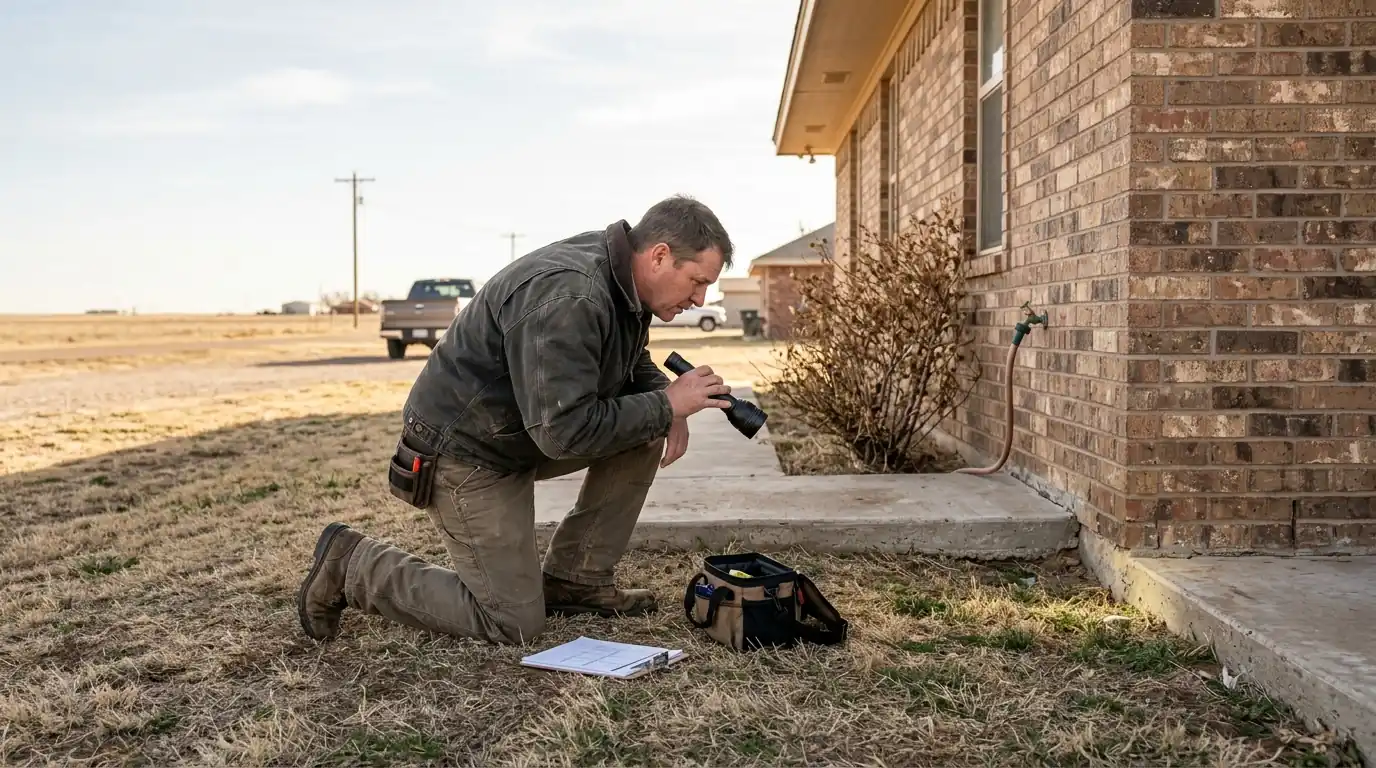
A mosquito visit starts with a walk of your yard looking for breeding water: gutters, low spots, containers, AC drip lines, plant saucers and anything hidden behind sheds or under decks. Our technician dumps what can be dumped and treats what can't with a larvicide or insect growth regulator.
Then they treat the places adult mosquitoes rest during the day, such as the undersides of leaves on shrubs, dense plantings, under decks and along fence lines, with a residual product. Because breeding restarts with every storm, many homes do best with treatments repeated through the season. We explain re-entry times and keep pets, kids and pollinators in mind when choosing where to apply. Call (806) 552-3060 to talk it through; we answer 24/7.
Dolores Lankford, Pest Advice Editor, edits the Pest Advice section for Pestcon, Inc.. Articles are checked against Texas A&M AgriLife, Texas Parks and Wildlife, Texas DSHS, NWS Amarillo and City of Amarillo guidance.
Questions about this article
Does the city fogging truck on my street cover mosquitoes in my backyard?
Not really. The City of Amarillo fogs from public streets between April and October, based on traps and complaints, and it does not spray private property. The fog drifts briefly and breaks down quickly, so it rarely reaches the shrubs, decks and water containers in a backyard where mosquitoes breed and rest. Dumping standing water weekly and treating resting areas is what covers your yard.
We live near a playa lake in Amarillo. Can we treat it ourselves?
Usually not, unless the playa sits entirely on your property. Most playas inside the city are on public land or shared ground, and the city treats many standing-water sites as part of its program. What you can do is report heavy mosquito activity there to the city, cut out breeding sites in your own yard and treat the shrubs and shade near your fence where mosquitoes from the playa rest.
Services that go with this article
Mosquito Control
Mosquitoes biting on the patio at dusk usually mean they are breeding in standing water close to home, in a clogged gutter, a planter...
Flea Control
Fleas biting your ankles in a house you just moved into, or a dog that will not stop scratching, usually mean a flea cycle...
Tick Control
Ticks climbing the living room wall or clustered in a dog run usually mean brown dog ticks are breeding around the house, not just...
Home Pest Control
Spiders in the garage, crickets at the back door and a mouse behind the stove are everyday problems in Amarillo houses.