Prairie dogs next to your yard: Texas rules, plague risk and your options
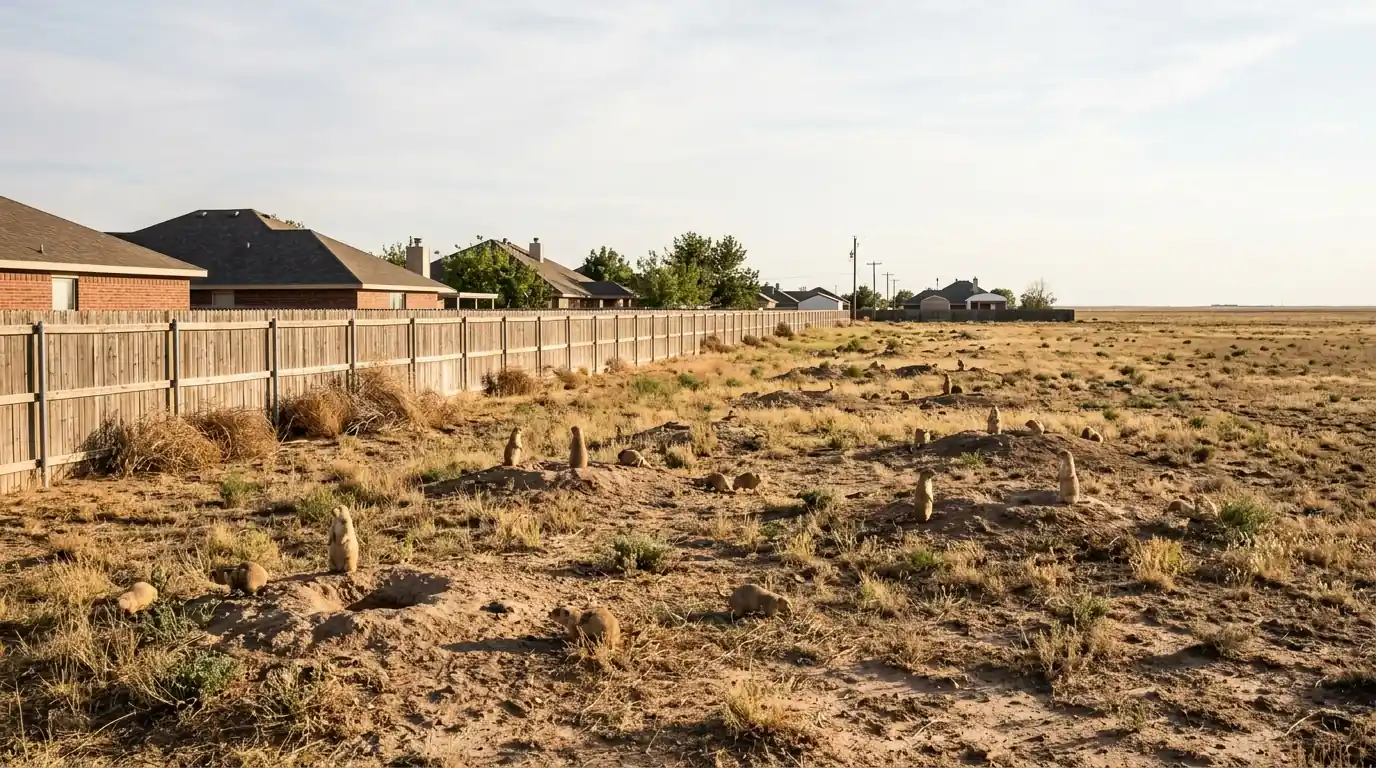
If you live on the edge of Amarillo, Canyon or one of the acreage areas around town, there's a fair chance a prairie dog town sits on a vacant lot, pasture or road shoulder near you.Most of the time they keep to themselves. When the mounds start creeping toward your fence, though, homeowners have questions about the law, about plague and about what they are allowed to do.
By Dolores Lankford, Pest Advice EditorPublished June 2, 2026Updated October 16, 2026
Why black-tailed prairie dogs end up next to homes
Black-tailed prairie dogs are native to the Panhandle grasslands. They live in colonies, often called towns, made up of family groups that share a network of burrows. A town needs open, short-grass ground with good visibility, which describes a lot of empty lots, pasture edges, drainage strips and undeveloped land next to new subdivisions on the south and southwest sides of Amarillo.
Towns grow outward. Young prairie dogs come above ground in late spring, and as the colony expands, new burrows show up along its edges. If your backyard has mowed grass, a chain-link fence and open ground on the other side, the edge of the town may move right up to it. Mounds under a fence line, holes in a horse pasture and clipped grass around a garden are the usual first complaints.
Beyond the holes, the concerns are real. Burrows are an ankle hazard for people and a leg hazard for horses and livestock. The animals clip vegetation down to bare soil. And prairie dogs carry fleas that matter for plague, which is the most important reason to treat a nearby town with care.
What Texas law says about prairie dogs
Texas Health and Safety Code section 825.036 declares prairie dogs a public nuisance. That's an unusual status for a native animal, and it means landowners in Texas are not barred from controlling prairie dogs on their own property. The same section of law allows county commissioners courts to buy poison and provide it to residents dealing with prairie dogs.
That doesn't mean anything goes. You can only act on land you own or have permission to treat, so a town on a neighbor's lot or a city right of way is their call, not yours. Control products come with label rules about where and when they can be used, and the presence of burrowing owls changes the picture entirely, as the next section explains.
In March 2026 the City of Amarillo worked with a wildlife rehabilitation group to relocate the prairie dog colony at John Stiff Memorial Park. Relocation needs a place for the animals to go and people to trap and move them, which is part of why the city took that route on public parkland. On a private lot, it's usually not a simple option.
Plague risk and what webs over burrows can mean
Plague is endemic in the Panhandle, and prairie dogs are the main regional reservoir. The disease is spread by fleas, and when it moves through a colony it can kill most of the animals quickly. People and pets are at risk mostly from fleas that leave dead or dying prairie dogs looking for a new host.
One sign of a die-off is spider webs stretched across burrow entrances. In an active town, prairie dogs pass through their holes all day and webs never last. If you notice webs over many burrows, few animals moving and an unusual quiet in a town that used to be busy, treat it as a warning. Keep children and pets out of the area, don't handle any dead prairie dog, and let your city or county office know what you've seen.
Dogs and outdoor cats that roam into a colony can pick up fleas there. Keeping pets on a regular flea preventive and on a leash near the town is simple insurance.
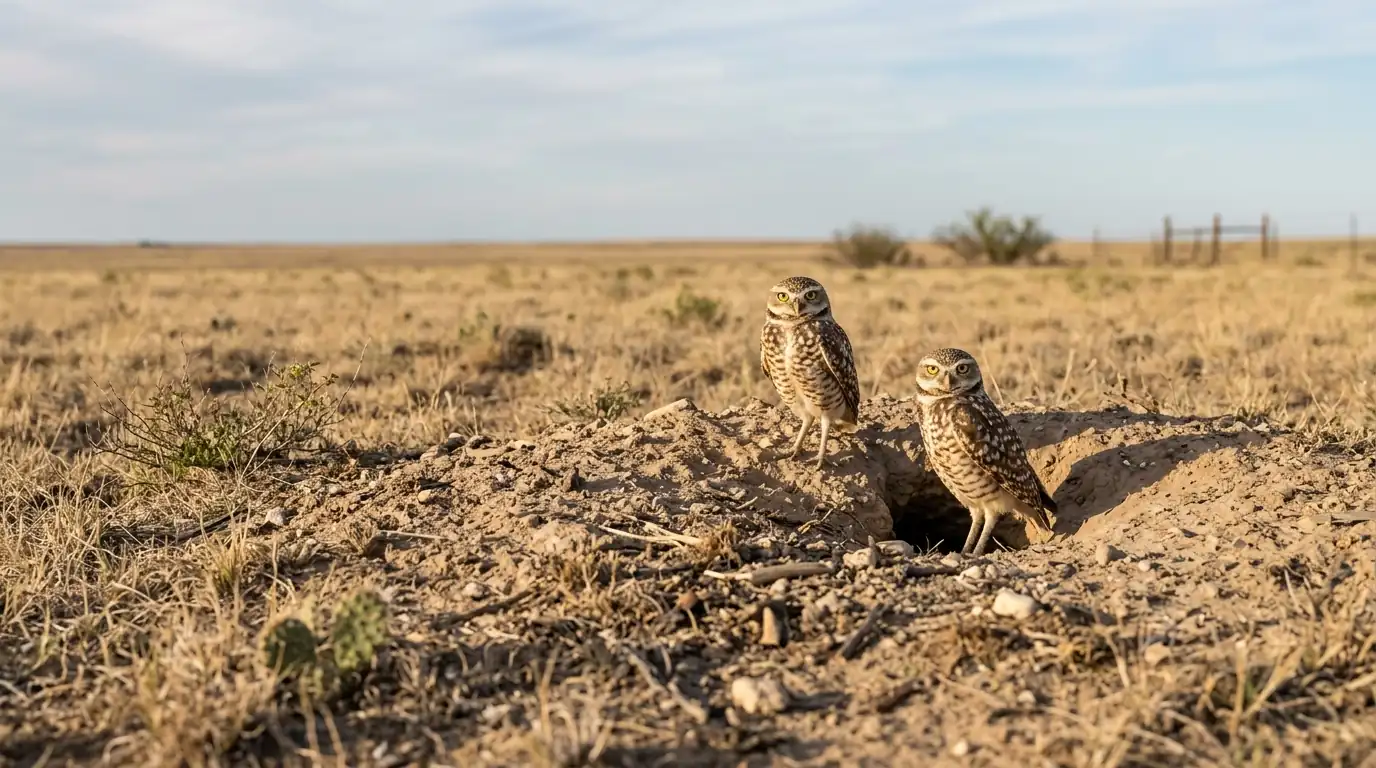
Burrowing owls: why they change everything
Burrowing owls use prairie dog burrows to nest and roost, and they are federally protected. That means any work on a colony has to start by checking for owls. They're small, long-legged, sandy brown owls that stand at a burrow entrance in daylight and bob when disturbed. Signs include white droppings around a burrow, regurgitated pellets, and feathers or bits of insects near the mouth of the hole.
If owls are present, burrow treatments and filling burrows are off the table near them, and timing matters a great deal. Our technicians survey for owls before recommending any approach, and we'll explain plainly what can and can't be done if they're using the town.
Your options when a town is at the fence line
The right choice depends on whose land the colony is on, how close it is and whether owls are present. Common approaches include:
- Barrier fencing along your property line, with mesh buried and bent outward at the base so animals can't dig under it.
- Visual barriers such as solid fencing or tall plantings, since prairie dogs avoid places where they can't see predators coming.
- Letting the grass on your side grow taller near the fence, which makes the ground less attractive for expansion.
- Filling and packing burrows on your property once they're confirmed empty and no owls are using them.
- Trapping or burrow treatments on your own land, following product labels and only after an owl survey.
- Talking with the neighbor or the city about the source colony, because control on one side of a fence rarely lasts.
What to do this week if prairie dogs are moving in
A few steps now save trouble later:
- Walk your fence line and mark every new mound or hole on your side with a flag.
- Watch the town for a few mornings and note any owls standing at burrow entrances.
- Look for spider webs over burrow openings, and keep pets and kids away if you see many.
- Check that dogs and outdoor cats are current on flea prevention.
- Find out who owns the land the colony is on before planning anything beyond your fence.
- Keep horses and livestock out of areas with new burrows until the holes are dealt with.
What our technician does on a prairie dog visit
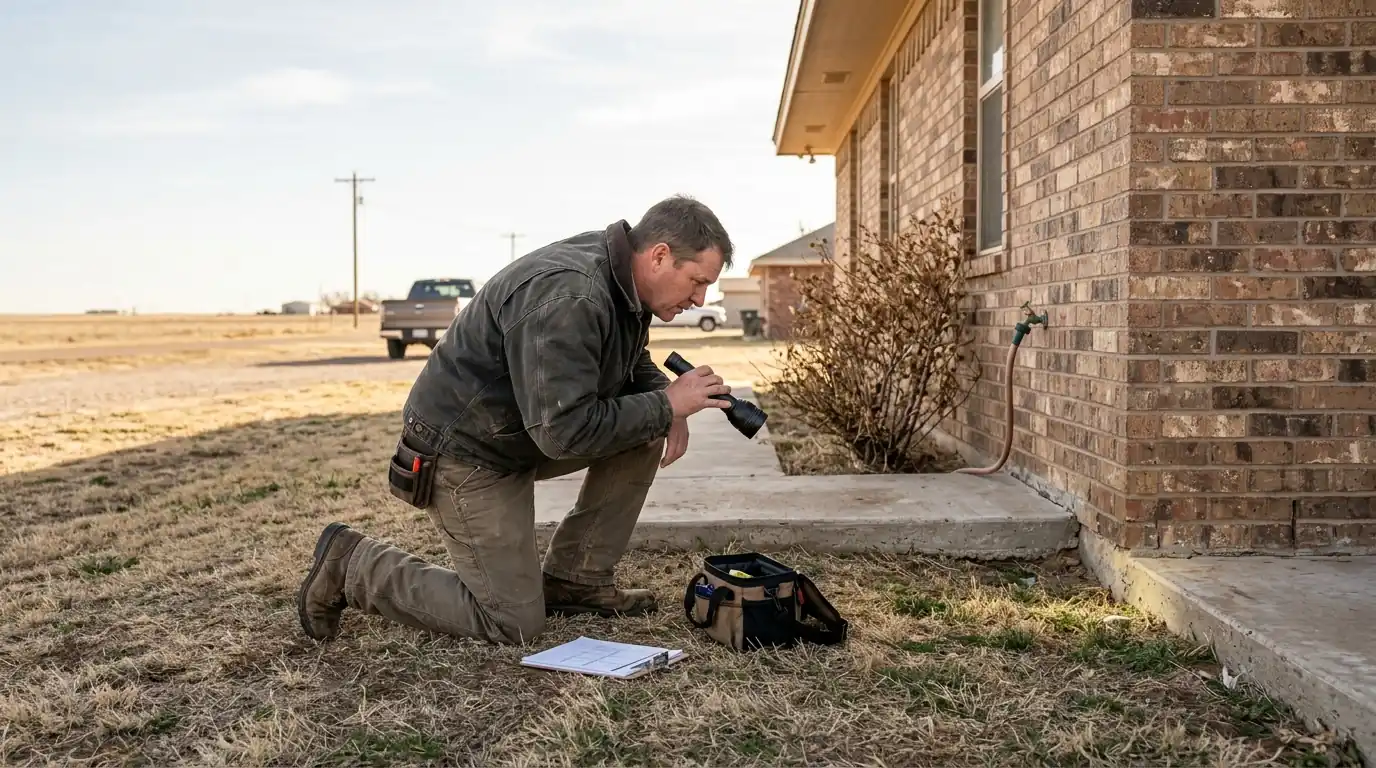
Our technician walks the property and the colony edge, maps active and inactive burrows on your side, and surveys for burrowing owls before anything else. They'll look for signs of a die-off as well, because that changes what's safe to do and how close people should get.
From there, we explain the options that fit your land and the law: barrier work, filling confirmed-empty burrows, trapping, or a treatment plan that follows the label and avoids owls and other animals. We also point out what will keep the colony from moving back in. If prairie dogs have reached your fence, call (806) 552-3060; we answer 24/7.
Dolores Lankford, Pest Advice Editor, edits the Pest Advice section for Pestcon, Inc.. Articles are checked against Texas A&M AgriLife, Texas Parks and Wildlife, Texas DSHS, NWS Amarillo and City of Amarillo guidance.
Questions about this article
Can I make the city remove a prairie dog town on the vacant lot behind my house?
It depends on who owns the lot. If it belongs to the city, call and ask, since the city has handled colonies on public land before, including the John Stiff Memorial Park relocation in 2026. If it's privately owned, the decision belongs to that owner. You can still protect your own side of the fence with barriers and by dealing with burrows on your property.
Is it safe for my dog to run in a field where prairie dogs were living last year?
It's worth caution. If the colony disappeared suddenly, a plague die-off is one possible reason, and fleas can linger in burrows for a while. Keep your dog on a leash and away from burrow openings, make sure flea prevention is current, and don't let it dig in old holes or pick up anything dead. If you notice webs over many burrows, keep pets out of the area entirely.
Services that go with this article
Prairie Dog Control
A black-tailed prairie dog town on the lot next door can spread into your yard, pasture or horse pen within a season.
Pocket Gopher Control
Fresh fan-shaped dirt mounds popping up across a lawn or along a pasture edge usually mean a pocket gopher working underground.
Flea Control
Fleas biting your ankles in a house you just moved into, or a dog that will not stop scratching, usually mean a flea cycle...
Snake Removal
A snake coiled by the back door, in the garage or under the AC unit needs to be identified before anyone gets close.