Where scorpions hide in Amarillo homes and how to keep them out
Finding a scorpion in the bathtub or on the bedroom wall in June is unnerving, and it raises a fair question: how did it get there, and are there more?In Amarillo the answer almost always points to the striped bark scorpion, a climber that uses attics, wall voids and brick weep holes. Here is where they hide and how to shut them out.
By Dolores Lankford, Pest Advice EditorPublished June 16, 2026Updated October 16, 2026
How to recognize the striped bark scorpion
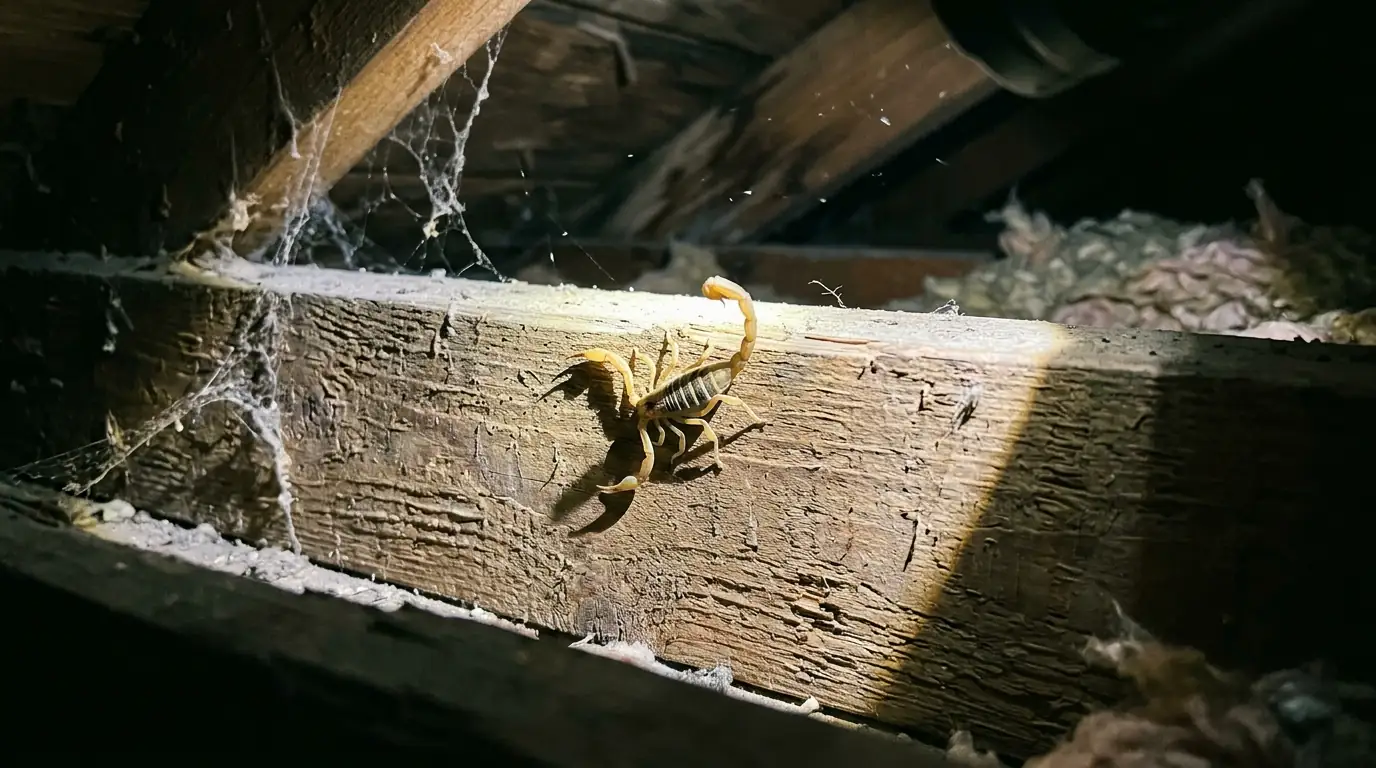
The striped bark scorpion (Centruroides vittatus) is found throughout Texas, the Panhandle included. Adults are usually 2 to 3 inches long, straw yellow to tan, with two dark stripes running down the back. The tail is long and slender, and the pincers are thin rather than chunky. Younger ones look paler and almost translucent.
What sets this species apart is how well it climbs. Texas A&M AgriLife notes that it climbs walls and trees and often spends time in attics, then moves down into living areas when the weather turns hot. That is why people find them on ceilings, on curtains and in upstairs rooms, not just near the floor. A sting is painful, roughly like a bad wasp sting for most healthy adults. Small children, older adults and anyone who reacts strongly should get medical advice right away.
The hiding spots we check first in an Amarillo house
Scorpions hunt at night and spend the day pressed into tight, dark spaces. In a typical brick ranch home on a slab, these are the places our technicians find them most often:
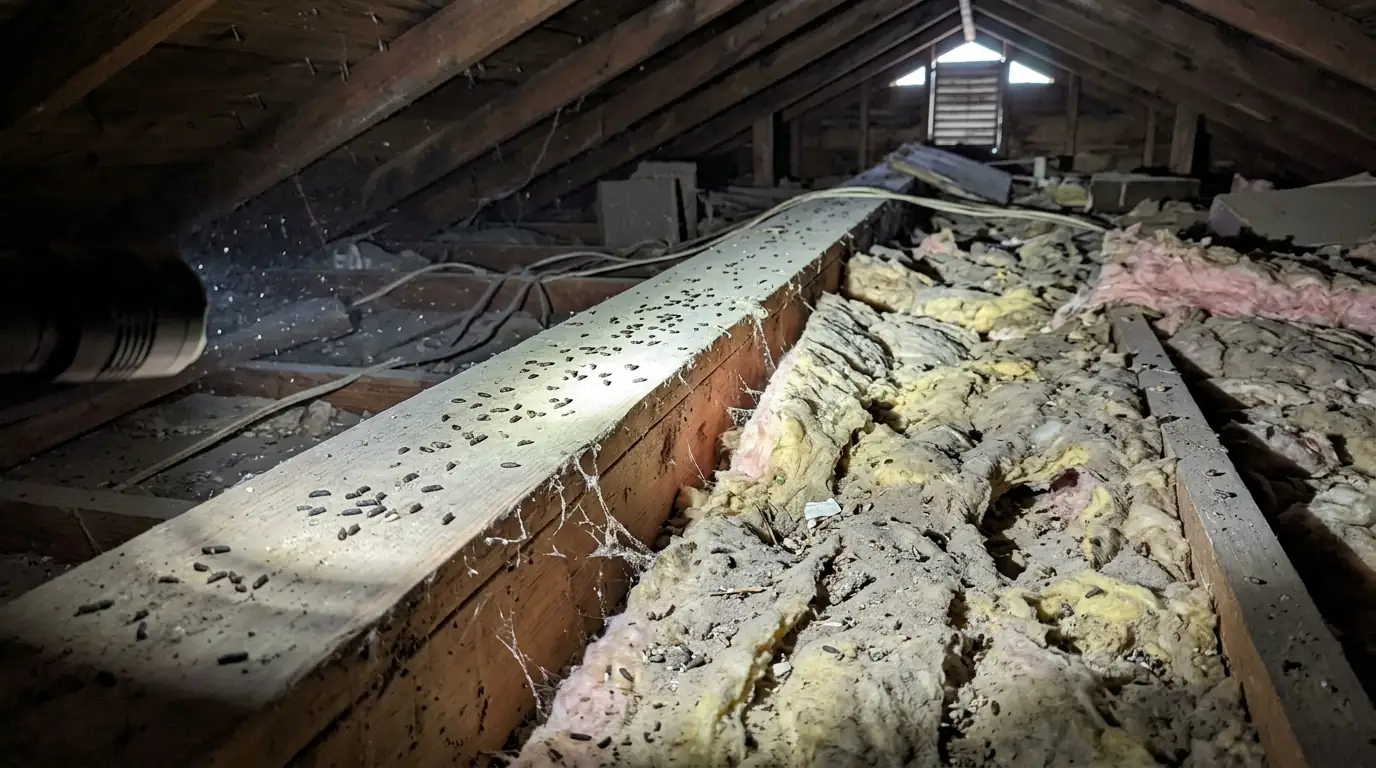
- The attic, especially along the top plates of exterior walls and near the attic hatch.
- Bathrooms and the laundry room, where they come looking for moisture and get trapped in tubs and sinks with slick sides.
- Closet floors, under shoes, folded blankets and stored bags.
- The garage, along the base of the walls, behind shelving and under the bottom seal of the overhead door.
- Brick weep holes at the base of exterior walls, which lead straight into the wall cavity.
- Outdoor landscape rock, stacked stone borders, firewood and boards lying on the ground.
Why heat and drought push scorpions indoors
Texas A&M AgriLife reported in 2023 that scorpions, along with cockroaches and rodents, move indoors during heat and drought because they are looking for water. A local Amarillo TV report the same year described heat, dryness and then cooler weather pushing scorpions, spiders and millipedes into homes. Out here, where spring humidity can drop below 15 percent and summer rain comes in short bursts, a house is the dampest place on the block for weeks at a time.
Attic heat plays a role too. On a hot afternoon the air under a shingle roof gets far hotter than the rooms below, and scorpions living up there drift down through gaps around light fixtures, ceiling fans, bath vents and the attic hatch. That explains the classic complaint of a scorpion that seems to drop from the ceiling.
Food matters as well. Scorpions eat crickets, cockroaches and other insects, so a house with a lot of crickets along the foundation in late summer tends to have more scorpions nearby.

How to do a black light check around your house
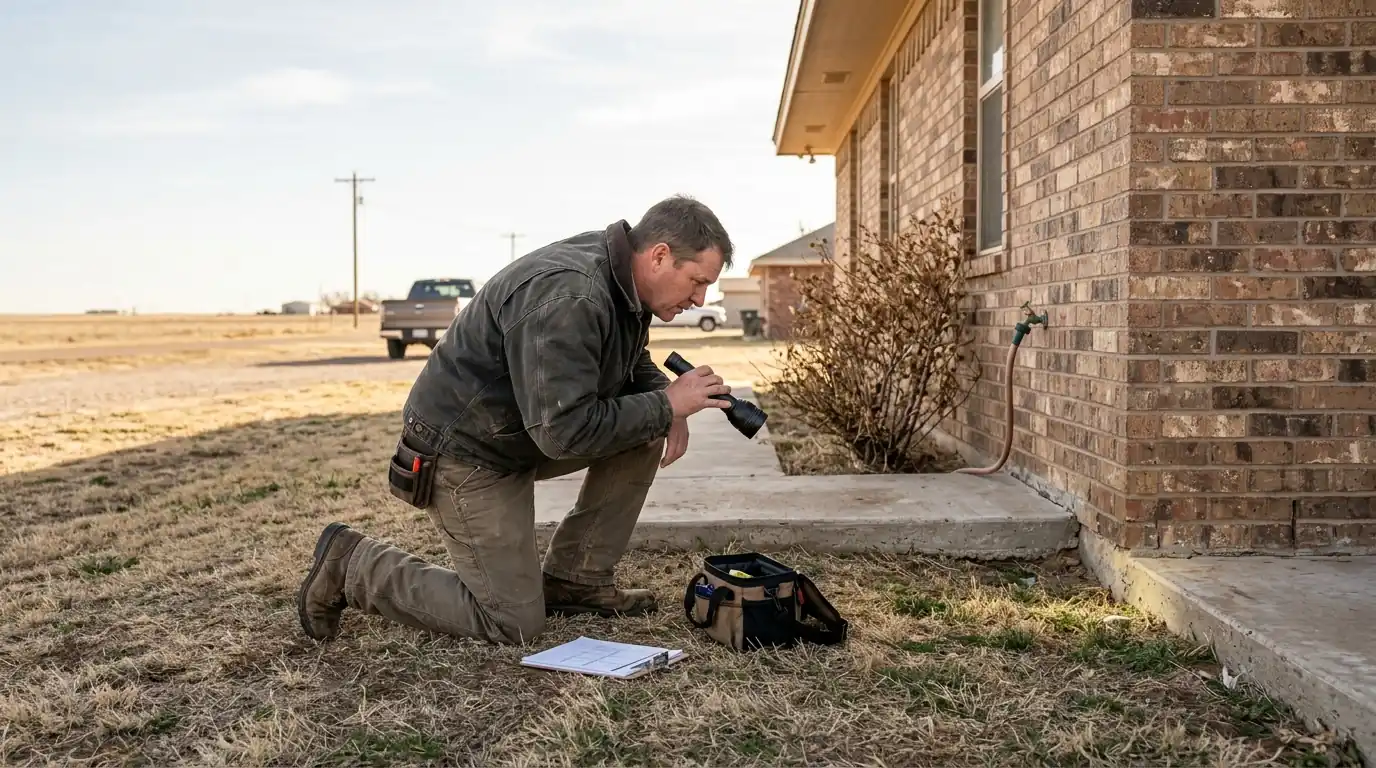
Scorpions glow a bright greenish blue under ultraviolet light, which makes a night inspection easy and fairly quick. A small UV flashlight from a hardware store is enough. Go out about an hour after full dark on a warm, still evening, when scorpions are out hunting.
Walk slowly along the base of the brick, sweeping the light up the wall and along the soffit. Check fence lines, block walls, the woodpile, stacked pavers, garage door edges and the gap under the front door. Inside, check baseboards, behind the toilet, under the bathroom vanity and around the attic hatch with the lights off. Wear closed shoes and use long tongs or a jar if you plan to catch one.
Keep notes. If you find several on one side of the house, near the same weep holes or the same tree touching the roof, you have found the route they use. That information is valuable to you and to our technician, because it tells us where to seal and treat first.
Sealing the gaps scorpions use to get in
A scorpion can flatten itself enough to slip through a gap about the thickness of a credit card, so the goal is tight seams rather than just closed doors. AgriLife's advice lines up with what we see on visits: deal with weep holes, weatherstripping and screens first.
Weep holes should never be filled solid, because they let moisture drain out of the brick wall. Instead, fit them with mesh or vented weep inserts made for brick veneer. Replace door sweeps that leave a line of daylight, and make sure the overhead garage door seal touches the slab across its whole width. Caulk around pipes, dryer vents and AC line sets where they pass through the wall. Check that attic and foundation vent screens are intact.
Outside, trim tree limbs and shrubs so nothing touches the roof or the siding. Move firewood, lumber and landscape timbers away from the foundation, and keep rock borders from piling up against the brick.
What to do this week if you have seen one
Start with the steps that cut the most risk of a sting, then work toward keeping them out:
- Pull beds a few inches from the wall and keep bedspreads off the floor.
- Shake out shoes, gloves and towels that have been sitting on the floor or in the garage.
- Run a black light check one evening and note where you find scorpions.
- Fit mesh inserts in weep holes along the walls where you saw activity.
- Replace worn door sweeps and the garage door bottom seal.
- Cut back branches touching the roof and move the woodpile away from the house.
- Fix dripping outdoor faucets and keep AC condensate lines draining away from the slab.
What our technician does on a scorpion visit
The visit starts with an inspection of the outside of the house, the garage and, when it can be reached safely, the attic. Our technician looks at weep holes, door seals, roofline gaps, vegetation touching the house and any spots you found on your black light check. Gaps that can be closed on the spot get sealed, and we point out anything bigger that needs a repair.
Treatment usually combines a residual band around the foundation and up the lower wall, a product such as Demand CS or Suspend in cracks and along the eaves, and a dust in wall voids, weep holes and the attic where scorpions shelter. Because scorpions feed on insects, cutting down crickets and roaches around the house is part of the plan. We explain re-entry times and keep kids and pets in mind when choosing placements. We answer 24/7 at (806) 552-3060.
Dolores Lankford, Pest Advice Editor, edits the Pest Advice section for Pestcon, Inc.. Articles are checked against Texas A&M AgriLife, Texas Parks and Wildlife, Texas DSHS, NWS Amarillo and City of Amarillo guidance.
Questions about this article
Does finding one scorpion in the bathtub mean there are more in the attic?
It often does. A bathtub scorpion usually came down from above or in from a wall void while looking for water, then got stuck on the slick sides. One sighting doesn't prove a large population, but it does mean the house has a route in. A black light check of the attic hatch, ceiling fixtures and the outside walls over the next few nights will show if you are seeing a stray or a pattern.
Will a black light check outside find every scorpion around my Amarillo house?
No, but it finds enough to show you the pattern. On any given night some scorpions stay tucked in wall voids, the attic or under landscape rock and never come into view. What the check reliably shows is which walls, fences and trees they use, and roughly how many are active. Repeat it on two or three warm evenings for a better picture before deciding what to seal first.
Services that go with this article
Scorpion Control
Striped bark scorpions climb into attics, then drop into bedrooms and bathtubs when the summer heat builds.
Cricket Control
Black field crickets can show up by the hundreds in late summer, chirping in the garage, piling against storefront glass and slipping under doors.
Home Pest Control
Spiders in the garage, crickets at the back door and a mouse behind the stove are everyday problems in Amarillo houses.
Quarterly Pest Control Plans
Panhandle pests arrive in waves: moths in spring, scorpions in summer, crickets in late summer and mice when the first freeze hits.