Skunks under the porch: denning season, rabies and safe removal
A whiff of skunk at night, a fresh hole beside the porch steps and small cone-shaped holes in the lawn: that's the usual start.Striped skunks den under porches, decks, sheds and slab edges all over Texas. Getting one out takes the right timing, a careful approach to rabies and a clear understanding of what Texas rules allow.
By Dolores Lankford, Pest Advice EditorPublished May 5, 2026Updated October 16, 2026
Why skunks move under porches, decks and sheds
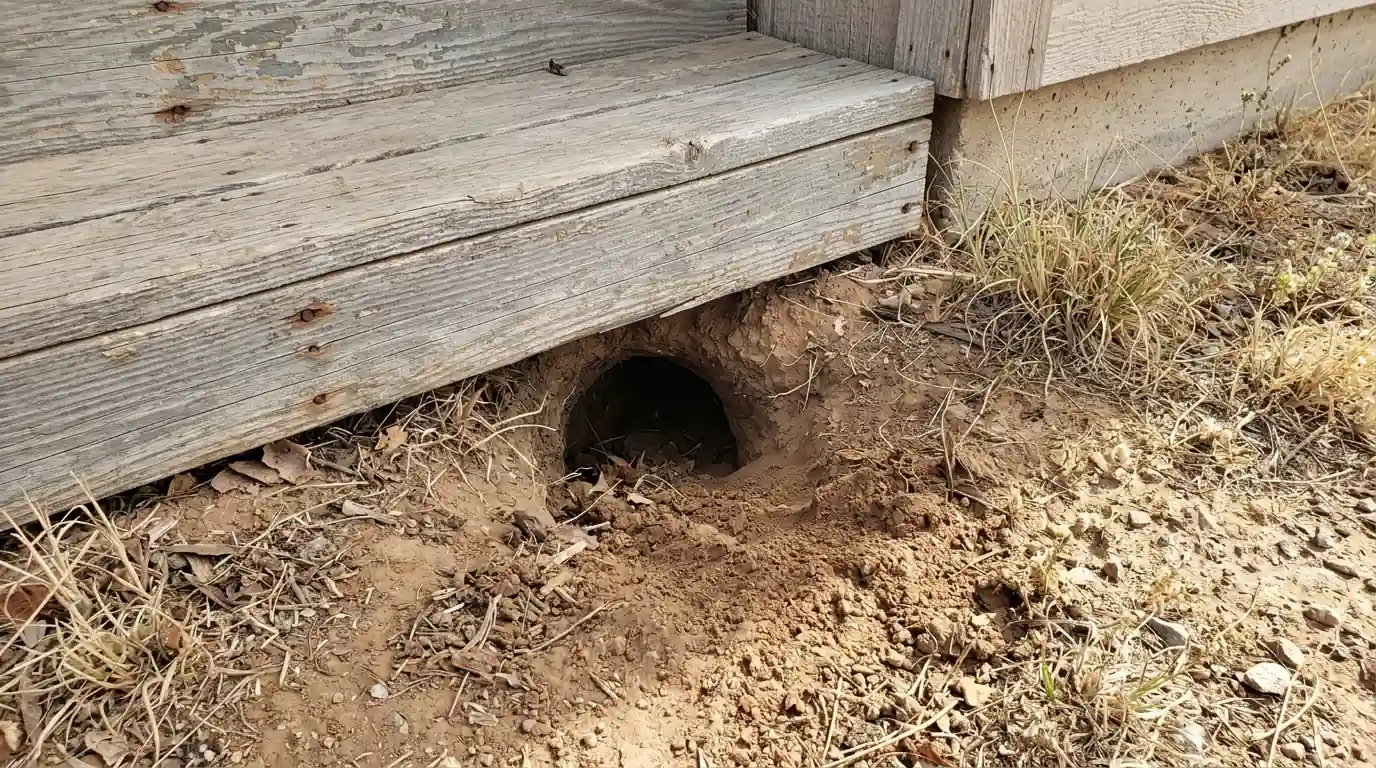
Striped skunks live throughout Texas, in town and out in the country. They are mostly active at night and spend the day in a den, and they'd rather borrow a ready-made space than dig a deep burrow. The gap under a concrete porch, a wooden deck, a storage shed on blocks or a pier-and-beam crawlspace is dark, dry and sheltered from wind, which is exactly what they want.
Skunks come for food, too. They dig for grubs and beetle larvae in lawns, leaving small, neat holes in the turf, and they'll eat pet food left outside, fallen birdseed, garbage and even eggs from a backyard chicken coop. A yard with all of that and a dark space under the porch is an easy choice for a skunk.
The denning calendar: February breeding, May babies
Skunks breed in February and March. That's often when people first notice the smell, because males travel far looking for females and spray more during encounters. Females then pick a den to raise their young, and the litter is usually born in May.
Timing matters a great deal for removal. From May through early summer, a skunk under your porch may be a mother with young that can't yet leave the den. If you block the opening during that window, you can trap the young inside, where they'll die and cause a far worse smell problem. If you're dealing with a den in late spring, it's worth having someone confirm whether young are present before any exclusion.
By midsummer the young follow their mother on nightly outings, and the family eventually breaks up. Fall and early winter are good times to seal up the spaces under porches and decks before the next breeding season starts.
Rabies: what local reports tell us
Skunks are one of the main carriers of rabies in Texas. State health officials recorded 118 rabid skunks in Texas in 2025. Closer to home, two rabid skunks were reported in Randall County in December 2025, and three rabid skunks turned up in Vega in 2019. So rabies is present in Panhandle skunks, not just a distant risk.
A healthy skunk avoids people and is active mostly at night. Warning signs of possible rabies include a skunk out in broad daylight acting confused, unafraid of people or pets, staggering, circling or showing unusual aggression. If you see that, keep everyone inside, keep pets away and contact animal control.
Make sure dogs and cats are current on rabies vaccinations. If a pet tangles with a skunk, call your veterinarian even if there's no visible wound. If a person is bitten or scratched, wash the area thoroughly and seek medical care the same day.
What Texas rules say about removing and releasing skunks
Texas Parks and Wildlife allows landowners or their agents to take nuisance furbearers, including skunks, that are causing problems on the property, with no special paperwork from the state for that step. Where things get stricter is release. Releasing a trapped skunk somewhere else requires TPWD authorization and the consent of the landowner where it's let go. You can't simply drive it out to a pasture or a park.
The rules are tighter for some other animals. Moving live raccoons, foxes or coyotes is illegal. That's one reason homeowners often prefer exclusion for skunks: instead of trapping and moving the animal, you let it leave on its own and then close the space so it can't come back.
Home remedies tend to backfire. Mothballs, ammonia-soaked rags and flooding the den are common suggestions, but they rarely move a settled skunk, they can harm young in the den, and a cornered skunk is the one most likely to spray. Poison is a bad idea under a house for the same reason a sealed-in skunk is: the smell of a dead animal under a porch can last for weeks.
How exclusion works to get a skunk out safely
Exclusion means making sure the skunk is out, then sealing the space so it can't return. The method our technicians use most often follows a simple order:
- Confirm the den is active and look for signs of young, especially from May through early summer.
- Find every opening under the porch, deck or shed, since skunks often have more than one way in.
- Install a one-way door over the main opening so the skunk can leave at night but can't get back in.
- Check that the skunk is out by watching for tracks or loosely stuffing the opening with leaves or paper.
- Seal the perimeter with hardware cloth or welded wire buried about a foot deep and bent outward in an L shape so it can't dig under.
- Remove the attractants in the yard so another skunk doesn't move into the area.
What to do this week if a skunk is denning on your property
These steps keep everyone safer and set up a clean removal:
- Keep pets inside at dusk and after dark, and turn on a porch light before letting dogs out.
- Bring pet food and water bowls in at night, and clean up spilled birdseed.
- Use trash cans with tight lids and keep them in the garage until pickup day.
- Don't block the hole or try to flush the skunk out with water, smoke or mothballs.
- Note where the den opening is and whether you see small skunks following an adult at night.
- Check that dogs and cats are current on their rabies vaccinations.
- Avoid any skunk that's out in daylight acting oddly, and report it to animal control.
What our technician does on a skunk visit
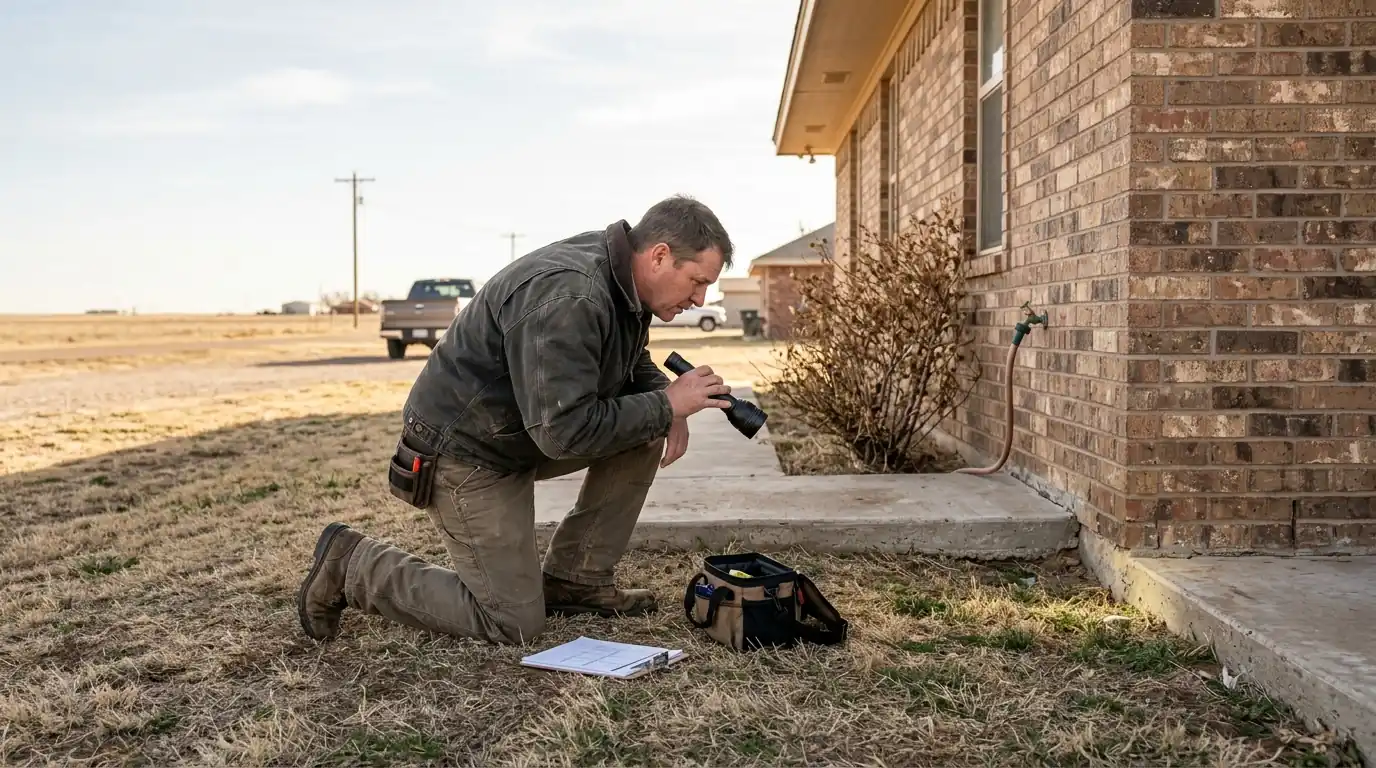
Our technician starts by inspecting the porch, deck, shed or crawlspace for active openings, tracks, odor and signs of young. They walk the property to find every place a skunk could get under a structure and look at what's drawing it to the yard, such as grubs, pet food or a chicken coop.
From there we set up exclusion with a one-way door or, where it fits, trapping that follows TPWD rules on release. Once the skunk is out, the space gets sealed with buried wire so it stays closed. If young are present, we plan the timing around them. We'll also point out lawn grub problems that keep skunks digging. If a skunk is under your porch, call (806) 552-3060; we answer 24/7.
Dolores Lankford, Pest Advice Editor, edits the Pest Advice section for Pestcon, Inc.. Articles are checked against Texas A&M AgriLife, Texas Parks and Wildlife, Texas DSHS, NWS Amarillo and City of Amarillo guidance.
Questions about this article
Is it safe to seal the hole under my porch if I haven't smelled the skunk for a week?
Not without checking first. A skunk can stay in a den for days without much odor, and in late spring a mother may have young inside that don't come out at all. Loosely stuff the opening with leaves or newspaper and watch it for two or three nights. If it stays undisturbed, and it isn't May or June when young could be inside, sealing is much safer.
Does a skunk out in my yard during the day mean it has rabies?
Not always, but it's a reason for caution. Healthy skunks are mostly active at night, though mothers sometimes forage in daylight in spring. A skunk that acts confused, staggers, circles, seems unafraid of people or approaches pets is more worrying, especially with rabid skunks reported in Randall County in December 2025. Keep people and pets away and contact animal control.
Services that go with this article
Skunk Removal
A skunk denning under your porch, deck or shed brings odor, holes and a rabies concern for pets.
Raccoon Removal
Heavy thumping in the attic at night, a torn soffit or a chimney full of chatter usually means a raccoon has moved in.
Lawn Grub Control
Brown patches that peel back like loose carpet in midsummer often mean white grubs are eating the roots under your lawn.
Dead Animal Removal
A sweet, rotten smell that gets worse every day usually means an animal died in a wall, attic or crawlspace.