What to do when a snake turns up in your Amarillo garage
You open the side door to grab a rake and something long is stretched along the wall.A snake in the garage is one of the most common summer surprises on the edges of Amarillo, and what you do in the next few moments matters more than anything else. Here is how to stay safe, figure out the likely visitor and keep the next one out.
By Dolores Lankford, Pest Advice EditorPublished July 28, 2026Updated October 16, 2026
Your first moves after spotting a snake in the garage
Stay calm and give it room. Snakes do not chase people, and a snake can only strike a fraction of its own length, so a few big steps back puts you out of reach. Most bites happen when someone tries to kill, catch or shoo a snake, not when they simply walk away.
Then work through this short list:
- Back away, but keep watching the snake from a distance so you can tell us where it went.
- Get children and pets out of the garage and keep them indoors.
- Shut the inside door that leads from the garage into the house and lay a towel along its bottom gap.
- Do not swing a shovel or hoe at it; that is exactly how many bites happen.
- Do not reach behind boxes, shelving, the water heater or the car to look for it.
- Phone (806) 552-3060 at any hour; someone can talk you through the wait.
The four snakes most likely to be in an Amarillo garage
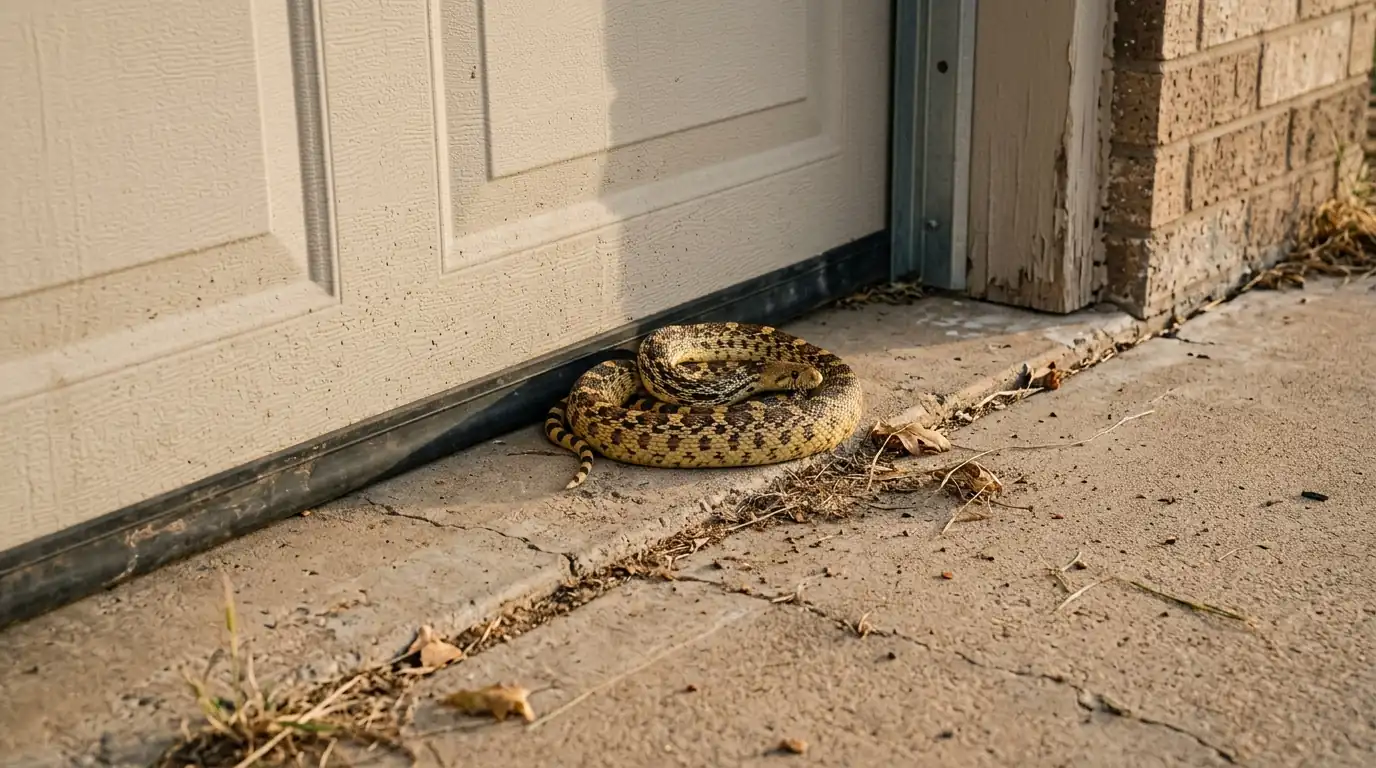
Bullsnakes are frequent garage visitors, mostly because they hunt mice. They are large, often several feet long, yellowish to tan with dark brown blotches. When cornered they hiss loudly, flatten the head and vibrate the tail in dry leaves to imitate a rattle. They have no rattle and no venom, but they will bite if grabbed.
Coachwhips are long, slender and very fast, with smooth scales and a tail patterned like a braided whip. Color runs from tan to pinkish red to dark brown. They are not venomous either, but they are nervous and will race for cover or strike if pinned against a wall.
Of all Texas rattlesnakes, the western diamondback has the widest range, and you can know it by its heavy body, diamond pattern and black and white bands just ahead of the rattle. Prairie rattlesnakes favor dry grassland and the canyons, and they are greenish brown to tan with rounded blotches. Both are venomous, and neither always rattles before striking, so silence proves nothing.
If you cannot tell which one you are looking at from a safe distance, treat it as a rattlesnake. Bullsnakes copy rattlers well enough to fool people who have lived out here their whole lives.
Why garages pull snakes in during July and August
Local snakebites peak in July and August, which is also when garage calls stack up. Panhandle summer afternoons are hot and dry, and a shaded concrete slab stays cooler than open ground. A snake looking for midday shelter, or hunting at dusk, finds a dark room with clutter along the walls and, very often, mice.
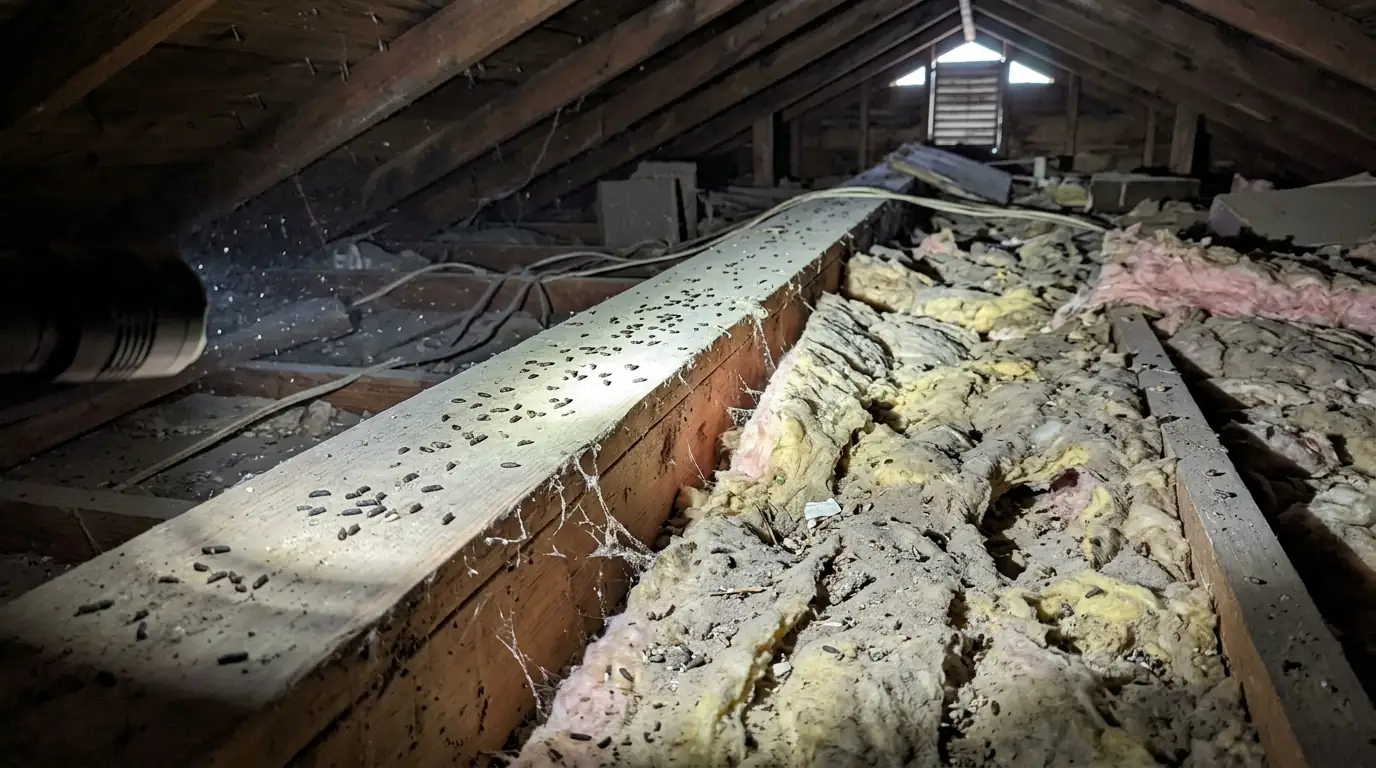
Mice are the real draw. A garage holding birdseed, grass seed, dog food or chicken feed in paper sacks gives mice an easy meal, and the mice give bullsnakes and rattlesnakes a reason to move in. Water adds to it: a water heater drip pan, a washing machine drain line or a leaky hose bib by the door.
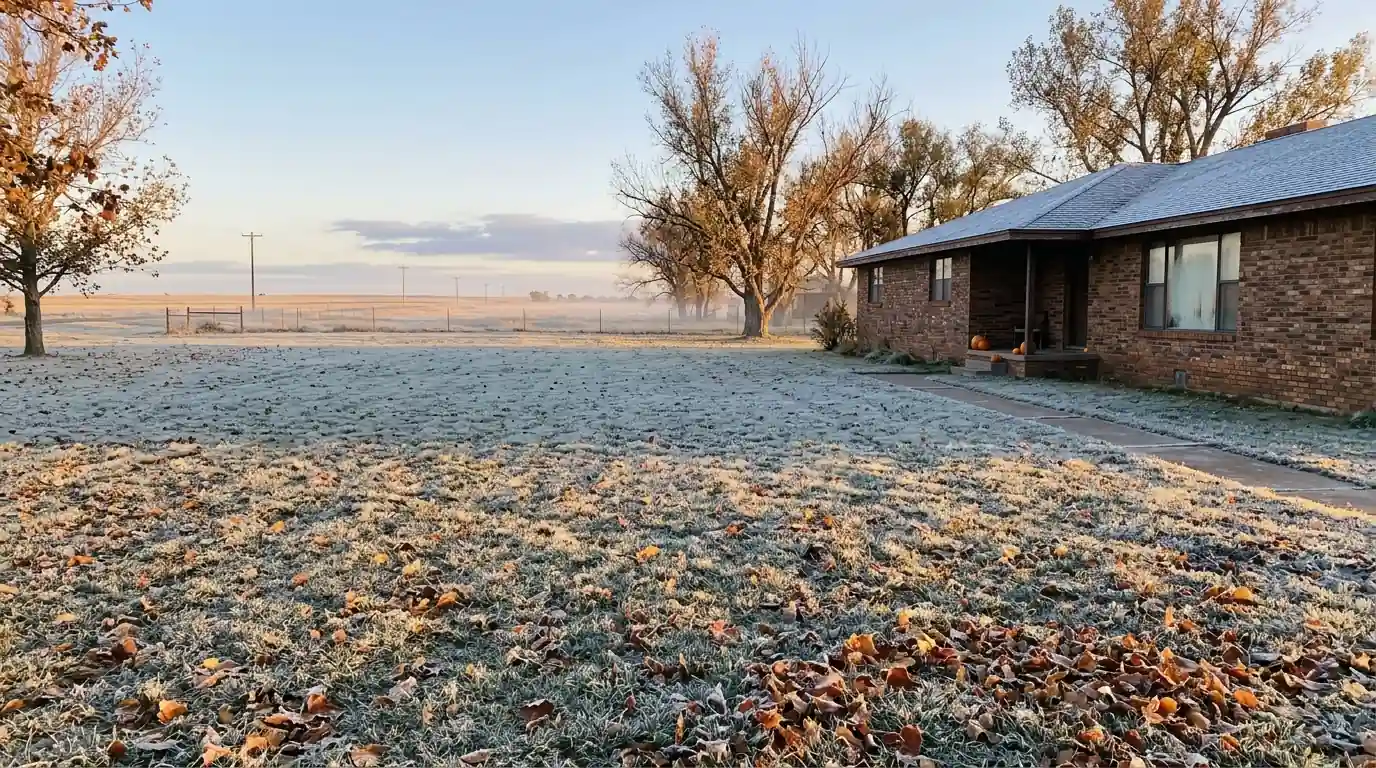
Location raises the odds. Snakes turn up most often on the outskirts and in subdivisions still under construction, because grading strips away the grass and burrows they were using and pushes them toward the closest shelter. Homes along the south and southwest edge of the city that border open pasture, acreage lots outside town and houses near the canyon breaks see the most.
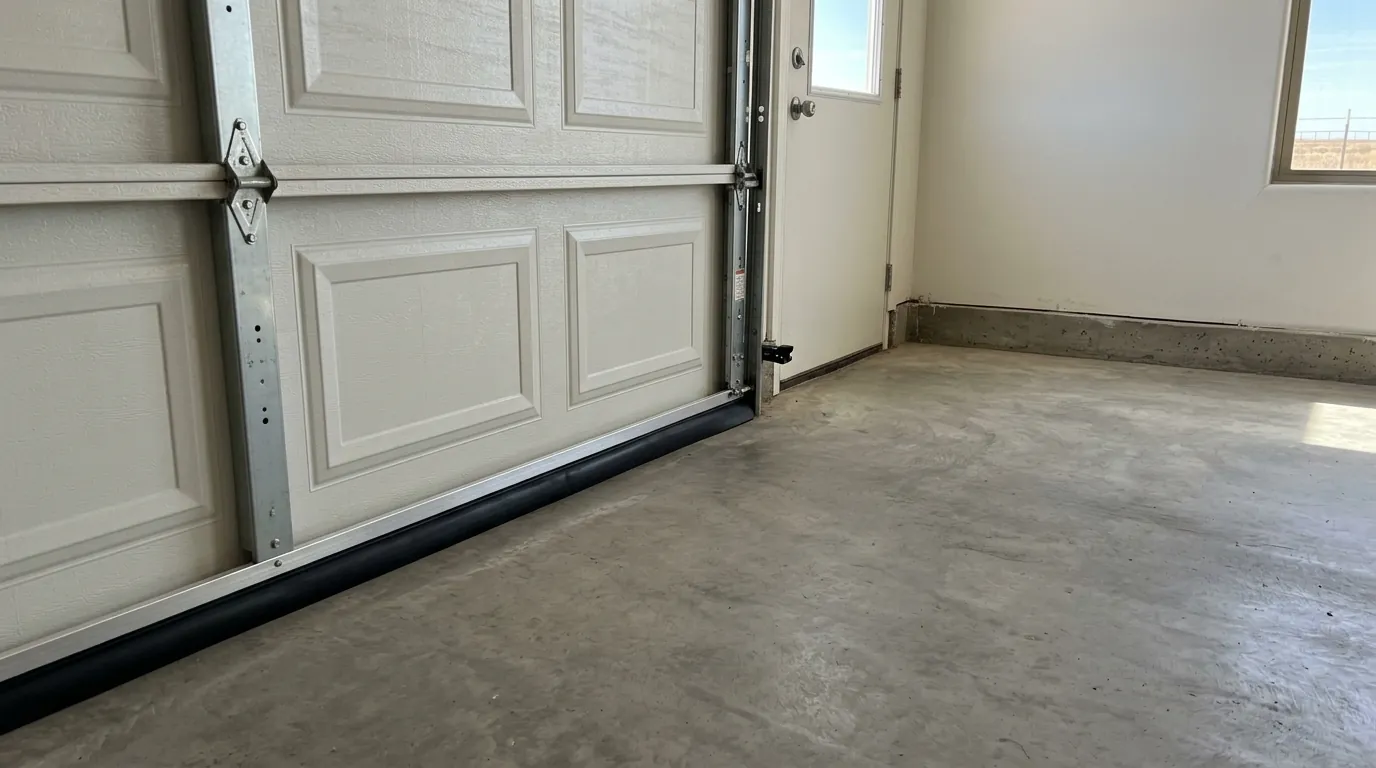
Closing the gaps that let snakes into a garage
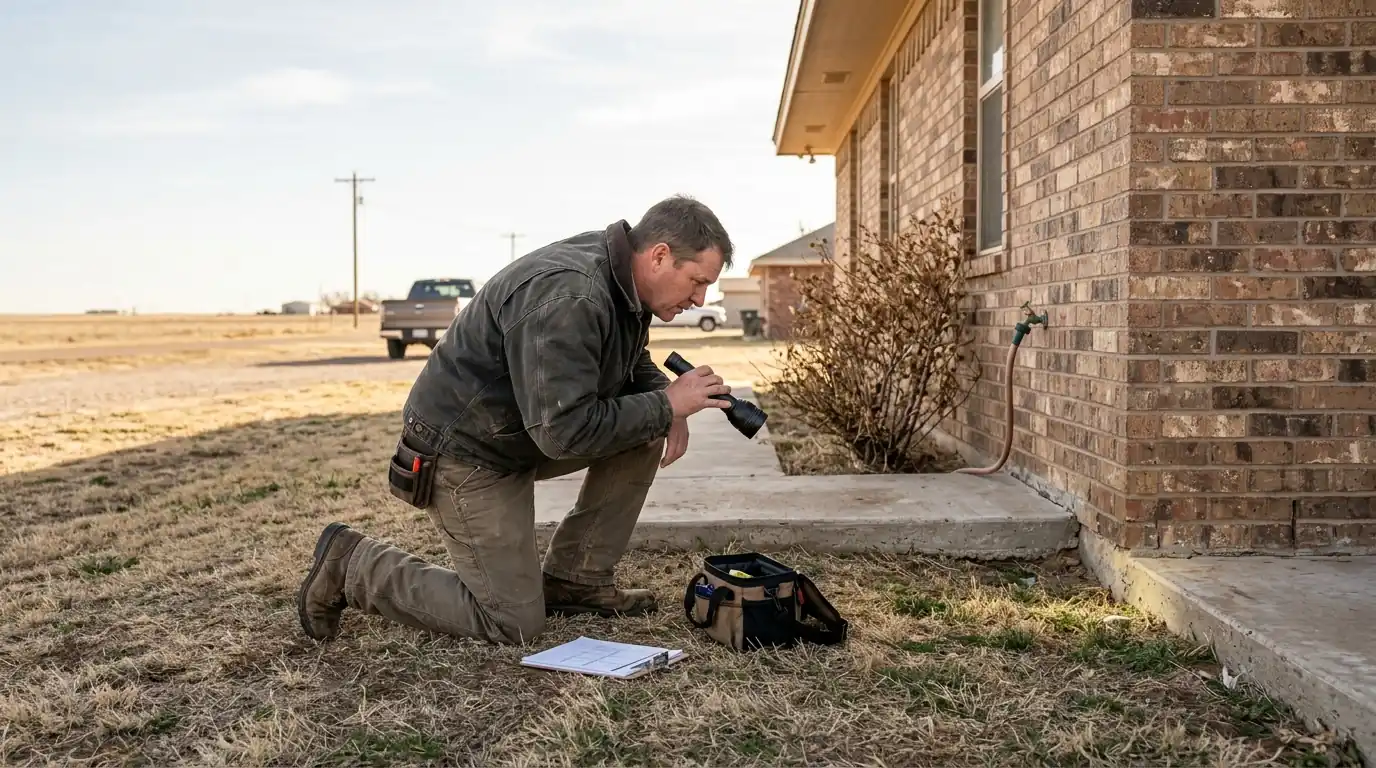
Most garage snakes come in under the overhead door. Bottom seals dry out, crack and shrink after years of sun and wind, and settling can lift one corner of the door off the concrete. Check it after dark: close the door, turn off the garage lights and have someone shine a flashlight along the outside while you watch the bottom edge from inside. Any light that shows through is an opening a young snake can use.
Replace a worn bottom seal and add a threshold strip if the slab is uneven. Check the side weatherstripping where it meets the floor, the sweep on the walk-in side door and the gap under the door into the house. Pack holes around pipes, wires and the AC line set with steel mesh and seal over them. Brick weep holes take mesh inserts, never mortar, so the wall can still drain.
Outside, keep grass short along the driveway edge and the side yard, and move woodpiles, lumber and junk away from the garage walls. Snakes use that cover to reach the building without being seen.
Cutting off the mice that bring snakes inside
Sealing gaps and starving out the mice work together. A garage with no food and no rodents holds little interest for a snake, even one that finds a way in. These steps help:
- Keep dog food, birdseed and livestock feed in sealed metal cans rather than paper sacks.
- Lift boxes and bags off the slab onto shelving set a few inches out from the walls.
- Sweep up spilled seed and kibble the same day.
- Watch for droppings and chewed bags, and set snap traps along the walls if you find them.
- Throw out old cardboard, rags and stacked newspaper that mice shred for nests.
What our technician does when called to a garage snake
When you call, we ask what the snake looks like, where you saw it last and whether kids or animals are nearby. On arrival, our technician locates and identifies the snake from a safe distance, then secures it with long tongs and moves it into a locking container. It leaves the property with us.
Then comes the part that prevents a repeat. We check the rest of the garage, behind shelving and appliances, for a second snake or shed skins, look over the door seals and wall gaps, and point out any signs of mice. If rodents are what brought the snake, our rodent control and exclusion work closes that loop. Night or day, someone picks up the phone.
Dolores Lankford, Pest Advice Editor, edits the Pest Advice section for Pestcon, Inc.. Articles are checked against Texas A&M AgriLife, Texas Parks and Wildlife, Texas DSHS, NWS Amarillo and City of Amarillo guidance.
Questions about this article
Should I leave the garage door open so the snake leaves on its own?
Opening the overhead door can give the snake a way out, but it may just as easily slide behind boxes and stay put, and then nobody knows where it is. If you open it, use the remote from a distance and keep watching. Never try to herd the snake out with a broom or a hose. Keeping an eye on it until we arrive makes removal much quicker.
Is a bullsnake in the garage worth keeping around for the mice?
A bullsnake does eat mice, and out in the pasture it is a useful neighbor. Inside a garage it is a different story: it can startle a child, upset pets and hide in places you reach into. It also tells you mice are living in the garage. Having the snake removed and fixing the rodent problem solves both issues at once.
How does a rattlesnake get into a closed garage in Amarillo?
Usually under the overhead door, through a corner where the bottom seal no longer meets the slab, or under a walk-in side door with no sweep. Snakes can slide through gaps that look far too small for them. Holes around pipes and wiring are other routes. Sealing door bottoms and side seals closes the most common way in, and removing mice takes away the reason to try.
Services that go with this article
Snake Removal
A snake coiled by the back door, in the garage or under the AC unit needs to be identified before anyone gets close.
Rodent Control
Droppings in a kitchen drawer or scratching in the attic at night usually mean house mice, and gnawed feed sacks in a barn often...
Rodent Exclusion & Sealing
Trapping clears the mice inside, but every gap a quarter inch or wider is an open door for the next ones.
Emergency Pest Control
A wasp nest over the front door, a snake in the laundry room or a bat flying through the bedroom cannot wait until Monday.